Distinguishing Bone Marrow Needle from Lumbar Puncture Needle: Comparative Analysis
Apr 28, 2024
A. Importance and Purpose
Bone marrow needle and lumbar puncture needle are essential medical tools used in diagnostic and therapeutic procedures. Understanding the differences between these two needles is crucial for medical professionals to make accurate diagnoses and provide appropriate treatments to patients.
B. Overview of the Article
This article aims to explore and elucidate the disparities between bone marrow needles and lumbar puncture needles. By examining their structural differences, applications, usage techniques, and potential risks, readers will gain a comprehensive understanding of these vital medical instruments.
Basic Concepts of Bone Marrow Needle and Lumbar Puncture Needle
A. Definition and Usage of Bone Marrow Needle
A bone marrow needle is a specialized medical instrument used to aspirate bone marrow from the central core of bones for diagnostic purposes. It is commonly employed in the evaluation of hematologic disorders, such as leukemia, lymphoma, and anemia.
B. Definition and Usage of Lumbar Puncture Needle
A lumbar puncture needle, also known as a spinal tap needle, is utilized to collect cerebrospinal fluid (CSF) from the subarachnoid space in the lumbar region of the spine. This procedure, known as a lumbar puncture or spinal tap, is performed for diagnostic purposes to assess for conditions such as meningitis, subarachnoid hemorrhage, and multiple sclerosis.
C. Differences and Similarities
While both bone marrow needles and lumbar puncture needles are used for diagnostic purposes, they differ significantly in their intended anatomical sites and the fluids they collect. Despite these disparities, both procedures require precision and expertise to minimize risks and ensure accurate results.
Structural and Design Comparison
A. Structure and Design Features of Bone Marrow Needle
Bone marrow needles typically consist of a sharp trocar tip, an outer cannula, and an inner stylet. The trocar tip facilitates penetration through the hard cortical bone, while the cannula allows for the aspiration of bone marrow into a syringe for analysis.
B. Structure and Design Features of Lumbar Puncture Needle
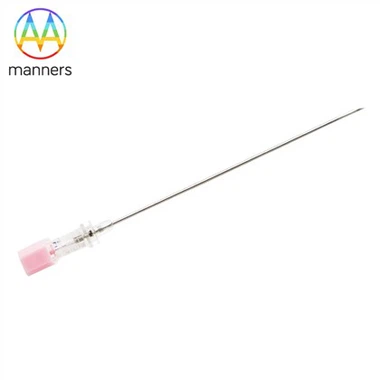
In contrast, lumbar puncture needles are longer and thinner, with a beveled tip designed to minimize trauma to the spinal cord and surrounding tissues during insertion. They often incorporate a stylet that can be removed once the needle has been successfully inserted into the subarachnoid space.
C. Differences in Appearance and Functionality
The structural disparities between bone marrow needles and lumbar puncture needles are evident in their appearance and functionality. While bone marrow needles are sturdier and shorter to penetrate dense bone, lumbar puncture needles are longer and more flexible to navigate through the spinal canal without causing damage.
Comparison of Applications and Suitability
A. Applications of Bone Marrow Needle
Bone marrow needles are primarily employed in the diagnosis and staging of hematologic malignancies, bone marrow failure syndromes, and certain infectious diseases. They are also utilized in the collection of bone marrow for hematopoietic stem cell transplantation.
B. Applications of Lumbar Puncture Needle
Lumbar puncture needles are essential for the diagnosis and management of neurological conditions affecting the central nervous system. They facilitate the collection of cerebrospinal fluid for analysis, aiding in the detection of infections, hemorrhages, and neurodegenerative disorders.
C. Variances in Medical Procedures
The distinctive applications of bone marrow needles and lumbar puncture needles reflect their unique roles in diagnosing and treating different medical conditions. While bone marrow needles focus on hematologic disorders, lumbar puncture needles are instrumental in diagnosing neurological conditions affecting the central nervous system.
Comparison of Usage Methods and Operational Techniques
A. Utilization of Bone Marrow Needle
The utilization of a bone marrow needle requires meticulous positioning and insertion into the bone marrow cavity under sterile conditions. The aspiration technique involves applying negative pressure to the syringe to withdraw bone marrow samples for analysis.
B. Utilization of Lumbar Puncture Needle
Conversely, the utilization of a lumbar puncture needle involves positioning the patient in a specific anatomical position, typically the lateral decubitus or sitting position. The needle is inserted between the lumbar vertebrae under sterile conditions, and cerebrospinal fluid is collected by gravity flow into collection tubes.
C. Variations in Procedure Techniques
The techniques employed for bone marrow aspiration and lumbar puncture differ due to the distinct anatomical sites and procedures involved. Both procedures necessitate adherence to strict aseptic techniques and proficiency in needle insertion to minimize the risk of complications.
Comparison of Risks and Complications
A. Risks Associated with Bone Marrow Needle
Bone marrow aspiration carries risks such as pain, bleeding, infection, and injury to surrounding structures, including nerves and blood vessels. In rare cases, marrow cavity perforation or hematoma formation may occur.
B. Risks Associated with Lumbar Puncture Needle
Similarly, lumbar puncture poses risks such as headache, back pain, bleeding, infection, and nerve injury. Additionally, cerebrospinal fluid leaks and post-lumbar puncture headaches are common complications following the procedure.
C. Mitigation of Risks
Despite these risks, appropriate patient selection, meticulous technique, and adherence to procedural guidelines can mitigate the occurrence of complications associated with both bone marrow aspiration and lumbar puncture procedures.
Conclusion
A. Summary of Differences and Applications
In summary, bone marrow needles and lumbar puncture needles serve distinct yet invaluable roles in diagnostic medicine. While bone marrow needles focus on hematologic disorders, lumbar puncture needles aid in the diagnosis of neurological conditions affecting the central nervous system.
B. Encouragement for Further Understanding
It is imperative for healthcare professionals to understand the disparities between these two procedures to make informed clinical decisions and provide optimal patient care. By fostering a deeper understanding of bone marrow aspiration and lumbar puncture techniques, healthcare providers can enhance diagnostic accuracy and patient outcomes.