Breast Biopsy Needles: Types, Uses, and Advances for Accurate Diagnosis
May 17, 2024
Breast health is a critical aspect of overall well-being, particularly given the prevalence of breast cancer among women worldwide. Early detection and accurate diagnosis are pivotal in improving treatment outcomes and survival rates. Breast biopsy needles play a crucial role in this process, allowing for the precise extraction of tissue samples for pathological examination. In this article, we will delve into the various types of breast biopsy needles and their specific clinical applications, highlighting their importance in modern medical practice.
What is a Breast Biopsy Needle?
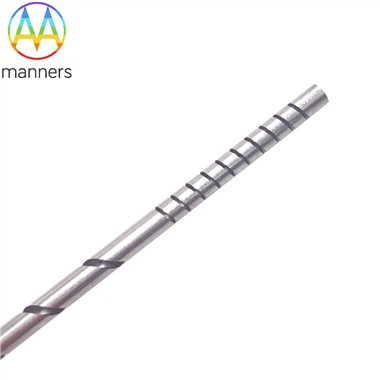
A breast biopsy needle is a medical tool designed to remove small samples of breast tissue for diagnostic purposes. These needles are essential in determining the nature of breast abnormalities, distinguishing between benign and malignant lesions, and guiding subsequent treatment decisions. Their use is paramount in the early detection and diagnosis of breast cancer, making them indispensable in the field of oncology.
Types of Breast Biopsy Needles
Fine Needle Aspiration Biopsy (FNA) Needle
Fine Needle Aspiration Biopsy (FNA) involves using a thin, hollow needle to extract cells or fluid from a breast lump. This minimally invasive procedure is often performed with the aid of ultrasound to ensure precise needle placement.
Advantages: FNA is less invasive, requires no incisions, and has a shorter recovery time. It is particularly useful for evaluating cysts and palpable masses.
Disadvantages: While FNA is quick and relatively painless, it may not always provide sufficient tissue for a definitive diagnosis, especially in cases of solid tumors.
Clinical Applications: FNA is typically used for evaluating palpable lumps, cysts, and for initial assessments of suspicious areas detected through imaging.
Core Needle Biopsy (CNB)
Core Needle Biopsy (CNB) uses a larger, hollow needle to remove small cylinders of tissue, called cores, from a breast lesion. This procedure is often guided by imaging techniques such as ultrasound, mammography, or MRI.
Advantages: CNB provides larger tissue samples compared to FNA, which helps in making a more accurate diagnosis. It is especially useful for assessing solid masses.
Disadvantages: CNB is more invasive than FNA and may cause more discomfort, bruising, or bleeding.
Clinical Applications: CNB is commonly employed for diagnosing solid breast masses, microcalcifications, and abnormal areas detected on imaging studies.
Vacuum-Assisted Breast Biopsy (VABB)
Vacuum-Assisted Breast Biopsy (VABB) involves using a vacuum-powered instrument to collect multiple tissue samples during a single needle insertion. This technique is often performed under imaging guidance.
Advantages: VABB allows for the removal of larger and more numerous tissue samples with a single insertion, increasing diagnostic accuracy and reducing the need for repeat procedures.
Disadvantages: VABB is more complex and can be associated with a higher risk of complications, such as bleeding or infection.
Clinical Applications: VABB is particularly beneficial for sampling areas with microcalcifications, complex lesions, and for cases where previous biopsies were inconclusive.
Other Specialized Biopsy Needles
There are several other types of specialized biopsy needles, such as stereotactic biopsy needles and MRI-guided biopsy needles, which are used for specific clinical scenarios.
Clinical Applications: Stereotactic biopsy needles are used for precise sampling of microcalcifications or masses not easily seen on ultrasound. MRI-guided biopsy needles are employed when lesions are only visible on MRI.
Clinical Applications
Diagnosing Breast Lumps
Breast biopsy needles are instrumental in diagnosing the nature of breast lumps. By extracting tissue samples, pathologists can determine whether a lump is benign or malignant, which is crucial for developing an appropriate treatment plan.
Detecting Microcalcifications
Microcalcifications, tiny deposits of calcium in the breast tissue, can be an early sign of breast cancer. Biopsy needles, especially those used in VABB procedures, are adept at sampling these areas for analysis.
Guiding Treatment Plans
The results of a breast biopsy directly influence treatment decisions. Accurate diagnosis ensures that patients receive the most appropriate care, whether it be surgical intervention, chemotherapy, radiation, or a combination of therapies.
Image-Guided Biopsies
Advances in imaging technology have significantly enhanced the precision of breast biopsies. Ultrasound, MRI, and mammography-guided biopsies allow for accurate targeting of suspicious areas, minimizing damage to surrounding tissues and improving diagnostic yield.
Safety and Efficacy
Accuracy of Biopsy Needles
The accuracy of biopsy needles varies depending on the type and the technique used. CNB and VABB generally provide more definitive results compared to FNA, due to the larger and more intact tissue samples obtained.
Safety Considerations
While breast biopsies are generally safe, they are not without risks. Potential complications include bleeding, infection, and bruising. Ensuring proper technique and post-procedure care can mitigate these risks.
Technological Advances and Future Trends
Technological Innovations
The field of breast biopsy is continually evolving with technological advancements. Innovations such as robotic-assisted biopsies and smart needles with real-time imaging capabilities are on the horizon, promising greater precision and less invasiveness.
Future Directions
Future research is focused on improving biopsy techniques to enhance accuracy and patient comfort. Advances in imaging technology and needle design are expected to further reduce complications and improve diagnostic outcomes.
Patient Experience and Guidance
Patient Perspective
Undergoing a breast biopsy can be a stressful experience for patients. Sharing patient stories and experiences can help demystify the process and alleviate anxiety.
Doctor's Advice
Medical professionals play a crucial role in guiding patients through the biopsy process. Providing clear information on what to expect before, during, and after the procedure can significantly enhance the patient experience.
Conclusion
Breast biopsy needles are vital tools in the diagnosis and management of breast diseases. Their diversity in types and applications allows for tailored approaches to different clinical scenarios, ensuring high diagnostic accuracy and patient safety. As technology advances, the future of breast biopsy techniques looks promising, with ongoing improvements aimed at enhancing precision and reducing patient discomfort. Regular breast health monitoring and early detection remain key in the fight against breast cancer.