

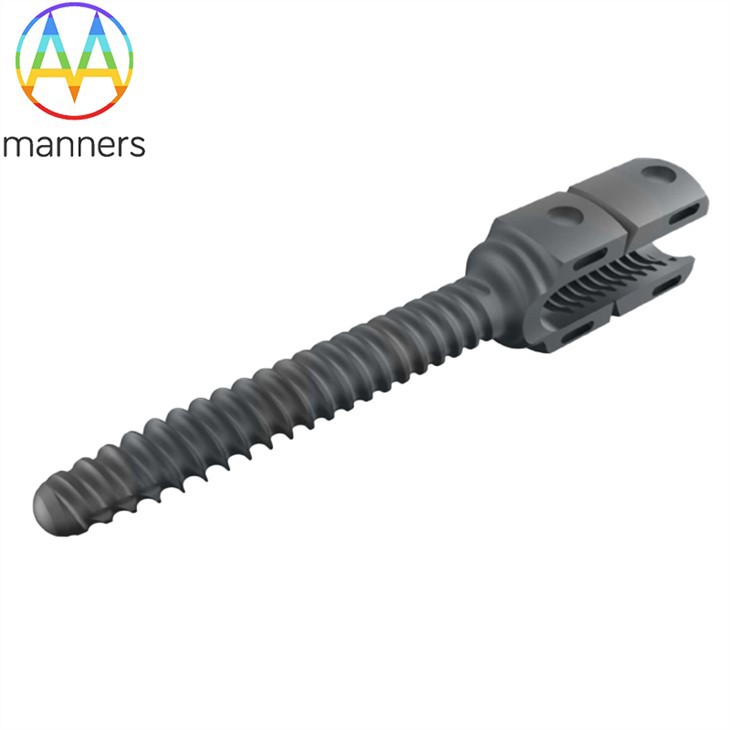

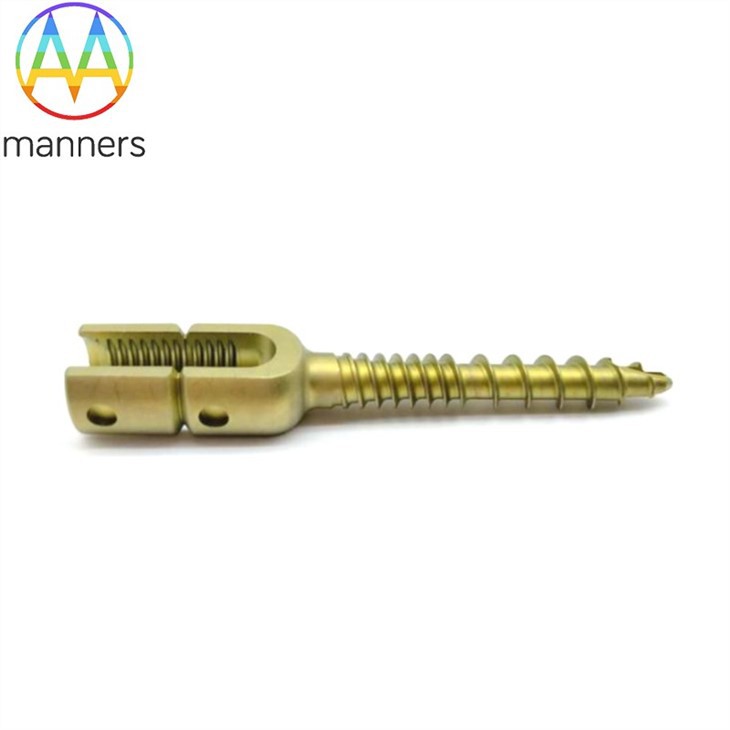
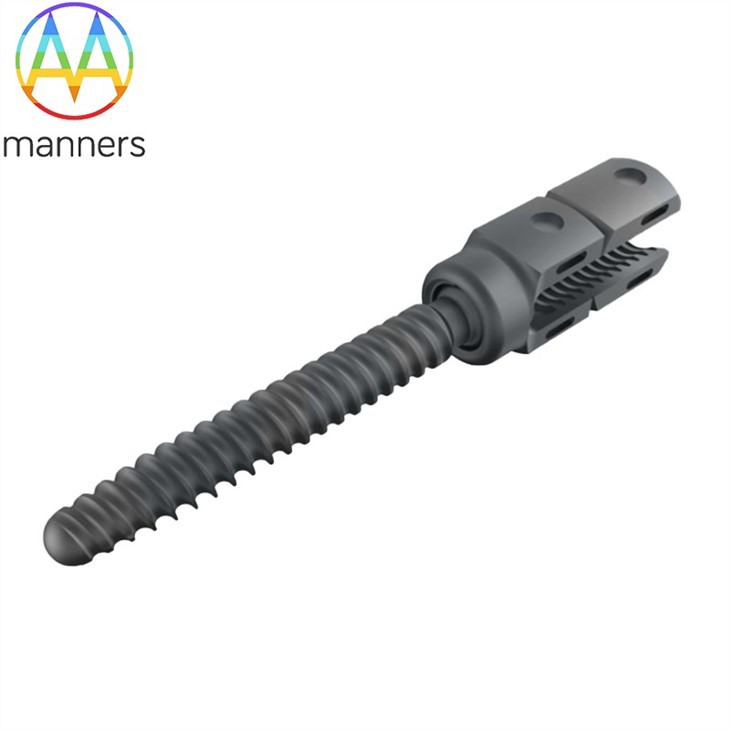
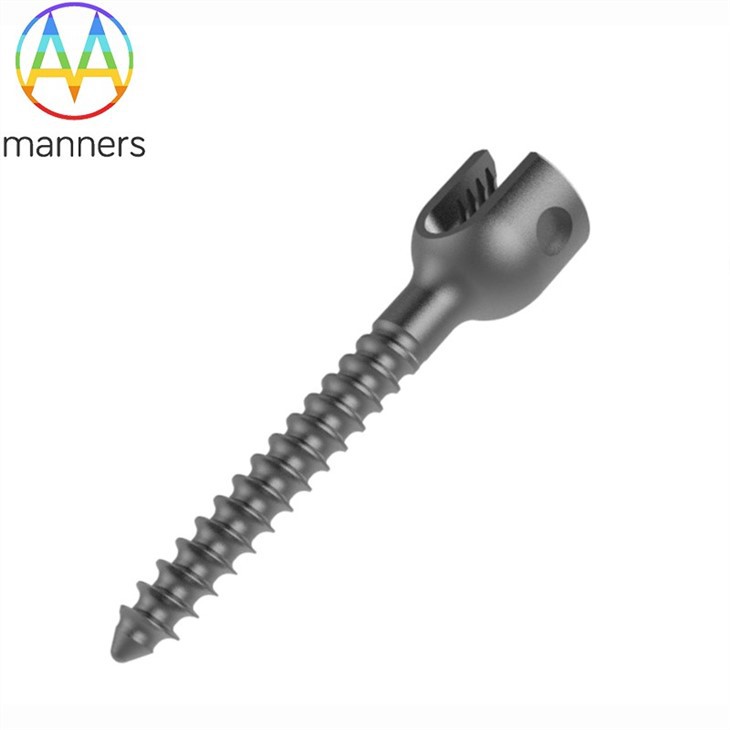
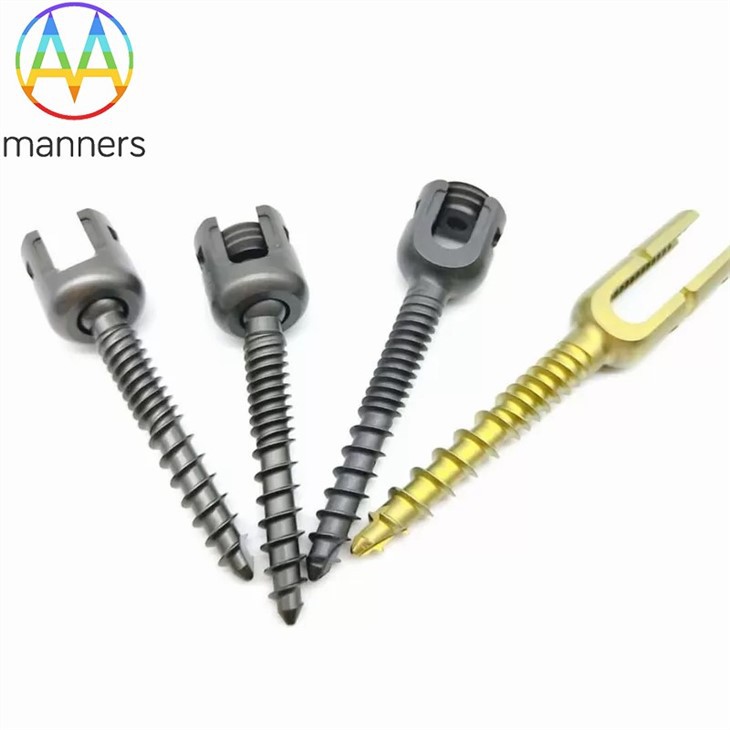
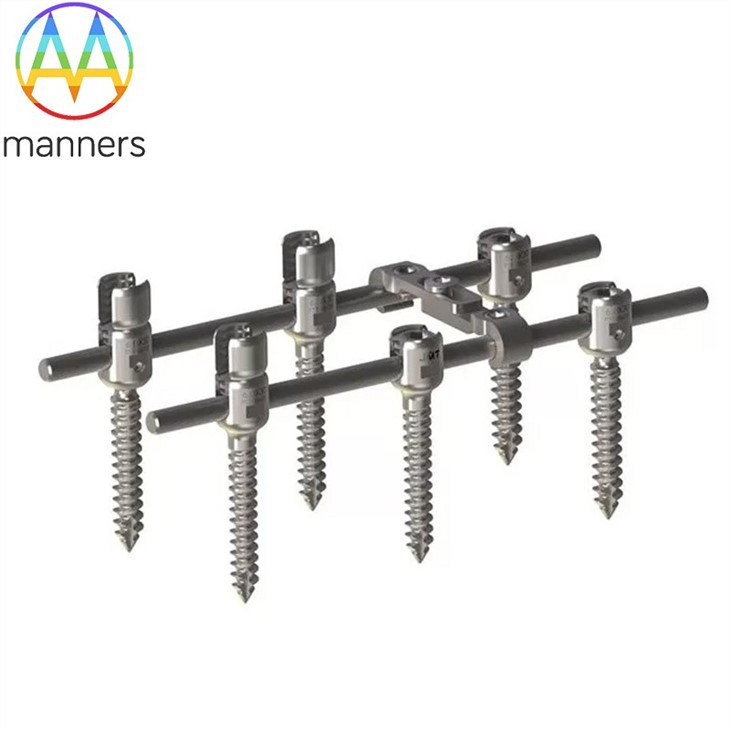
Orthopedic Surgical Implants 5.5mm Polyaxial Reduction Screw
Product specification Product show How to prevent deadlock problem Lock (thread galling) often occur in stainless steel, aluminum alloy and titanium alloy fasteners, this a few kinds of metal alloy itself has the property of corrosion resistance, the surface is damaged, in metal surface to...
Description
Product specification
Product name | Orthopedic Surgical Implants 5.5mm Polyaxial Reduction Screw |
material | Titanium, etc. |
Surface Treatment | Anodizing, Sandblasting, Painting, Powder coating, Plating, Silk Printing, Brushing, Polishing, Laser Engraving |
Machining Option | Turning, grinding, milling, welding, bending, drilling, swaging, flaring, slot-cutting, stamping, deep-drawing, capping, beveling, etc. |
Custom feature | According to your 2D/3D Drawing or sample provided |
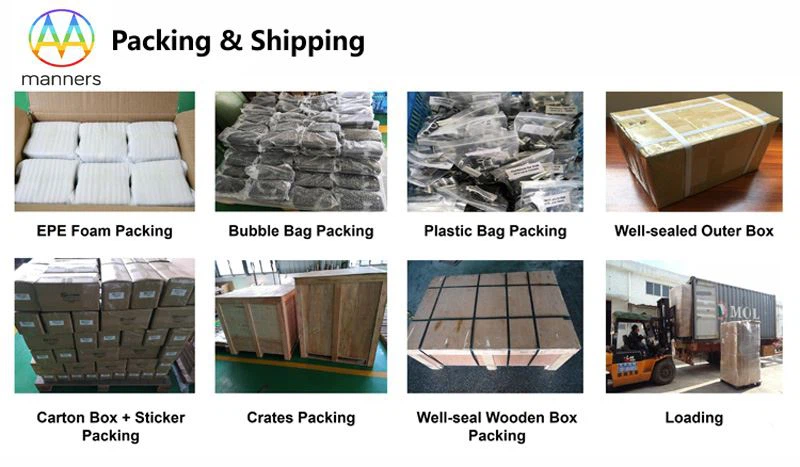
Package | Standard carton or according to customer's requirement |
Certification | ISO9001:2015, SGS |
Product show
How to prevent deadlock problem Lock (thread galling) often occur in stainless steel, aluminum alloy and titanium alloy fasteners, this a few kinds of metal alloy itself has the property of corrosion resistance, the surface is damaged, in metal surface to produce a thin layer of oxide layer (in terms of austenitic stainless steel, chrome oxide) to prevent further further corrosion. When the stainless steel fastener is locked, the pressure and heat generated between the teeth will destroy and erase the chromium oxide layer during the period, making the metal teeth directly blocked/shear, and then the phenomenon of adhesion. When adhesion occurs continuously (usually no more than one full tooth diameter), the stainless steel fastener will completely lock and can never be removed or locked again. Usually this series of blocking - shear - adhesive locking series of action in just a few seconds, therefore, understand the characteristics of stainless steel products and follow the correct operation procedures are the first to prevent stainless steel fastener locking. External reasons for locking phenomenon: (1) the product is not correctly selected. Before use, it should be confirmed that the mechanical properties of the product can meet the requirements of use (such as the tensile strength of the screw and the safety load of the nut). In addition, the length of the screw should be appropriate, and one to two tooth distances of the nut exposed after tightening shall be the criterion. (2) Rough or sticky teeth, such as solder joints and other metals sandwiched between teeth, often lead to locking. (3) Too much force or too fast lock speed, as far as possible to choose torque wrench or socket wrench, avoid the use of adjustable wrench or electric wrench, because electric wrench often lead to lock speed too fast, temperature rise and lock. (4) If the Angle of applying force is wrong, the nut must be rotated perpendicular to the axis of the screw, and do not tilt. (5) No gasket is used. The use of gasket/retaining ring can effectively prevent the problem of over-locking. Preventive measures to prevent stainless steel fasteners from locking: (1) when using stainless steel fasteners, is it always fixed speed to lock nuts? If you are a first-time user or not familiar with the process of stainless steel products, you should consult your supplier about the characteristics of stainless steel. In general, slowing down the speed of locking can greatly reduce (or even completely avoid) the chances of locking. Because heat often occurs during locking, the chance of locking increases as heat increases. In use, the locking speed of stainless steel fasteners should be lower than that of carbon steel fasteners. (2) Are screws or nuts lubricated before locking? If the answer is "no", butter, molybdenum disulfide, graphite, mica or talcum powder may be recommended to lubricate the internal and external teeth to reduce the occurrence of locking. Coating nuts with wax is also an effective way of lubrication. Coating nuts will be like having a layer of lubrication film between nuts and screws. (3) Whether to use screws and nuts of the same material grade? If the answer is yes, it is recommended to use different grades of screws in nuts, such as 304 and 316, but it should be noted that the grade of stainless steel selected should meet the needs of their own rust and corrosion resistance. In addition, when the locking flange is most often a locked case, assume that you have pay attention to and in accordance with the above all the points, including the use of the washer, coating nut, can also suggest using a long nut, such as GB6170 or DIN934, diagonal sequence on nuts, slowly in order to properly tightness, etc., if still can't solve, Often in the pre-shrink can not be unloaded, finally, have to ask you in the pre-lock flange device when the first temporary use of carbon steel nuts, until the final formal lock to use stainless steel nuts, in the class of rust resistance and do not lock to find a balance point.


Our factory

Production equipment
| Equipment List | Brand | Type | Working Track | Tolerance (mm) | Quantity (Set) |
CNC Milling Machine | FANUC | FANUC Machining Center | 500*400*320 | 0.01 | 15 |
Brother | Brother Tapping Center | 500*400*300 | 0.02 | 10 | 1 |
HATEN | Drilling & tapping machine | 0.02 | 5 | 2 | |
| LK | Machining Center | 0.02 | 7 | 2 | |
Harvest Star | CNC Machine | depend on different models | 0.015 | 10 | 1 |
| Mazak | Vertical Machining Center | 910*550*450*+30-(-120)*0-360 | 0.005 | 1 | 2 |
| SYNTEC | Vertical Machining Center | 530*400*300 | 0.01-0.005 | 1 | 2 |
| Tmt | CNC Machine | depend on different models | 0.01 | 8 | 2 |
| Sihai | Machining Center | 0.02 | 2 | 1 | |
| Kangcheng | Machining Center | 0.02 | 2 | 1 | |
| Taikan | Machining Center | depend on different models | 0.01 | 110 | 2 |
| Renishaw | Probe | 0.01 | 80 | 1 | |
| CNC Turning Lathe | Schutte | CNC Lathe | depend on different models | 0.005 | 2 |
| TSUGAMI | CNC High Precision Lathe | depend on different models | depend on different models | 2 | 1 |
HELONG | CNC Lathe | depend on different models | 0.01 | 20 | 2 |
Slotting Machine | YUYI | CNC Slotting Machine | 0.01 | 1 |
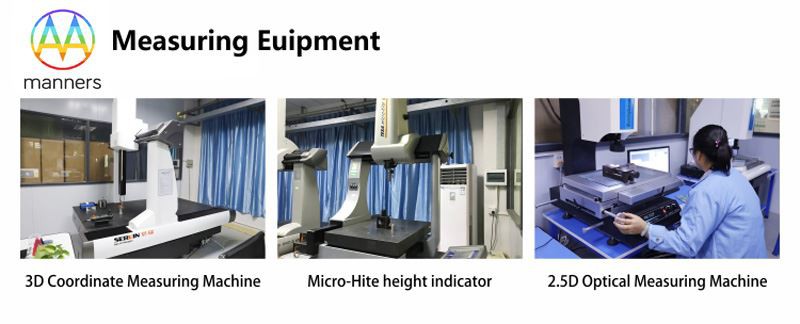
Testing equipment
| Equipment Name | Brand | Specification | Tolerance(mm) | QTY |
3D-CMM | Serein | 1.5m*1m | 0.001 | 1 |
| 3D-CMM | Hexagon | 500*500 | 0.001 | 2 |
| Micro-hite | TESA | 1 | ||
| 2D-CMM | Ernst | 3 | ||
| Microscope | 45 Times | 12 |
Surface treatment equipment
| Surface Treatment Equipment List | QTY |
| Sand Blast Machine | 1 |
| Screen Printing Machine | 4 |
| Laser Engraving Machine | 3 |
Our Certification



Orthopedic Surgical Implants 5.5mm Polyaxial Reduction Screw
Hot Tags: orthopedic surgical implants 5.5mm polyaxial reduction screw, China, suppliers, manufacturers, factory, customized, custom, cheap, low price, made in China


