Why Does Meniscus Suturing Require So Many Technical Choices?
Apr 15, 2026
Why Does Meniscus Suturing Require So Many Technical Choices?
When discussing meniscus suturing surgery, many patients wonder: Isn't it just a matter of putting in a few stitches inside the knee? Why are there so many different methods - "outside‑in," "inside‑out," "all‑inside"? What is the surgeon thinking during the operation?
Behind this seemingly simple procedure lies a complex interplay of anatomical, biomechanical, and clinical decision‑making challenges.
The Challenge of the Anatomical Maze
The meniscus sits between the femur and tibia - an area that is, surgically speaking, a "restricted zone." Imagine trying to realign and securely fix a torn meniscus through a gap of less than 5 mm, while avoiding nearby nerves, blood vessels, and ligaments. It's akin to repairing a tiny part inside a box filled with precision instruments - blindfolded.
Adding to the complexity, different parts of the meniscus present entirely different anatomical environments:
Anterior horn: Relatively accessible, but obscured by the infrapatellar fat pad.
Body: Adequate working space, but the posterior portion is close to the popliteal artery and vein.
Posterior horn: Narrowest workspace, with neurovascular bundles just millimeters away - the highest surgical risk area.
This is why there is no universal "one‑size‑fits‑all" suturing method. Different tear locations demand different techniques to balance accessibility, safety, and effectiveness.
The Precision Demands of Biomechanics
The meniscus is not a passive cushion; it is a key component of the knee's biomechanical system. Its collagen fibers are meticulously organized: circumferential fibers resist outward expansion, while radial fibers prevent delamination.
When the meniscus tears, this precise fiber architecture is disrupted. The goal of suturing is not only to "tie the two sides together," but to restore the continuity of these functional fiber systems.
Vertical longitudinal tears: Cause minimal disruption to collagen fibers; high success rates (~90%). Best repaired with vertical mattress sutures to restore hoop stress.
Radial or horizontal tears: Severely disrupt fiber architecture; even after suturing, mechanical recovery may be incomplete. These often require horizontal mattress sutures to prevent layer separation.
This explains why surgeons pay such close attention to tear type. The same suturing technique can yield vastly different outcomes depending on the tear pattern.
The Biological Time Window for Healing
Another unique challenge is the meniscus's limited blood supply:
Red zone (outer 10–30%): Direct blood supply; healing rates >90%.
Red‑white zone (middle 30%): Transitional vascularity; healing rates 70–85%.
White zone (inner 40%): Avascular; natural healing rates <10%.
Clinically, tears often occur in low‑vascularity areas, creating a paradox: the areas most in need of repair have the poorest healing potential.
Modern solutions aim to convertbiologically unfavorable tissue into a "pseudo‑red zone" - by rasping tear edges to create bleeding beds, injecting platelet‑rich plasma (PRP), or, in the future, applying stem cell therapy to induce regeneration.
Individualized Patient Considerations
Meniscus suturing is not only a technical challenge, but also a decision‑making puzzle. The optimal choice for the same tear can differ dramatically between patients:
Young athletes: Worth attempting repair even if success rates are slightly lower, since meniscectomy has severe long‑term consequences.
Middle‑aged office workers: Must weigh surgical risks against recovery time and work impact.
Older patients: Unless highly active, may be better served by physiotherapy or partial meniscectomy.
Activity level, occupational demands, lifestyle expectations, and even insurance coverage can influence decisions. That's why surgeons often cannot commit to a definitive plan before actually seeing the tear during arthroscopy.
The Logic Behind Technological Evolution
The evolution of meniscus suturing reflects medicine's typical pathway for solving complex problems:
Generation 1: Open Suturing (1885–1970)
Goal:Make suturing technically possible.
Cost:Large incisions, significant trauma, slow recovery.
Core philosophy:Prioritize visibility over function.
Generation 2: Inside‑Out / Outside‑In (1970–1990)
Advance:Arthroscopy enables minimally invasive visualization.
New problem:How to operate through tiny portals?
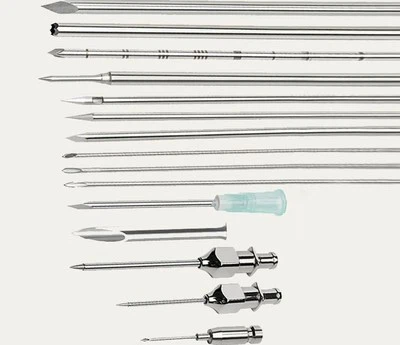
Solution:Elongated instruments, specialized portals.
Cost:Risk of neurovascular injury, technically demanding.
Generation 3: All‑Inside Repair (1990–Present)
Ideal:Perform all steps within the joint.
Method:Pre‑loaded suture anchor systems.
Advantages:No additional skin incisions, reduced neurovascular risk.
New challenges:Learning curve, higher costs.
Generation 4: Intelligent Repair (Emerging)
Direction:Real‑time navigation, force sensing, biological augmentation.
Goal:Shift from "suturing" to "biological regeneration."
The Surgeon's Decision Tree
In the operating room, the surgeon's mental process resembles a complex algorithm:
Locate the tear: Anterior horn, body, or posterior horn?
Identify tear type: Vertical longitudinal, radial, horizontal, or complex?
Measure size: <1 cm, 1–4 cm, or >4 cm?
Determine vascularity: Red, red‑white, or white zone?
Check for combined injuries: ACL injury? Cartilage damage?
Match the technique: Which method best suits this specific tear?
For example, for a common posterior horn vertical longitudinal tear, the decision path might be:
Young patient, acute tear → Choose inside‑outtechnique (maximum strength).
Surgeon skilled in all‑inside repair → Choose all‑inside(minimally invasive, faster recovery).
Limited equipment → Use outside‑inwith spinal needle.
The Future: Beyond Suturing
The greatest limitation of current meniscus repair is that we can connectthe tear, but cannot fully restore the meniscus's original structure and function. The repaired tissue is fibrovascular scar, not native fibrocartilage.
Future directions aim for biological reconstruction rather than mechanical suturing:
Tissue‑engineered menisci: Scaffold + cells + growth factors.
Stem cell therapy: Inducing true fibrocartilage regeneration.
Gene therapy: Promoting collagen synthesis and matrix repair.
In this future, meniscus tears may heal completely - like superficial skin cuts - leaving no long‑term trace.
Returning to Clinical Reality
When patients ask, "Doctor, how should my tear be treated?"the surgeon's internal thought process is: "Given this exact tear in this exact patient, what is the best option?"
The multitude of technical choices in meniscus suturing is not chaos - it is maturity. It reflects our deepening understanding of knee complexity, respect for individual differences, and commitment to optimizing long‑term outcomes.
In this sense, meniscus suturing is not just a technical skill, but an art - the art of finding the optimal balance between anatomical constraints, biological realities, and patient needs. Every surgery is a tailored solution crafted from medical knowledge, clinical experience, and judgment.
If you'd like, I can now combine all your translated sections - ACL & meniscus histories, technical definitions, clinical deployment, manufacturing standards, future visions, and this explanatory piece - into one comprehensive, journal‑ready monograph with unified structure, references, and academic formatting.
Do you want me to proceed with that final integrated manuscript?