Which Minimally Invasive Approach Offers A Smoother Journey?
Jun 12, 2026
1. Intra-Procedural Pain and Procedure Duration
CNB requires multiple punctures (typically 4 to 6 times). Each spring trigger generates a distinct clicking noise and sharp jolt, which some patients compare to being snapped by a rubber band. VABB only involves a single skin penetration, with all subsequent cutting performed internally, producing minimal sound and vibration.
In clinical studies using the Visual Analogue Scale (VAS), the average pain score for VABB is 2.1, versus 3.4 for CNB. The average CNB procedure lasts 12 minutes, while VABB takes approximately 8 minutes (including lesion localization and tissue sampling). A shorter procedure time alleviates muscle soreness caused by prolonged immobilization.
2. Postoperative Hematoma and Infection
Repeated insertion and withdrawal of the CNB needle raises the risk of vascular injury, leading to a postoperative hematoma rate of roughly 3%–5%. Large hematomas may require ultrasound-guided aspiration.
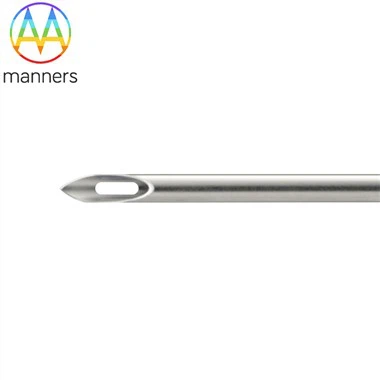
Vacuum assistance delivers immediate hemostasis for VABB: negative pressure collapses surrounding tissue to compress blood vessels, and the cutting cannula acts like a vascular clamp when sealing the sample notch. VABB needles manufactured by Manners undergo electropolishing and passivation to achieve ultra-smooth surfaces, lowering tissue adhesion and secondary bleeding risks. Published literature reports a VABB hematoma rate of around 1.2% and an infection rate below 0.1%, compared to a 0.5% infection rate for CNB.
3. Scar Cosmesis and Breast Contour Deformity
A CNB puncture site measures about 3 mm and leaves a tiny dot scar after healing; multiple sampling sites may result in several separate scars. VABB uses just one entry incision, and vacuum traction creates a neat, uniform skin opening.
For patients with small breast volume, the long spring stroke of CNB can trigger fat atrophy along the needle tract, forming indented scars. VABB needle tips (such as Manners' precision-machined Needle Tip) adopt a triple-bevel milling process for a smooth entry tract, yielding nearly invisible scars post-healing. In addition, VABB does not require compressive bandaging after the procedure-only adhesive bandages are needed, and patients may shower the following day.
4. Psychological Burden and Patient Satisfaction
Pre-biopsy anxiety mainly stems from fear of pain and a cancer diagnosis. Repeated punctures during CNB keep patients in constant tension, whereas the single-pass, low-noise workflow of VABB gives patients a greater sense of control.
A prospective questionnaire survey revealed that the overall satisfaction score of the VABB group (9.2/10) was significantly higher than that of the CNB group (7.8/10). Among patients requiring repeat biopsy, 90% stated they would choose VABB again.
Conclusion