Visual Challenges Of Laparoscope Tubes In Laparoscopic Gastrostomy Tube Placement
Aug 24, 2026
Industry Pain Points
Laparoscopic gastrostomy tube placement is widely performed for patients with dysphagia, neurological disorders and long‑term enteral nutrition demands. This procedure requires clear real‑time visualization of gastric wall, abdominal peritoneum and puncture site to safely fix the gastrostomy tube and avoid injury to intra‑abdominal organs. However, conventional low‑grade laparoscope tubes bring prominent clinical pain points that interfere with surgical safety. Many ordinary tubes adopt thick‑wall fabrication with rough inner diameter surface and micro‑burrs. During repeated lens movement, burrs scratch scope optics and trigger frequent lens fogging or blurring. Once vision degrades, surgeons face difficulty identifying ideal gastric puncture points, raising risks of stomach perforation, colon injury or improper gastrostomy positioning. In addition, poor dimensional stability of low‑end tubes causes slight deformation under intra‑operative heat output from LED light sources and electrocautery. Lens shake and view offset occur exactly when operators locate the gastric fixation site. Non‑custom fixed‑length tubes cannot adapt to variable abdominal wall thickness among emaciated, obese and critically‑ill patients. Excessively long tubes cause visual drift; overly short tubes fail to reach target operative zones. Poor surface finish also increases bio‑residue accumulation, elevating chances of surgical‑site infection and peritonitis after gastrostomy creation. All these defects threaten procedural success and patient recovery for laparoscopic gastrostomy tube placement.
Working Principle
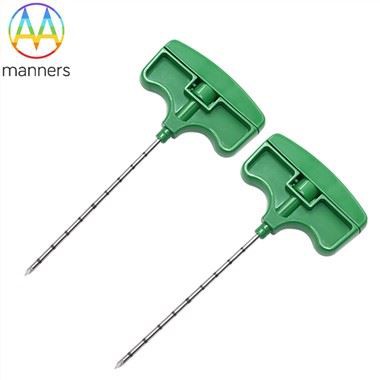
Manners laparoscope tubes, also named laparoscope sheaths, serve as the core optical carrier for laparoscopic gastrostomy tube placement. Manufactured from thin‑wall stainless steel with bright smooth inner diameter, the tube provides stable mounting space for the tip‑mounted video camera and LED lights. The ultra‑smooth inner ID minimizes friction when endoscopes slide back and forth, preventing lens scratching and image jitter during gastric wall observation and puncture positioning. The supporting holder is constructed from Delrin, a heat‑resistant polyacetal engineering thermoplastic featuring high rigidity, low friction and reliable dimensional stability. The Delrin holder firmly locks the sheath body, resisting thermal deformation caused by long‑time LED illumination and electro‑surgical heat. Maintaining coaxiality between scope optics and the tube lumen guarantees consistent optical transmission. Surgeons obtain steady, high‑definition views of abdominal cavity, gastric serosa and target puncture location, supporting safe trocar puncture, gastric wall anchoring and gastrostomy tube positioning throughout the whole intervention.
Equipment Classification
For laparoscopic gastrostomy tube placement, Manners laparoscope tubes are classified by diameter, viewing angle, working length and tube shape. In diameter selection: 4 mm and 5 mm small‑bore tubes apply to minimally invasive access for physically fragile patients, reducing abdominal wall trauma; 8 mm and 10 mm tubes match high‑resolution larger‑diameter scopes, delivering brighter imaging for complex cases with intra‑abdominal adhesion. For viewing angles: 0° straight‑view tubes suit routine anterior abdominal and superficial gastric wall inspection; 12° and 25° angled tubes help observe lateral gastric walls and surrounding visceral margins; 30° and 45° tubes resolve visual blind spots behind stomach and beneath liver, critical for patients with abdominal adhesion. Working lengths cover 280 mm, 283 mm, 298 mm, 300 mm, 302 mm, 303 mm, 312 mm, 344 mm and custom variants, fitting thin patients with thin abdominal walls as well as obese patients with thick abdominal layers. Beyond standard round profile, oval and special‑shape tubes are customizable according to 2D/3D drawings or physical samples for complex anatomy scenarios. All hardware meets ISO9001:2015 and ISO13485 quality standards.
Operational Guidelines
Standardized operation is required to maximize tube performance during laparoscopic gastrostomy tube placement. Pre‑operative selection: for routine gastrostomy in average‑build patients, choose 5 mm, 0° or 12° tubes with moderate working length; for obese patients or cases with expected intra‑abdominal adhesion, adopt 8‑10 mm, 30° angled tubes and longer customized working length. Equipment assembly: insert video‑camera scope gently along the bright smooth inner lumen; fasten the Delrin holder tightly to secure sheath position and maintain optical coaxiality, avoiding scope tilting. Intra‑operative manipulation: advance and retract the laparoscope slowly, never force rough sliding which may damage inner surface. Focus visualization on gastric body and antrum to select safe puncture zones away from major blood vessels and adjacent bowels. Periodically clean lens through the sheath channel when blood mist appears. Avoid direct electrocautery contact against stainless‑steel tube and Delrin holder to prevent thermal damage. Post‑operation maintenance: fully clean both inner bore and outer surface; inspect for scratches, dents and holder loosening before storage in standard carton or customer‑specified packaging.
Practical Clinical Experience
Real‑world clinical practice shows high‑precision Manners laparoscope tubes effectively resolve multiple visual obstacles seen with generic tubes in gastrostomy placement. Surgeons report that mirror‑smooth thin‑wall stainless‑steel inner ID eliminates lens scratching and persistent image shake. Stable imaging allows operators to accurately mark ideal gastrostomy puncture sites, lowering accidental visceral injury risk. Multi‑angle options remove blind spots, especially valuable for patients suffering from previous abdominal surgery and intra‑abdominal adhesions. The Delrin holder retains rigidity under continuous thermal load, without loosening or shifting during long procedures. Gradient working‑length specifications accommodate diverse abdominal wall thickness across critically‑ill, emaciated and obese patient groups. Custom special‑shape tubes reduce instrument clashing in crowded abdominal cavities. Clinicians observe fewer intra‑operative interruptions caused by poor vision, shortened procedural time, decreased rate of post‑operative peritonitis and gastrostomy‑site infection, bringing more predictable outcomes for enteral‑nutrition‑dependent patients.
Summary and Sublimation
High‑quality laparoscope tubes act as the fundamental visual guarantee for safe laparoscopic gastrostomy tube placement. Conventional inferior tubes cause blurred vision, thermal deformation and dimension mismatch, creating avoidable procedural risks. Manners stainless‑steel thin‑wall sheaths with bright smooth inner lumen, matched Delrin high‑stability holders and complete specification portfolio deliver steady optical channels for identifying gastric wall landmarks, selecting puncture points and completing gastrostomy fixation. Diversified specifications and drawing‑based custom services satisfy varied patient anatomy and surgical complexity. Reliable ISO‑certified hardware improves procedural safety, reduces complication probability and creates favorable conditions for successful long‑term enteral nutrition support. These sheaths represent indispensable auxiliary hardware in modern minimally‑invasive gastrostomy interventions.
Prospects and Suggestions
Minimally‑invasive gastrostomy surgery will keep expanding among aging populations and neurological‑disease patient groups, raising higher requirements for laparoscope tube performance. Hospitals should phase out low‑precision rough‑surface tubes and deploy certified thin‑wall high‑smoothness laparoscope sheaths. Manufacturers shall continuously optimize inner‑wall polishing technology, enrich special‑shape customization capability for complex abdominal anatomy and strengthen thermal‑resistance performance of Delrin holders. Establish scenario‑oriented specification‑selection guidelines dedicated to gastrostomy procedures. Promote industry‑wide adoption of ISO13485‑aligned quality controls. Further shorten custom order lead‑time for 2D/3D drawing‑based requests, supporting individualized minimally‑invasive enteral‑access surgery development.