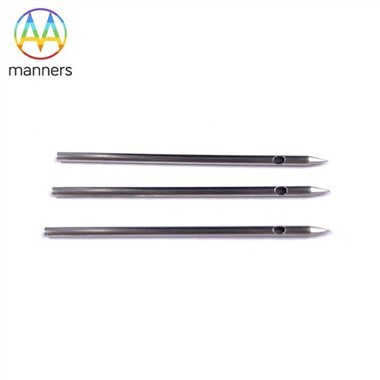
Unveiling The Journey Behind High-Quality Epidural Needles
Jun 22, 2026
In the field of medical consumables, epidural needles are hailed as "art on a needle's tip." What appears to be an ordinary metal needle actually embodies cutting-edge achievements from multiple disciplines, including materials science, precision mechanics, surface engineering, and quality management. Today, let's step into the workshop of a top-tier manufacturer and explore the entire process behind the creation of a qualified epidural needle.
Step 1: Material Control – "Genetic Screening" of Medical-Grade Stainless Steel
It all begins with the selection of raw materials. The stainless steel used for epidural needles must be austenitic stainless steel (such as SUS304, 316L), possessing three key characteristics:
- Biocompatibility: Free from impurities with high nickel release, and passes ISO 10993 tests for cytotoxicity, sensitization, and intradermal reactions.
- Corrosion resistance: Resistant to bodily fluids, disinfectants, and local anesthetics, ensuring no rusting during long-term implantation in the body.
- Mechanical balance: Rockwell hardness must be maintained between HRC 38–42. Too soft and it cannot penetrate ligaments; too hard and brittleness increases, leading to easy breakage.
Each batch of steel must undergo spectral analysis and tensile testing before being stored. Only materials whose chemical composition and mechanical properties fully meet the standards are permitted to enter the production line.
Step Two: Forming Stage – The Art of Micro-Level Cold Processing
Transforming a round rod into a hollow needle with precise curvature requires multiple cold working processes:
- Drawing: The outer diameter is gradually reduced and the inner bore formed through a series of dies, with the entire process conducted without lubrication to prevent oil residue. The reduction in diameter at each drawing stage is strictly controlled within 0.05 mm to avoid stress cracking.
- Annealing: Stress-relief annealing is performed in a vacuum furnace to eliminate internal stresses generated during cold working and restore the material's ductility.
- Bending: A CNC bending machine shapes the needle tube into a specified angle (typically 15°–30°). The precision of this step directly affects the insertion direction of the guide tube. Needles with deviations exceeding 0.5° are rejected.
- Sharpening: The needle tip is ground using diamond grinding wheels at multiple angles to produce a sharp, symmetrical bevel. Grinding parameters-such as rotational speed, feed rate, and coolant flow-are optimized hundreds of times to ensure the cutting edge has no burrs or chipping.
Step Three: Surface Treatment – The Transformation from "Rough" to "Mirror Finish"
The smoothness of the needle tube's inner wall is one of the key indicators of quality. Any minor protrusion or depression could serve as a hiding place for bacteria or scratch the catheter during insertion.
- Electrolytic polishing: The needle is immersed in an electrolyte solution, where electrochemical reactions dissolve the microscopic peaks on its surface. This process reduces the surface roughness from Ra 0.8 μm to below 0.1 μm, achieving a mirror finish.
- Ultrasonic cleaning: Multiple cleaning cycles are performed in an ultrasonic bath containing alkaline detergent to remove residual oils, debris, and electrolyte from the machining process. After cleaning, the needles must undergo particle inspection-after rinsing with pure water, the rinse liquid is collected and analyzed under a microscope to count particles ≥5 μm; no more than 100 particles per milliliter are allowed.
Step Four: Assembly and Inspection Stage – The Zero-Defect Standard for Final Output
Each hub is molded by injection, typically made of polycarbonate or ABS, and must be airtightly press-fitted with the needle. After assembly, each needle undergoes the following inspections:
- Leak test: Apply 3 atmospheres of air pressure at the needle hub and hold for 10 seconds, observing for any bubble escape.
- Flow rate test: Use a liquid with standard viscosity to measure the flow rate through the needle per unit time, ensuring it matches the nominal value.
- Sharpness test: Measure the peak force required to penetrate simulated material using a precision force gauge; deviation must not exceed ±10%.
- Visual inspection: Examine each needle under a 40x microscope for burrs or hooks on the tip, and for flash or cracks on the hub.
Step 5: Sterilization and Packaging – The Final Sterile Barrier
All qualified needles are sterilized with ethylene oxide in a cleanroom (Class 10,000 or Class 100), then packaged in double-layer sterile packaging (inner layer: Tyvek breathable film; outer layer: medical-grade dialysis paper). Each package bears a unique UDI code traceable to the production batch, operator, and raw material supplier.
Conclusion:
The cost of an epidural needle ranges from a few dollars to several dozen, with the price difference reflecting invisible investments in quality. When an anesthesiologist holds a smooth, warm, and solid Tuohy needle, they are not just holding a tool-they are grasping a lifeline built by countless engineers, quality inspectors, and sterilization technicians. This is manufacturing's most solemn promise to medicine.