Market Core Competitiveness From Curved Tips To Electropolishing
Jun 22, 2026
In the epidural needle market, the Tuohy needle commands a dominant ~69% global market share in its segment. This dominance stems from a clinical safety barrier built upon its unique design philosophy and precision manufacturing processes. Originally proposed by American anesthesiologist Dr. Edward B. Tuohy in the 1940s, this device was specifically engineered for catheter placement in continuous epidural anesthesia.
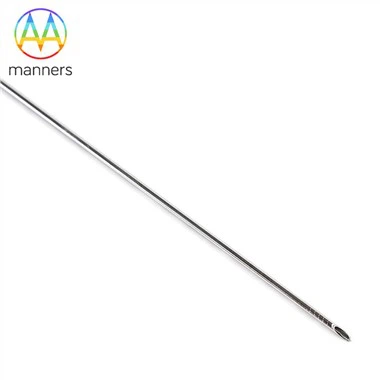
Its most distinctive feature is the blunt, curved tip (commonly referred to as the Huber pointor back-eye), with a side port (eye) located on the shaft. As the needle traverses the supraspinous, interspinous, and ligamentum flavum layers to enter the epidural space, the curved tip directs the catheter to advance along the longitudinal axis of the epidural canal. Crucially, the blunt curved tip tends to deflect off the dura mater rather than piercing it. This mechanism significantly reduces the incidence of accidental dural puncture (wet tap), thereby mitigating risks of post-dural puncture headache (PDPH) or total spinal anesthesia.
From a materials science perspective, high-quality Tuohy needles are manufactured from medical-grade 304 or 316L stainless steel tubes via deep drawing processes. Specifications range from 14G to 25G (with 16G–18G being most common) and lengths from 60mm to 90mm, extending to 100mm–120mm for obese patients. Leading manufacturers enforce machining tolerances of ≤ ±0.01 mm. The inner lumen must maintain optimal clearance with standard epidural catheters (OD 0.85–1.0 mm); thus, electropolishing and ultrasonic cleaning are employed to remove micro-burrs, ensuring smooth catheter advancement without abrasion. The shaft features laser-etched centimeter markings, while the transparent polycarbonate hub allows visualization of blood or CSF reflux. Winged hubs are standard to enhance grip stability and tactile orientation of the bevel.
While alternatives exist-such as the Crawford needle (straight tip, primarily for single-shot injections), Hustead, and Weiss needles-the Tuohy remains the gold standard in obstetrics and pain management due to its compatibility with continuous infusions and Combined Spinal-Epidural (CSE) techniques. Market competition among giants like B. Braun (Perifix), BD (E-Z Block), Smiths Medical (Portex), Teleflex (Arrow), and Asian OEM specialists (e.g., Manners Technology) has shifted focus from basic functionality to:
- Optimizing the tactile feedback of Loss-of-Resistance (LOR).
- Developing low-friction inner coatings.
- Integrating smart syringes with pressure sensing.
- Standardizing custom lengths and color-coding.
Chinese and Southeast Asian manufacturers are leveraging precision machining capabilities and cost advantages to penetrate the mid-to-high-end OEM/ODM market, compliant with FDA 510(k) and EU MDR standards. This trend is driving down average selling prices (ASP) while increasing the adoption of single-use devices, accelerating the phase-out of reusable needles to minimize cross-infection risks.
From a regulatory standpoint, Tuohy needles are classified as Class III Implant/Interventional Devices (EU MDR Class IIb/III, US 510(k) requiring predicate device comparison). Compliance mandates adherence to ISO 13485, biocompatibility testing (ISO 10993), and packaging validation (ISO 11607). With the global push for "comfortable medicine," safety-engineered Tuohy needles featuring traceability barcodes and needlestick protection shields are becoming standard in tenders across Europe and North America. For Chinese exporters, meeting these compliance requirements represents the primary pathway to enhancing product value. Ultimately, the synergy of "Design + Precision Manufacturing + Regulatory Certification" distinguishes premium brands from generic low-cost products and constitutes the core element for capturing market premiums in the saturated epidural needle sector.