Uncovering The Rigorous Production Journey Of Echogenic Tip Needles From Raw Materials To Finished Goods
Jun 10, 2026
https://www.nature.com/articles/s41598-024-72620-8
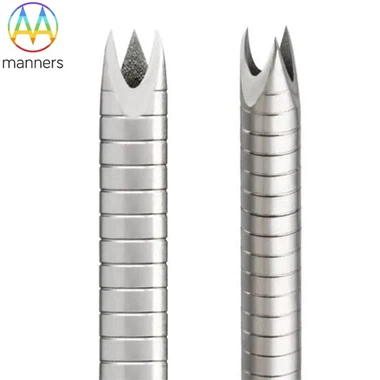
Behind a seemingly ordinary echogenic tip needle lies an intricate workflow integrating precision machining, polymer materials engineering and stringent quality control. Even minute defects can cause poor ultrasound visualization or failed puncture attempts. This article dissects the full manufacturing chain and outlines how premium-grade devices are developed.
I. Starting Point: Rigorous Raw Material Selection
Production commences with exacting substrate screening. Suppliers must deliver medical-grade stainless steel (304, 316L etc.) or Nitinol alloy complying with ASTM standards. These materials must deliver exceptional tensile strength and corrosion resistance, and pass cytotoxicity assessments to eliminate biocompatibility hazards. A certificate of composition analysis is mandatory for every batch of raw stock.
II. Core Procedures: Precision Forming and Surface Treatment
- Cutting and GrindingHigh-precision laser cutting or centerless grinders shape tubular or bar stock into cannulas with customized tapers and sharp needle tips. Tip bevel angle and cutting edge symmetry directly govern penetration resistance, with tolerances held to the micron scale.
- Surface Cleaning and ActivationPrior to coating deposition, plasma or chemical cleaning thoroughly strips lubricant residues and oxide films. This ensures robust bonding between the coating and metallic substrate, preventing postoperative coating delamination.
III. Defining Core Process: Fabrication of Polymer Echogenic Coatings
This stage exerts the decisive impact on echo performance. Manufacturers deploy dip coating, spray coating or electrostatic deposition to evenly apply microbubble-infused polymer solution onto designated shaft segments.
- Microbubble Generation and Regulation: Embedded micro air bubbles form the functional core. Their diameter (typically 10–100 microns), volumetric density and spatial uniformity are calibrated via precise gas blending and curing protocols. Insufficient bubbles yield weak echogenicity; excess bubbles compromise the coating's mechanical integrity.
- Coating Thickness and Adhesion Balance: An overly thin film delivers faint echo signals, while excessive thickness raises insertion friction. Manufacturers optimize the ideal thickness (usually several to tens of microns) via iterative trials. Bending and abrasion simulation tests validate adhesive bonding strength.
IV. Quality Inspection: Multi-Layer Verification for Zero Defects
In alignment with the ISO 13485 quality management system referenced, every production batch undergoes strict pre-shipment inspection:
- Dimensional and Visual InspectionHigh-magnification microscopes and optical measuring instruments verify needle length, outer diameter, tip geometry, and screen coating imperfections including voids, particulate contaminants and scratches.
- Physical Performance Testing
- Penetration force testing: Tissue-mimicking phantoms or animal tissue specimens quantify peak and average insertion forces to confirm compliant sharpness benchmarks.
- Echogenic performance testing: Specimens are inserted into ultrasound tissue phantoms; calibrated ultrasound scanners capture imagery. Analytical software calculates contrast ratio and signal-to-noise ratio between the needle shaft and background tissue, with results cross-referenced against certified reference samples to reject non-conforming units.
- Biocompatibility and Sterilization ValidationPost-packaging, products undergo ethylene oxide (EO) sterilization or radiation sterilization, followed by sterility assays and endotoxin quantification.
V. Traceability and Continuous Improvement
Each finished needle bears a unique batch identifier, enabling full traceability back to raw material lots, production equipment, operating staff and quality inspection records. This full-lifecycle traceability framework allows rapid identification and remediation of any quality nonconformities.
Conclusion
Manufacturing echogenic tip needles is far from basic assembly; it demands ultra-precise manipulation at the microscale. Meticulous tuning of metallic ductility, polymer acoustic properties, and every production stage culminates in a reliable, sharply visualized precision instrument for clinical practitioners.