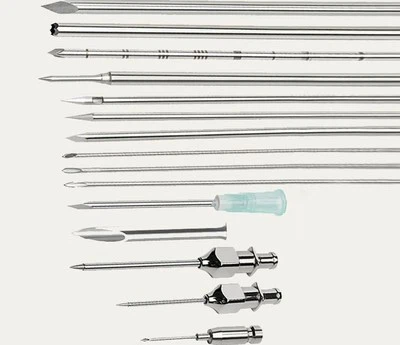
Top 10 Applications Of Intraosseous Access Needles in Emergency Medicine And Manufacturer Strategies For 2026
Apr 16, 2026
Top 10 Applications of Intraosseous Access Needles in Emergency Medicine and Manufacturer Strategies for 2026
In 2026, the application of intraosseous (IO) access needles in emergency medicine has evolved from an alternative option to a standard operating procedure, becoming an indispensable technology in critical care resuscitation. Leading global manufacturers are continuously optimizing product design and functionality to meet the specific demands of emergency medicine, promoting the standardization and widespread adoption of IO technology in clinical practice.
Core Status in Cardiac Arrest Resuscitation
In cardiac arrest resuscitation, establishing rapid and reliable vascular access is fundamental for drug delivery. Traditional peripheral venous access is difficult to establish under low-perfusion states, with a success rate of only 40–60% and significant time consumption. In contrast, IO access can be established in under 30 seconds with a success rate exceeding 90%, providing a rapid conduit for life-saving drugs like epinephrine.
The American Heart Association (AHA) 2025 Guidelines further reinforce the role of IO access in cardiac arrest, recommending immediate IO placement if the first attempt at venous access fails or is anticipated to be difficult. Similarly, the European Resuscitation Council (ERC) emphasizes the priority of IO access in pre-hospital cardiac arrest scenarios.
Teleflex's Arrow EZ-IO system performs exceptionally in cardiac arrest situations. Its powered driver operates reliably under extreme conditions, and its battery life meets prolonged resuscitation needs. The accompanying stabilizer ensures the needle remains immobilized during CPR, maintaining patency.
Lifeline Role in Trauma Resuscitation
Patients with severe trauma often present with hemorrhagic shock, causing peripheral veins to collapse and making venous access extremely challenging. IO access utilizes the rich venous network within the bone marrow to rapidly infuse crystalloids, colloids, and blood products, providing a conduit for damage control resuscitation.
Modern trauma care emphasizes the "Golden Hour" principle, and the rapid establishment of IO access provides the technical assurance to uphold this standard. Studies show that in pre-hospital trauma resuscitation, establishing IO access is 80% faster than central venous access and 60% faster than peripheral venous access, with infusion rates reaching 2–3 times that of traditional peripheral veins.
Pyng Medical's FAST system is specifically engineered for trauma resuscitation. Its sternal IO access provides infusion rates comparable to central venous access, suitable for rapid massive fluid resuscitation. The single-use design prevents cross-contamination and complies with infection control requirements in trauma care.
Special Value in Pediatric Emergencies
Establishing vascular access in pediatric emergencies is a common technical challenge. Children have small, fragile veins and abundant subcutaneous tissue, further reducing the success rate of venipuncture in low-perfusion states. IO access offers a reliable alternative for critically ill pediatric patients, proving invaluable in scenarios such as:
Neonatal Resuscitation: When umbilical venous access is unavailable or fails, proximal tibial IO access becomes the preferred alternative.
Status Epilepticus: Rapid administration of anticonvulsants via IO ensures timely delivery to the central circulation.
Severe Dehydration: IO access provides a route for rapid rehydration when veins are collapsed.
Congenital Heart Disease: Avoids the stress response associated with repeated peripheral punctures in infants with compromised cardiac function.
Pediatric-specific IO needles consider the skeletal characteristics of children, offering graded diameters (15G to 18G) and lengths (15mm to 45mm) to suit different ages. Safety depth-control mechanisms prevent damage to growth plates, avoiding long-term skeletal development issues.
Solutions for Special Clinical Scenarios
IO access needles provide unique solutions in various special clinical scenarios:
Severe Burns: With extensive surface damage limiting puncture sites, IO access in unburned areas provides a route for fluid resuscitation and antibiotics.
Obesity: Poor anatomical landmarks and deep subcutaneous tissue make ultrasound-guided IO puncture ideal for improving success rates.
Osteoporosis in the Elderly: Manual puncture risks cortical rupture; powered IO systems provide controlled insertion force.
Chemotherapy Patients: When peripheral veins are damaged, IO access offers a temporary route for emergency drug administration.
PerSys Medical's multi-functional IO system is optimized for special patient populations. Features like adjustable puncture depth and angle adapt to different anatomical conditions, improving success rates.
Integration into Pre-Hospital Emergency Systems
Modern pre-hospital emergency systems have adopted IO devices as standard equipment, integrating them into ambulances, helicopters, and wilderness first-aid kits. The rapid deployment capability of IO access is particularly suited for the pre-hospital environment, maintaining patency during transport and laying the groundwork for in-hospital continuation of care.
Integrated IO kits combine puncture devices, infusion sets, and pre-filled drug modules to minimize preparation time. Smart IO systems transmit operational data and patient information to receiving hospitals in real-time via wireless connections, ensuring seamless pre-hospital to in-hospital handoffs.
Smiths Medical's pre-hospital IO solution is optimized for mobile environments. The equipment is shockproof and drop-resistant, ensuring stable operation during ambulance rides and helicopter transfers. The system's rapid infusion set can deliver 1 liter of fluid within 5 minutes, meeting trauma resuscitation demands.
Standard Configuration in the Emergency Department (ED)
In the ED, IO access devices have become standard configuration, applied in various critical scenarios:
Septic Shock: Provides a reliable option for rapid antibiotic delivery and fluid resuscitation when venous access is difficult.
Diabetic Ketoacidosis: Facilitates insulin therapy and fluid replacement in severely dehydrated patients.
Poisoning/Toxicity: Ensures timely onset of action for antidotes.
End-of-Life Care: Avoids repeated peripheral punctures, aligning with principles of comfort care.
Management of IO devices in the ED emphasizes rapid accessibility and standardized use. Dedicated IO carts are equipped with various needle sizes, adjunct devices, and training materials. Standard Operating Procedures (SOPs) and Quality Management Systems ensure the safety and efficacy of IO use.
Training and Quality Control Systems
The proliferation of IO technology relies on systematic training and quality control. Major global manufacturers provide comprehensive training support:
Simulation Systems: Use realistic bone models to provide haptic feedback and real-time performance assessment.
Virtual Reality Platforms: Simulate diverse clinical scenarios to enhance decision-making and operational skills.
Competency Certification: Ensures healthcare workers meet operational standards.
Quality Improvement Projects: Continuously optimize IO usage effectiveness through data collection and analysis.
Cook Medical's IO training program covers a complete curriculum from basic theory to advanced operations. Collaborating with medical education institutions, it offers continuing education credits. Training materials are multilingual to meet the needs of diverse global regions.
Future Directions for Application Expansion
The application of IO access needles in emergency medicine will continue to expand:
Multiple IO Accesses: Establishing 2–3 simultaneous IO lines in severely traumatized patients to meet massive fluid resuscitation needs.
IO + Ultrasound Monitoring: Assessing volume status and resuscitation efficacy via intramedullary pressure.
Specialized Drug Infusion: Using IO for vasoactive drugs, antiarrhythmics, etc.
IO Sampling Techniques: Utilizing bone marrow blood for laboratory tests as an alternative to venous blood sampling.
Wilderness and Disaster Medicine: Providing life support in resource-limited environments.
With accumulating clinical evidence and technological advancements, the application of intraosseous access needles in emergency medicine will become broader and deeper. Through continuous innovation and clinical collaboration, manufacturers are driving the evolution of IO technology, providing emergency healthcare professionals with more effective tools to ultimately improve the prognosis of critically ill patients.