Titanium‑Alloy Material Advantages Of Multi‑unit Implant Analog Ø 4.8mm For Demanding Dental‑Laboratory Environments
Nov 14, 2026
Meta Description: Deep‑dive into titanium‑alloy material benefits for Multi‑unit Implant Analog Ø 4.8mm, covering rigidity, corrosion‑resistance and thermal‑stability in dental‑lab working conditions.
When dental laboratories source multi‑unit analog components, many purchasing teams fix attention purely on unit price and outer dimension, overlooking material‑grade performance differences between stainless‑steel and titanium‑alloy analog alternatives. The Multi‑unit Implant Analog Ø4.8 mm (OSS) is built upon medical‑grade titanium‑alloy base material combined with five‑axis‑CNC simultaneous‑machining technology. Material characteristics directly influence analog service life, fit‑stability and model‑replication reliability inside challenging daily dental‑lab environments filled with gypsum, chemical disinfectants and repeated mechanical assembly operations. This article breaks down titanium‑alloy material‑related strengths, compares performance versus stainless‑steel analog options, and explains material‑linked practical lab outcomes.
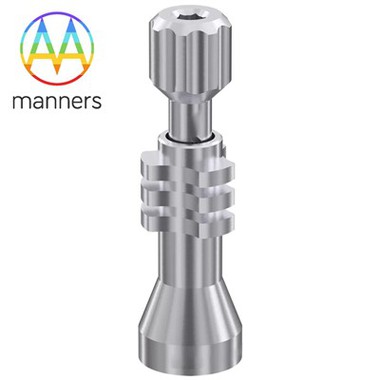
Three core material‑properties make titanium‑alloy ideal for Multi‑unit Implant Analog Ø4.8 mm. First is high specific strength and structural rigidity. Multi‑unit analogs feature delicate thin‑walled conical‑taper sections and fine anti‑rotation indexing flats. Under screw‑torque load when technicians tighten impression‑coping or scan‑body screws, softer‑grade metallic analogs risk subtle plastic deformation. Even micro‑deformation of analog indexing or taper geometry distorts multi‑unit‑abutment reference position on master‑casts and introduces error to subsequent prosthetic‑design work. Titanium‑alloy maintains rigid structural performance under typical lab‑application torque levels, preserving original conical‑taper and indexing geometry throughout model‑building cycles.
Second key advantage: outstanding chemical corrosion‑resistance. Dental‑lab workspaces expose analog components to gypsum slurry, plaster‑separating agents, acidic disinfectant solutions, ultrasonic‑cleaning baths and various surface‑treatment chemicals. Stainless‑steel multi‑unit analogs can gradually develop surface pitting and rust‑spots after repeated exposure to acidic lab‑chemicals. Tiny corrosion pits forming on critical conical‑taper sealing surfaces obstruct full seating of copings and scan‑bodies, creating invisible gaps that compromise scan‑data reliability and prosthetic fit. Titanium‑alloy instantly forms a thin, inert passive‑oxide surface‑layer that resists most lab‑chemical attack. Analog surface remains dimensionally stable and smooth even after repeated cleaning‑cycles, which brings extra value for labs occasionally re‑using analogs for non‑definitive training‑models.
Third benefit: favorable thermal‑expansion‑matching performance. Multi‑unit‑abutments, titanium‑frameworks and titanium‑bases for implant‑prostheses are universally titanium‑based components. Titanium‑alloy Multi‑unit Implant Analog Ø4.8 mm exhibits thermal‑expansion coefficients close to those clinical titanium prosthetic parts. During model‑curing, scanning‑process or long‑term storage, temperature‑variation triggers analogous expansion‑shrinkage behavior between analog and target prosthetic‑materials, minimizing thermal‑mismatch‑derived dimensional deviation. Stainless‑steel possesses noticeably higher thermal‑expansion rate, which introduces small‑but‑cumulative dimensional shift when master‑cast temperature fluctuates inside lab environments.
Our full OSS analog portfolio covering heights 7 mm,9 mm,11 mm,13 mm and15 mm adopts uniform titanium‑alloy‑grade and five‑axis‑CNC‑production workflow. The identical‑material specification applies across Ø4.2 mm SI narrow‑platform analog and Ø5.0 mm RI regular‑platform analog within our product series. Unified material‑standard simplifies batch‑quality‑control for multi‑site‑lab‑groups and dental‑product distributors.
Real‑world practical limitations should be acknowledged. Titanium‑alloy is more difficult to machine than stainless‑steel, demanding five‑axis‑CNC‑equipment and high‑performance carbide cutting‑tools, which contributes to higher manufacturing‑cost. Titanium‑alloy also demonstrates moderate‑lower surface electrical conductivity; this does not interfere with conventional gypsum‑cast workflows, yet technicians need to fine‑tune optical‑scanner parameters to reduce unwanted surface‑reflection during digital‑model‑scanning procedures.
For global‑market regulatory compliance, titanium‑alloy represents widely‑accepted standard material for dental‑implant accessory‑components. When exporting under EU‑MDR, FDA or other regional‑medical‑device‑regulations, titanium‑alloy analog material‑certificates simplify technical‑file‑compilation compared to generic‑low‑grade‑alloy substitutes. OEM customers can request batch‑specific material‑test‑reports for customs‑audit and internal‑quality‑documentation purposes.
Common lab‑material‑related mistakes include purchasing low‑cost non‑titanium analogs for definitive full‑arch‑cases, applying highly‑acidic cleaning‑solutions on analog‑components, and storing analogs in humid un‑sealed containers without complete drying after cleaning. Even titanium‑alloy analogs may accumulate surface‑contamination if cleaning‑and‑storage protocols are neglected.
FAQ Q: Are titanium‑alloy multi‑unit analogs significantly heavier than stainless‑steel counterparts? A: Titanium features lower density; weight‑difference is negligible for these miniature analog‑parts and creates no practical impact on lab‑model‑building. Q: Does Multi‑unit Implant Analog Ø 4.8mm require special protective surface‑coating? A: Standard‑product version is un‑coated titanium‑alloy; optional anodization color‑marking can be added as custom‑order feature for visual size‑and‑type differentiation. Q: Is autoclave sterilization required for OSS analogs? A: They are lab‑only components with no intra‑oral application; sterilization is not required, though titanium‑alloy can physically sustain autoclave temperatures if internal‑lab protocols demand it.
Conclusion Material grade is a core quality‑determining factor for Multi‑unit Implant Analog Ø4.8 mm (OSS). Titanium‑alloy delivers essential rigidity, corrosion‑resistance and thermally‑matched‑performance for harsh dental‑lab operating‑conditions. Combined with five‑axis‑CNC precision‑machining, titanium‑alloy material enables consistent conical‑connection fit and extended service‑life. During supplier evaluation, dental labs and distributors should prioritize material‑certificate verification instead of judging products solely by unit purchase‑price.