The Technological Evolution And Core Principles Of Radiofrequency Microneedling Therapy
Jun 21, 2026
Radiofrequency microneedling is not a newly emerged technology out of nowhere, but rather the result of a deep integration between radiofrequency ablation (RFA) and minimally invasive principles. Its core mechanism involves using high-frequency current-typically ranging from 300 kHz to 500 kHz-to generate thermal energy that precisely induces "thermal coagulation" and destruction of targeted tissue, while maximizing protection of surrounding healthy structures.
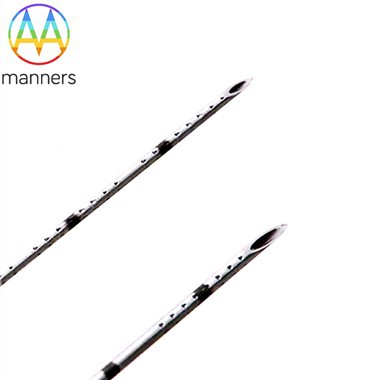
Traditional radiofrequency ablation is commonly used in tumor treatment, featuring electrodes with long exposed tips that generate heat diffusing in a spherical pattern, making it difficult to control the boundaries. The revolutionary breakthrough of radiofrequency microneedle technology lies in its "insulated shaft plus exposed tip" design. As your provided materials indicate, the needle shaft is made of medical-grade stainless steel, ensuring both strength and biocompatibility. Crucially, the length of the insulated tip-precisely controlled (typically ranging from 0.5 mm to 3 mm)-allows physicians to deliver thermal energy with pinpoint accuracy, much like a sniper, confining the heat precisely within the targeted depth and tissue volume.
This design offers two key advantages:
- Depth Control: By adjusting the needle penetration depth, treatment can be precisely targeted to different skin layers-epidermis, superficial dermis, deep dermis, or even subcutaneous fat. For example, in aesthetic dermatology, fine lines are treated at a shallower depth (0.5–1.5 mm), while acne scars or enlarged pores require deeper penetration (1.5–3.5 mm) to stimulate collagen remodeling in the dermis.
- Energy Focusing: The insulated needle shaft prevents heat from conducting upward along the insertion path, avoiding epidermal burns. All energy is concentrated at the exposed tip of the needle, creating a well-defined "thermal coagulation zone." This precise thermal injury activates the body's natural repair mechanisms, triggers an inflammatory response, and promotes fibroblast proliferation, ultimately leading to the regeneration of collagen, elastin, and hyaluronic acid.
From a technological standpoint, early monopolar radiofrequency microneedles suffered from energy dispersion and higher pain levels. Modern devices have evolved into bipolar or multipolar radiofrequency microneedles, in which current forms a circuit between two or more needle tips, resulting in shorter, more focused energy pathways and more consistent penetration depth. Additionally, integrated with real-time temperature monitoring and impedance feedback systems, these devices can automatically adjust energy output to ensure treatment safety and uniformity.
In essence, radiofrequency microneedling therapy has evolved from a crude ablation approach that merely "burns away" diseased tissue to a precise modulation method that "induces regeneration." It is no longer simply about destruction, but rather a finely tuned biological signal trigger that guides the body's self-repair and reconstruction. The maturation of this technology marks a significant step forward for interventional treatment-from "macroscopic surgery" to "microscopic engineering."