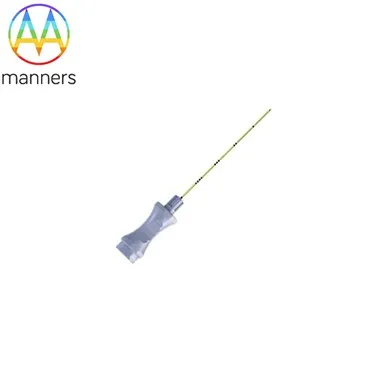
The Steel Body Of Subcutaneous Injection Needles
Jun 03, 2026
Abstract
https://litfl.com/intraosseous-access/
This paper conducts an in-depth analysis of the core constituent materials and precision manufacturing processes of modern hypodermic needles, elaborating how material properties directly govern needle safety, therapeutic efficacy and patient comfort, and highlighting the pivotal role of materials science in medical device fabrication.
Main Text
Serving as a microscale bridge linking pharmaceutical formulations to the human body and bridging external environments with internal tissues, hypodermic needles embody sophisticated materials science and advanced manufacturing techniques beneath their seemingly simplistic construction. Fundamental needle performance metrics including tensile strength, cutting sharpness, flexibility and biocompatibility are intrinsically dictated by base materials and associated fabrication workflows.
Austenitic stainless steel, specifically medical-grade 304 and 316L grades, constitutes the dominant raw material for contemporary hypodermic needles, a material selection validated through decades of clinical trials. The alloy must satisfy an array of stringent specifications. First, exceptional mechanical strength and hardness prevent buckling or fracture of ultra-fine cannulas (down to 34 gauge) during percutaneous penetration, thereby eliminating associated clinical adverse events. Second, outstanding corrosion resistance safeguards against degradation from disinfectants, diverse pharmaceutical reagents and physiological fluids, avoiding toxic metal ion leaching and subsequent hypersensitive reactions. With molybdenum incorporated into its chemical composition, 316L stainless steel delivers superior pitting corrosion resistance for premium-grade needle applications. Third, favorable formability enables cold drawing into micron-scale seamless thin-walled tubing and precision grinding of intricate needle point geometries.
Needle tip fabrication represents the core proprietary technology. Modern hypodermic needles predominantly adopt non-cutting abrasive grinding such as orbital bonded abrasive grinding. Under microscopic monitoring, multiple sequential grinding procedures form three precisely angled facets at the distal end of stainless steel cannulas to produce sharp beveled tips. Bevel angle, geometric symmetry and surface smoothness are critical performance determinants. A shallow insertion angle (e.g., 12°) paired with the triple-facet configuration drastically cuts penetration resistance, enabling nearly pain-free injection-an invaluable advantage for diabetic patients and other populations requiring repeated long-term administration. Electropolishing of the inner bore removes microscale burrs, yielding an ultra-smooth lumen that minimizes residual drug retention and reduces rubber particle shedding when piercing vial stoppers.
Continuous material innovation caters to specialized application scenarios. Nickel-chromium superalloys such as Inconel are deployed for needles exposed to highly corrosive contrast media and potent specialty pharmaceuticals demanding exceptional chemical inertness. Premium insulin pen needles and micro-lancets often feature ultra-thin-wall steel tubing supplemented with polymeric coatings including polytetrafluoroethylene and medical-grade silicone. Functioning as solid lubricants, these coatings slash penetration friction by 30% to 50% and substantially improve patient tolerability.
Material selection constantly requires trade-offs among production cost, environmental sustainability and functional performance. The single-use design of disposable needles drives massive raw material consumption. Accordingly, developing eco-friendly, biodegradable or cost-effective composite alternatives without compromising clinical safety stands as a key industry development priority. Fully degradable polylactic acid-based polymeric needles are currently under laboratory development to mitigate hazards from sharps waste disposal and excessive resource depletion.
Conclusion
Hypodermic needles are far more than rudimentary metal tubes. Every production stage-from specialty steel smelting and micron-precision tube drawing to nanometer-tolerance tip grinding and surface polishing-integrates cross-disciplinary expertise spanning materials science, mechanical engineering and clinical medicine. The evolutionary trajectory of hypodermic needles epitomizes the ongoing pursuit of safer, more comfortable and higher-precision micro-manufacturing in the medical industry.