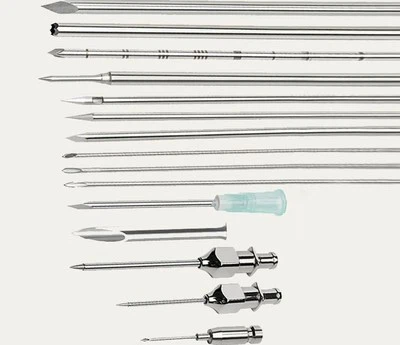
The Sixth Sense Of Robots: How The V3 Needle Becomes The Standard Interface Of Automated Production Lines
Apr 12, 2026
The Sixth Sense of Robots: How the V3 Needle Becomes the "Standard Interface" of Automated Production Lines
Introduction: The "Handshake" Between Machine and Tool
Amidst the wave of Industry 4.0, robotic arms are becoming increasingly intelligent, and vision systems more acute. Yet, a "physical gap" persists between these machines and traditional tools. If tool interfaces are custom and non-standard, any advanced algorithm or sensing capability remains trapped in the last centimeter. The V3 Infusion Needle is more than just a consumable; it functions as the standard physical layer protocol connecting precision robots to frontend execution actions. It defines the final translation rule from control commands to precise quantitative output, acting as the automated Infusion Robot's "standard hand."
I. Historical Tracing: From Manual Liquid Injection to the Interface Evolution of Unmanned Factories
A decade ago, micro-dosing in the food, flavor, and precision chemical industries relied heavily on operators' handheld pipettes and experience. This model suffered from uncertainties such as ~±5% error rates, batch-to-batch variations, and operator fatigue. With the proliferation of collaborative robots (Cobots), flexible automation became feasible, but a core contradiction immediately surfaced: agile robotic arms were "tied hand and foot" by the frequent, inefficient changing of frontend tools.
The market urgently demanded a standardized consumable interface that was "plug-and-play" and universally compatible, akin to a USB port. The V3 needle's design featuring a standard fully-threaded hexagonal base is the engineering response to this demand. It simplifies what was once a complex operation requiring wrenches and "feel" into a single, precise "grasp-and-screw" motion for the robot's end-effector. This compresses changeover time from minutes to seconds, truly unleashing the utilization rate (OEE) of the automation cell.
II. Principle Analysis: Mechanical Logic and Robustness Engineering of Modular Design
The design philosophy of the V3 interface is deeply rooted in reliable mechanical principles and a profound understanding of automation scenarios.
Fully Threaded Hexagonal Base: The Precise Conversion of Force and Torque: The hexagonal shape provides an optimal wrenching surface, but the贯穿 (through-going) thread design is the essence. When the robot screws the needle into the base, the "rotational" motion is linearly converted into a controllable axial clamping force. Compared to flat-head designs relying on end-face friction, the threaded connection provides predictable and uniform preload, ensuring complete conformity of the sealing surface. Crucially, it reliably resists the reversing torque caused by high-frequency start-stop motions and vibrations, fundamentally eliminating the risk of loosening during long-term operation-this is the lifeline of stable automated production.
Integrated O-Ring: The Silent Intelligent Damper: The O-ring at the top of the needle seat serves a purpose far beyond static sealing. In dynamic automation environments, movements of the robotic arm and the starting/stopping of pumps induce high-frequency micro-vibrations. The elastomeric nature of the O-ring acts as a mechanical damper, effectively absorbing and isolating these micro-vibrations to prevent them from transmitting to the delicate needle tip and affecting fluidic stability. Simultaneously, the slight radial tension generated within the thread pair creates a self-locking effect, further enhancing the overall rigidity of the connection. This tiny component is key to dynamic sealing and vibration control.
III. Standardization: The Power of ASME B1.21M and Ecosystems
The true power of the V3 needle stems from its strict adherence to the ASME B1.21M Unified Miniature Thread Standard. This is not merely a dimensional specification but a foundational protocol for an ecosystem. It implies:
Equipment Compatibility: Whether it is precision filling equipment in Europe, food seasoning robots in North America, or electronic dispensing systems in Asia, as long as the interface follows this standard, seamless compatibility with the V3 needle is ensured.
Consumable Interchangeability: Users can procure needles from multiple qualified suppliers, avoiding lock-in by a single vendor and fostering market competition and cost optimization.
Simplified Integration: Equipment manufacturers no longer need to design proprietary, complex quick-change couplers for each machine, drastically reducing mechanical design complexity and manufacturing costs.
This standardization breaks down traditional barriers between equipment manufacturers, consumable suppliers, and end-users, constructing an open and collaborative innovation ecosystem centered around the "interface standard."
IV. Application Scenarios: Capillaries and Data Nodes of Smart Manufacturing
In specific applications, the V3 needle, as a standard interface, catalyzes unprecedented production flexibility.
Mass Customization Production: On flexible production lines for high-end cigarettes, creative candies, or customized fragrances, the line control system can instruct robots to automatically retrieve V3 needles of corresponding models (e.g., different flow coefficients, inner coatings) from a material tower based on the current order ("Mango Flavor," "Menthol Burst"). This enables "thousands of products with unique faces" on the same line without manual intervention, meeting the demands of the personalized consumption era.
High-Cadence, High-Reliability Scenarios: In the beverage or daily chemical industries, where filling occurs hundreds of times per minute, actuators start and stop several times per second. The high-strength design of the V3 needle body (Hardness HRC 22-25) ensures its mechanical lifespan is synchronized with the preventive maintenance cycle of the robot itself. Meanwhile, its standard interface makes preventive replacement a fast, precisely executable planned task, minimizing unscheduled downtime.
Physical Anchor Point for Data Traceability: Within the IIoT (Industrial Internet of Things) architecture, every V3 needle can carry a unique identification code. When installed by the robot, this ID is automatically bound to information such as production batch, recipe parameters, and robot serial number. This means that for every drop of flavor or dab of glue, one can achieve full digital traceability regarding which needle, at what time, and via which device it was injected, anchoring quality control to the most minute physical unit.
Conclusion
The V3 needle is a seemingly tiny yet crucial "standard note" in the grand symphony of industrial automation. It makes no sound itself, yet it defines how all instruments connect. It reveals a profound industrial truth: the highest level of intelligence relies on the standardization of the most fundamental interfaces. The existence of the V3 standard interface ensures that robots are no longer merely repetitive robotic arms but "artisans" capable of autonomously changing their "fingers" to adapt to diverse tasks. It is these silent yet robust physical standards that constitute the solid foundation for realizing mass customization and flexible smart manufacturing, allowing machine intelligence to flow smoothly to the very capillaries of production.