The Significance Of The Needle Tip: The Puncture Game At The Sub-Millimeter Scale
Apr 11, 2026
The Significance of the Needle Tip: The "Puncture Game" at the Sub-Millimeter Scale
In the microscopic world of interventional bronchoscopic surgery, the tip of an EBUS biopsy needle is more than just a sharp piece of metal; it is a precisely calibrated mechanical interface operating at the sub-millimeter scale. Its "significance" lies in its ability to switch mechanical states-from "smooth penetration" to "efficient capture"-over an extremely short distance, all while resisting the powerful retraction forces of biological tissues.
I. Micromechanics of Needle Tip Geometry and Tissue Injury
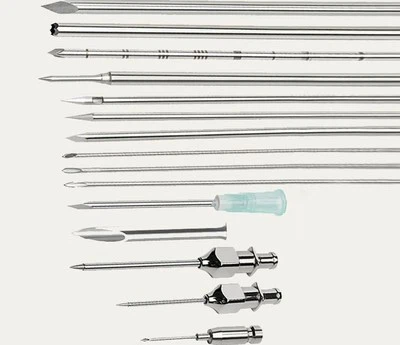
Puncturing is essentially a high-strain-rate mechanical interaction between the needle body and biological soft tissue. The Back-cut Point design adopted by EBUS needles carries significance far beyond mere "sharpness."
Optimization of Puncture Mechanics: Unlike traditional bevel tips that generate significant radial expansion forces upon tissue entry-risking airway wall laceration-the backward-facing cutting surface decomposes the impact force into lateral cutting force and axial propulsion. The significance of this design is the remarkable reduction of the initial puncture force (Target Puncture Force), minimizing radial dilation injury to surrounding mucosa and muscular layers, thereby drastically lowering the risk of postoperative pneumothorax or delayed hemorrhage.
The "Flypaper Effect" of Sample Acquisition: Once the needle tip penetrates the target lymph node, the rearward-extending cutting edge forms a structure analogous to a one-way valve. Under sustained negative aspiration pressure, tissue fragments are more easily "caught" and drawn into the lumen while being prevented from escaping. This explains microscopically why EBUS needles can obtain sufficient, intact histological samples through a minimal incision, meeting the diagnostic requirements of pathology departments.
II. The "Golden Balance Point" of Material Hardness
The article mentions that the hardness of stainless steel and Nitinol alloys is controlled within the range of 200–250 HV. This figure is no accident but an optimal solution in micromechanics, reflecting the dialectical unity of material strength and toughness.
Low Hardness (<200 HV): When facing dense bronchial cartilage rings or calcified lymph nodes, the needle tip edge will undergo microscopic rollover or plastic deformation. This not only causes an exponential surge in puncture force but may also lead to lumen obstruction and biopsy failure.
High Hardness (>250 HV): While the material is more wear-resistant, its brittleness increases significantly. When navigating the curved sheaths of the bronchial tree, the tip is highly susceptible to chipping or fracture upon lateral stress, risking severe iatrogenic embolism from metal debris.
Where Significance Lies: The 200–250 HV interval ensures the needle tip possesses sufficient "cutting capacity" to penetrate tough tissues while retaining necessary "toughness reserves" to withstand bending and torsion in complex anatomical paths, achieving a harmony of "rigidity and flexibility."
III. Fluid Dynamic Significance of Surface Finish
Following electropolishing, the needle tip surface roughness is reduced to the nanometer scale. This carries major implications for fluid mechanics and tribology:
Reducing "Wall Slip" and Eddies: Ultra-smooth inner lumen surfaces eliminate microscopic protrusions, ensuring blood and tissue debris are expelled smoothly with airflow, preventing needle clogging.
Minimizing Tissue Drag: The smooth outer surface reduces frictional resistance during withdrawal, preventing acquired samples from being "scraped" back into the body and ensuring the integrity of specimens sent for pathological examination.
IV. Conclusion
From a micromechanical perspective, the "significance" of the EBUS needle tip is a collection of precise physical parameters. Every successful puncture is proof of the perfect matching of material hardness, geometric angles, and tissue stress.