The Significance Of The Needle Tip: Micro-Sculpture Under 5-Axis Mill-Turn Machining
Apr 11, 2026
The Significance of the Needle Tip: "Micro-Sculpture" Under 5-Axis Mill-Turn Machining
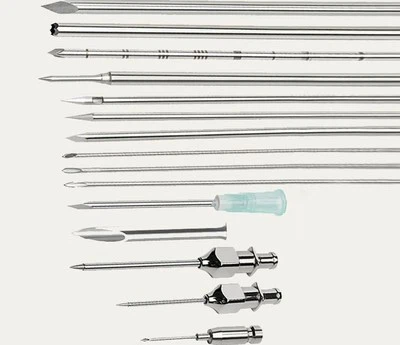
In the grand landscape of precision manufacturing, the creation of the VABB (Vacuum-Assisted Breast Biopsy) needle tip is akin to a "limit surgical operation" performed in the microscopic world of metal. This is not simple cutting in the traditional sense, but a masterpiece that fuses high-end CNC technology, fluid mechanics, and materials science. Every needle tip produced is a perfect dance of precision and performance, orchestrated by the CNC system through multi-axis linkage and coordinated precision tool management.
I. 5-Axis Linkage: Decoding the Spatial Geometry
The reason the VABB needle tip is regarded as one of the most difficult components to machine lies in its complex spatial geometric reconstruction. The approximately 30-minute cycle time required to process a single tip represents the extreme refinement of micro-surfaces achieved through 5-axis linkage technology.
Needle tips typically feature asymmetric hyperbolic or multi-angled structures, requiring tools to perform multi-degree-of-freedom attitude adjustments within an extremely confined space. Operators utilize miniature flat-end mills with a diameter of only ∅0.4531 inches to perform high-precision interpolation machining perpendicular to the main cutting path. The profound significance of this process lies in reshaping the atomic arrangement trajectory of the metal, ultimately presenting a streamlined appearance that conforms to aerodynamics and puncture mechanics.
Even more stringent are the positioning accuracy requirements of ±0.005mm. This micron-level control ensures that the three critical surfaces of the needle tip converge to form a continuous, step-free "razor-sharp edge." Under a microscope, any minor positioning error is amplified into a fatal microscopic notch. In medical applications, such flaws prevent the smooth cutting of breast tissue, instead causing tissue compression and tearing, severely compromising the integrity of the biopsy sample.
II. Collaborative Design: The Closed Loop from Cutting to Fluid Delivery
The functionality of the needle tip extends far beyond mere "sharpness." Its structural design embodies a perfect coupling of mechanical processing and fluid application.
First is the precision slotting of the sample notch. Using laser ablation or precision turning tools, specific angled grooves are cut into the side of the needle tube. This seemingly simple structure acts as a "temporary holding chamber" for sample capture. At the instant the cutting blade completes the severing action, the negative pressure system activates, immediately capturing tissue debris and channeling it into the vacuum pathway, eliminating the risk of sample residue or loss.
Second is the fluidic significance of internal tapers and chamfers. The needle tip undergoes precise internal hole chamfering, completely eliminating right-angle transitions. From a fluid mechanics perspective, this creates a "streamlined inlet," drastically reducing flow resistance for tissue cells at corners. This design effectively prevents cell accumulation and clogging on the inner walls, ensuring the key to continuous and efficient sampling.
III. Exquisite Balance of Materials Science and Structural Mechanics
Needle tip manufacturing is not merely about shaping morphology; it is about pushing the performance limits of the material itself.
Control of the microstructure is a core aspect. During machining, cutting heat must be precisely controlled within a critical range to prevent excessive grain growth of austenite. Excessive temperatures can form a "white etching layer" on the needle surface-a microstructure characterized by high hardness but significant brittleness. During puncture, this brittle region is prone to microscopic cracking, potentially leading to brittle fracture of the needle tip at stress concentration points.
Residual stress management is equally crucial. During finish grinding operations, the feed rate of the grinding wheel and the flow rate of the grinding fluid must be adjusted in real-time based on the metal's elastic modulus. Improper grinding parameters can induce a tensile stress layer on the needle surface; this internal stress releases gradually during thermal cycles of repeated sterilization and use, causing micron-level bending deformation and directly affecting the straightness of the puncture trajectory.
IV. The Micro-World of Surface Integrity
At the nanoscale, the topological structure of the needle tip surface defines the boundaries of its clinical performance.
Surface roughness is controlled to Ra 0.1μm levels, equivalent to 1/800th of a human hair's diameter. Such a smooth surface is not merely aesthetic; its deep value lies in minimizing tissue damage. During puncture, a rough surface generates greater friction with tissue fibers, increasing patient pain and causing more cellular extrusion and mechanical damage, which affects the accuracy of pathological diagnosis.
Edge preparation is another technological stronghold. The needle tip edge is not a simple point but features a specially designed micron-scale arc transition. This radius is typically controlled between 5–10μm, ensuring puncture sharpness while preventing edge rolling when encountering calcified tissue. Under an electron microscope, an ideal edge presents a perfectly continuous curve without any microscopic notches or burrs.
V. Laser Marking: Imposing Eternal Identity on Metal
At the final stage of manufacturing, laser marking technology bestows an indelible "ID card" upon the needle tip. Using high-energy laser beams to induce localized oxidation and color change on the metal surface, the resulting marks possess extreme wear and corrosion resistance. Laser parameters require precise control-insufficient energy results in unclear markings, while excessive energy can expand the heat-affected zone, potentially altering the local metallographic structure.
Advanced laser systems can etch miniature QR codes containing batch numbers, production dates, and specifications within a region less than 1mm in diameter. Even after hundreds of high-temperature, high-pressure sterilization cycles, these micron-deep identifiers remain legible, ensuring full lifecycle traceability and meeting the strict requirements of FDA and CE certifications.
VI. Mapping Performance from Manufacturing to Clinic
A quantifiable relationship exists between manufacturing precision and clinical performance.
Puncture force test data shows that when the needle tip angle deviation exceeds 0.5 degrees, puncture resistance increases by approximately 18%. This not only affects the surgeon's tactile feedback but also directly relates to the degree of tissue injury. Studies on sample integrity indicate that biopsy samples obtained using ideally machined 5-axis needle tips retain over 30% more intact acinar structures compared to ordinary tips, providing a more reliable basis for pathological diagnosis.
Fatigue life testing reveals the long-term value of manufacturing quality. In cyclic tests simulating clinical conditions, precision-manufactured needle tips withstand over 200 standard puncture operations, whereas defective tips often show performance degradation after just 50–80 cycles. This difference directly translates to variations in medical cost and safety in high-intensity settings like ambulatory surgery centers.
Conclusion: The Macro Value of Micro Precision
In summary, the significance of the VABB needle tip transcends that of an ordinary medical device component. It is a fusion of multidisciplinary knowledge at the microscopic scale-from the mathematical logic of CNC programming to the physical processes of metal cutting, and the engineering principles of fluid delivery, all ultimately serving the clinical demands of precision medicine.
This needle tip, measuring less than 20mm in length, is a microcosm of the modern manufacturing system. Its birth tells us: in the field of medical technology, no detail is trivial. Every micron-level improvement in precision and every optimization of surface integrity silently converts into more accurate diagnoses, smaller traumas, and faster recoveries.
In the operating room, when this needle tip accurately reaches the lesion site and harvests tissue samples intact, it is not merely a mechanical part performing its function; it is the crystallization of collective wisdom from countless engineers, technicians, and medical experts. This is a deep dialogue between the art of manufacturing and life sciences, a silent guardianship of health through extreme craftsmanship.
In the future, with continuous advancements in materials science and micro/nano manufacturing technology, needle tip manufacturing will march toward the nanoscale. Yet, regardless of evolution, its core significance remains unchanged: to bear the weight of life with ultimate manufacturing precision. In this sense, every perfectly born needle tip is a tiny yet firm footprint in humanity's journey against disease.