The Industrial Revolution And The Quality Totem - How Manufacturers Define Safety Standards Through Extreme Cleanliness And Process Control
May 16, 2026
Announcement of the Results
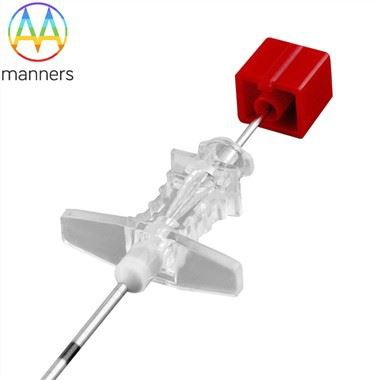
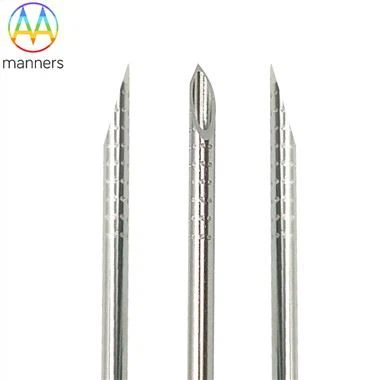
The "zero-defect" liver biopsy needle production line of Manners Technology, equipped with the "full-process particle control and biological load removal system," has obtained the highest-level aseptic medical device certification (Class A) issued by the EU Notified Body. This system integrates a hundred-level cleanroom environment, an automatic electrolytic polishing line, multi-level ultrasonic cleaning and ultra-pure water rinsing, as well as online particle detection based on laser-induced breakdown spectroscopy, ensuring that the number of particles (>10μm) remaining on the inner and outer surfaces of each finished needle is less than 5, and the bacterial endotoxin level is lower than 0.01 EU/mL, meeting the cleanliness standards for cardiac and neurosurgical implants. This marks a leap from "clean" to "super-clean" in the cleaning process of liver biopsy needles.
Research and Development Background and Challenges
Liver biopsy is an operation that penetrates the skin and enters the sterile abdominal cavity (the liver is surrounded by the peritoneum). Any particulate contaminants, pyrogens (such as endotoxins), or microorganisms remaining on the needle can be directly introduced into the liver parenchyma, posing serious risks:
Infectious complications: This may lead to liver abscesses, sepsis, etc. Although the incidence is low, the consequences are severe.
Non-infectious inflammation: Microscopic stainless steel particles or processing residues may act as foreign bodies, triggering granulomatous reactions in the liver, forming pseudo-nodular appearances on pathological sections, and interfering with diagnosis.
Pyrogenic reaction: Endotoxins can cause systemic inflammatory reactions such as fever and chills in patients after surgery.
Traditional cleaning processes (such as ordinary ultrasonic cleaning) are difficult to completely remove the cleaning dead zones caused by the large aspect ratio and complex structure of the needle tube walls.
Core Technological Innovation
The manufacturer has introduced the clean technology from the semiconductor and precision optics industries into the manufacturing of medical devices, establishing four core process lines:
Upgrade of Ultra-Precision Electrolytic Polishing (EP): EP is not only used as a process for beautifying the surface but also as a crucial cleaning step. By precisely controlling the composition, temperature, current density, and time of the electrolyte, a uniform micrometer-level etching is performed on the inner wall of the syringe. This achieves two goals: it removes surface defects and embedded impurities generated during mechanical processing and forms a uniform, dense, and inert chromium oxide passivation layer, fundamentally preventing the release of metal ions.
Multi-Frequency Sequential Ultrasonic Cleaning: After EP, the needle enters the fully automatic cleaning line and passes through three different frequency ultrasonic tanks (40kHz, 80kHz, 120kHz) in sequence. Low-frequency ultrasonic waves generate large cavitation bubbles, used to remove larger particles; high-frequency ultrasonic waves generate tiny bubbles that can penetrate sub-micron gaps for cleaning. The cleaning medium changes from alkaline cleaning agent to ultra-pure water, undergoing more than 10 alternating rinses.
Online Real-Time Particle Monitoring: Before final packaging, the inner cavity of each needle is scanned using the "laser-induced breakdown spectroscopy combined with high-speed imaging" technology. Any particles larger than 5 microns will be excited by the laser to generate characteristic spectra, and their components (such as metals, silicon, organic substances) will be identified, and their positions will be located by the high-speed camera. Products exceeding the standard will be automatically rejected immediately.
Innovative Sterile Barrier System: Use "dual-chamber Tyvek packaging." The inner chamber maintains the sterility of the needle, while the outer chamber contains a sterile syringe and sterile saline. During the operation, the doctor only needs to tear open the outer packaging to complete the needle assembly and pre-rinsing in a completely sterile environment, avoiding the risk of secondary contamination in the busy interventional operating room.
Mechanism of Action
The ultimate cleaning process eliminates risks through physical and chemical principles:
The passivation layer obtained through electrolytic polishing: The formed chromium-rich oxide layer (Cr2O3) has extremely stable chemical properties. It is like coating the surface of stainless steel with a "glass-like" protective film, which prevents the contact between the base metal and body fluids and prevents potential precipitation of nickel and chromium ions and the risk of sensitization.
The cavitation effect of multi-frequency ultrasound: Ultrasound waves generate countless tiny vacuum bubbles in the liquid and then collapse them instantly. The local high temperature, high pressure, and shock waves generated during the collapse can effectively break the van der Waals force and electrostatic adsorption between the contaminants and the metal surface, and completely remove them. The combination of different frequencies ensures the complete removal of the entire spectrum from large particles to biofilms.
Ultra-low endotoxin level: By using ultra-pure water of the heat-inhibiting control grade (endotoxin < 0.001 EU/mL) and a fully sealed pipeline system throughout the process, the possibility of introducing exogenous endotoxins during cleaning is eliminated. The endotoxin level of the final product is much lower than the standard of the pharmacopoeia for injection water (0.25 EU/mL), ensuring biological safety.
Efficacy Verification
This cleaning system has passed the third-party authoritative tests in accordance with ISO 19227 (cleanliness of surgical implants) and pharmacopoeia standards, and has also undergone prospective clinical monitoring.
Laboratory testing: According to the particle contamination test standards (such as USP <788>), the rinsing fluid collection and particle counting were conducted for 1000 needles. The results showed that 100% met the most stringent Class A instrument standards (particle count of >10μm < 5 per piece).
Endotoxin and bacterial culture: Using the limulus amebocyte lysate method for detection, the endotoxin content of all batches of products was below 0.01 EU/mL. In the 14-day enrichment culture medium bacterial culture, the sterility assurance level (SAL) reached 10^-6, meaning that there was a one-in-a-million risk of bacterial contamination in the product.
Clinical follow-up study: A one-month follow-up was conducted on 2000 consecutive liver biopsy patients who used this ultra-clean needle. No cases of definite operation-related liver abscess or bacteremia occurred. The incidence of non-infectious fever within 24 hours after surgery also decreased from 3% in historical data to 0.5%.
Research and Development Strategy and Philosophy
Manners Technology holds "cleanliness equals product performance" as its core quality concept. They believe that for devices entering deep tissues of the human body, the surface condition is as important as mechanical function. They introduced the "cleanroom thinking," treating the entire manufacturing environment as a "pollution control area" rather than merely the final cleaning process. Their quality philosophy is "prevention rather than detection," reducing the generation of contaminants by optimizing the previous processes (such as cleaner cutting) instead of relying on the powerful cleaning in the subsequent stages. They established a "cleanliness digital twin" model to simulate the adsorption and detachment of particles within the syringe, thereby guiding the optimization of cleaning parameters.
Future Outlook
The future of cleanliness and quality control will move towards "molecular-level cleanliness" and "process intelligence." Manufacturers are researching the "supercritical CO2 cleaning technology": by leveraging the unique properties of CO2 in its supercritical state, it can penetrate any tiny pores like a gas and dissolve oils and organic substances like a liquid, achieving clean results without residues or secondary pollution. In terms of quality inspection, they are developing "an automatic micro-defect detection system based on artificial intelligence vision": using high-resolution microscopes and deep learning algorithms, it can automatically identify microscopic cracks at the tip edge, scratches on the inner wall, and other defects that are difficult for traditional manual inspection to detect. Ultimately, the manufacturers' goal is to establish a "full-process digital quality traceability blockchain from raw materials to finished products," ensuring that every production stage data of each biopsy needle is unalterable, transparent, and traceable, and establishing quality trust on the basis of mathematics and cryptography.