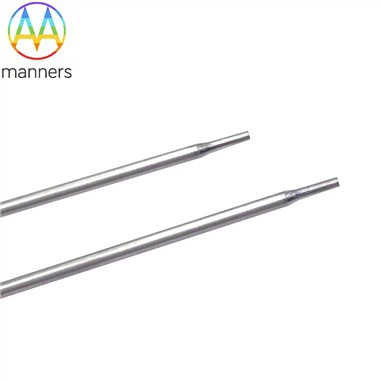
From Single‑Use Device To Integrated System — How Manufacturers Build Holistic Solutions For Safety And Efficiency In Liver Biopsy
May 16, 2026
Official Release of Achievements
Manners Technology has officially launched its SafePath Intelligent Liver Biopsy Assistance System, which integrates Menghini biopsy needles with electromagnetic navigation, real‑time ultrasound fusion, and an intelligent negative‑pressure control module. In its first multicentre clinical trial, the system raised the biopsy success rate for small intrahepatic lesions (< 1 cm) invisible under ultrasound from 65 % with conventional methods to 94 %, while reducing the incidence of major complications (requiring blood transfusion or interventional haemostasis) by 60 %. This system marks a paradigm shift from blind puncture or experience‑guided ultrasound‑assisted biopsy to precision puncture under image navigation.
R&D Background and Clinical Pain Points
Although ultrasound guidance has become standard for liver biopsy, real‑world practice still faces substantial challenges:
Target positioning deviation: Ultrasound provides two‑dimensional images, while puncture is a three‑dimensional procedure. Physicians must mentally convert 2D data into 3D spatial perception, which easily causes access‑path deviation for deep or tiny lesions, leading to sampling failure or repeated punctures.
Respiratory motion interference: The liver moves 2–3 cm with breathing. Even if the target is aligned under ultrasound, needle insertion may miss the lesion due to patient respiration.
Experience‑dependent negative‑pressure control: Suction pressure with conventional Menghini needles is controlled by manual syringe withdrawal, with inconsistent force and speed that may result in insufficient sample volume or excessive tissue compression.
Long training curve: Mastering ultrasound‑guided liver biopsy requires extensive practice, limiting its adoption in primary‑care hospitals.
Core Technological Innovations
Moving beyond standalone needles, the manufacturer has built a closed‑loop system featuring sensing‑planning‑execution‑feedback:
Electromagnetic navigation and ultrasound image fusion: Miniature electromagnetic sensors are mounted on the biopsy needle, with electromagnetic positioning patches placed on the patient's skin. The system performs three‑dimensional fusion and registration of real‑time ultrasound images with pre‑operative CT/MRI scans, displaying the real‑time 3D position of the needle tip and predicted insertion path on screen - granting physicians a "fluoroscopic vision".
Respiratory gating and motion compensation: Optical or surface sensors monitor the patient's respiratory waveform in real time. The system prompts needle insertion at end‑inspiration or end‑expiration (moments when the liver is relatively stationary). Meanwhile, navigation algorithms predict liver position based on the respiratory cycle and dynamically adjust virtual insertion guides.
Intelligent negative‑pressure control unit: Replacing conventional syringes with an electric negative‑pressure pump. With a single button press, the system automatically applies optimal pre‑programmed negative‑pressure profiles (customised for different liver tissue types, typically 3–5 mL empty‑syringe suction) and maintains constant pressure to ensure adequate, intact tissue cores with each aspiration.
Virtual reality training module: The system includes a VR training platform built on patients' real CT data. Physicians can repeatedly practise the full workflow from path planning to puncture on virtual livers, receiving quantitative scores for precision, speed and stability.
Mechanism of Action
Through multimodal information integration and automated control, the system enhances procedural precision and safety:
Multimodal image‑fusion navigation: Combining the real‑time capability of ultrasound with the high spatial resolution and three‑dimensional information of CT/MRI, the system addresses poor visualisation of isoechoic lesions under ultrasound. Electromagnetic navigation delivers millimetre‑level needle‑tip tracking, enabling physicians to clearly visualise the relative positions of the needle tip, lesions and blood vessels for precise obstacle avoidance.
Respiratory gating technology: Freezes the dynamic puncture process during the liver's stationary respiratory phases, greatly reducing errors caused by target movement. Similar to respiratory gating in radiotherapy, it converts uncertainty into a controllable variable.
Standardised negative‑pressure control: Eliminates individual variations in manual suction. Pre‑set pressure profiles derived from fluid‑mechanics and liver‑tissue‑mechanical research maximise sampling efficiency while minimising tissue damage. Constant pressure also prevents sample fragmentation caused by hand tremors.
Efficacy Validation
A prospective, multicentre, single‑arm study of the system was conducted across five major medical centres in Europe and Asia, enrolling 250 patients with focal intrahepatic lesions (30 % of lesions < 1.5 cm).
Precision study: For lesions smaller than 1 cm, the single‑puncture sampling success rate (pathologically confirmed target‑tissue acquisition) reached 94 % with the system, compared with approximately 65 % in historical controls using conventional ultrasound guidance. The average number of punctures decreased from 2.3 to 1.1.
Safety study: The incidence of major complications (defined as bleeding requiring transfusion, vascular intervention or surgery) was only 0.4 %, significantly lower than the literature‑reported average of 1 %. No severe complications such as pneumothorax or bile leakage occurred.
Learning‑curve study: Junior physicians (with fewer than 50 procedures) rapidly achieved puncture precision scores equivalent to those of senior physicians (with over 200 procedures) using conventional methods, with a markedly flattened learning curve.
R&D Strategy and Philosophy
Manners Technology's system‑level strategy is "Encapsulate complexity within the system, deliver simplicity to clinicians". It recognises that bottlenecks in modern interventional medicine often lie not in devices themselves, but in information asymmetry and procedural instability. Therefore, it aims to act as a "co‑pilot in the operating room", freeing physicians from cumbersome spatial calculations and manual manipulation via sensors, algorithms and automation so they may focus on high‑level clinical decision‑making. Its R&D philosophy deeply integrates clinical medicine, biomechanics and computer science to create an augmented‑reality surgical environment.
Future Outlook
Future biopsy systems will evolve toward full automation and integrated diagnosis‑therapy. Manufacturers are developing a robot‑assisted liver biopsy system: after physicians plan insertion paths on fused images, robotic arms steadily hold the needle and perform puncture, completely eliminating hand tremors and respiratory‑motion interference with sub‑millimetre precision. Meanwhile, the system is being integrated with in‑vivo microscopic optical biopsy: ultra‑fine optical fibres embedded within biopsy needles perform confocal laser microscopic imaging of contacted tissue during puncture, generating real‑time near‑histological images within seconds to achieve "diagnosis upon puncture". Further integration with an AI‑powered pathological diagnosis cloud platform enables real‑time upload of tissue‑core images, delivering preliminary AI‑assisted diagnostic reports within minutes. The manufacturer aims to build a complete closed loop from precision puncture to immediate diagnosis, drastically shortening waiting times for liver disease diagnosis.