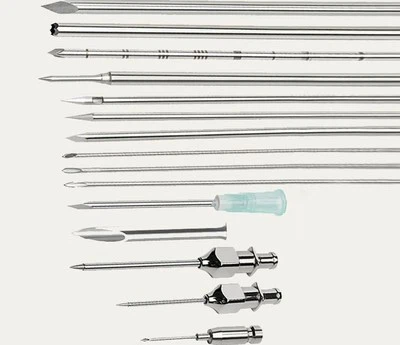
The Industrial Ecosystem, Technological Convergence, And Future Trends Of V3 Infusion Needles
Apr 19, 2026
The Industrial Ecosystem, Technological Convergence, and Future Trends of V3 Infusion Needles
As an integral component of industrial automation, the V3 Infusion Needle exists within a grand industrial chain stretching from special raw materials to the smart factories of the future. Its evolution is being profoundly shaped by advancements in new materials, intelligent manufacturing paradigms, and the growing ethos of sustainable development.
Industrial Ecosystem Panorama
Upstream:
This tier consists of suppliers of specialty metal materials, providing stainless steel bar stock and tubing (such as 304 and 316L compliant with GB/ASTM standards). It also includes manufacturers of high-precision processing equipment-such as precision CNC lathe suppliers like Citizen, Star, and Tsugami-and suppliers of surface treatment chemicals (providing the chemical raw materials required for electropolishing and passivation).
Midstream:
This segment includes the V3 Infusion Needle manufacturers themselves (e.g., Manners). These companies procure raw materials and utilize precision machining, welding, passivation, electropolishing, ultrasonic cleaning, and rigorous quality inspection to produce the final product. Additionally, this tier encompasses OEM manufacturers of complete filling and perfusion equipment, who may either produce needles in-house or source them to integrate into their machinery.
Downstream:
This involves system integrators and end-users. Products are sold either through equipment manufacturers or directly to the engineering and procurement departments of end-user facilities-food processing plants, tobacco factories, cosmetic factories, and chemical enterprises. Ultimately, the needles are installed on fully automated filling lines, injection machines, and spraying equipment, where they generate value day after day.
Technological Convergence and Intelligent Upgrades
1. Integration with Sensor Technology
Future "smart needles" may integrate micro-pressure sensors or thermistors. Pressure sensors can monitor for blockages and abnormal flow rates in real-time, while thermistors can track the temperature of the fluid to prevent changes in viscosity (due to temperature fluctuations) from affecting dosing accuracy. This data feeds directly back to the central control system, enabling predictive maintenance and adaptive adjustment of process parameters.
2. Synergy with IIoT and Digital Twins
Each needle could possess a unique digital identifier (e.g., QR code or RFID tag). Information regarding its model, material, service life, and maintenance history would be integrated into the factory's MES/ERP systems. Within a digital twin model, the performance of the needle under various operating conditions can be simulated and optimized, allowing for proactive replacement scheduling and full lifecycle asset management.
3. Combination with New Materials
Beyond conventional stainless steel, the exploration of Hastelloy, titanium alloys, and even high-performance engineering ceramics may be necessary for handling specific corrosive media (e.g., certain strong acid extracts). Physical Vapor Deposition (PVD) coating technology will also see broader application in enhancing the surface properties of the needles.
Future Development Trends
1. Ultra-High Precision and Micro-Flow Control
As the food industry trends toward personalization and functionalization, the active ingredients requiring injection (such as probiotics and vitamins) are decreasing in dose while increasing in value. This places stringent demands on micro-flow control accuracy, pushing machining precision into the sub-micron range to handle volumes measured in microliters or even nanoliters.
2. The Pinnacle of Hygienic Design
For industries with extreme hygiene requirements, such as dairy and beverages, needle design will prioritize dead-leg free zones, complete drainability, and ease of Cleaning-In-Place (CIP) and Sterilization-In-Place (SIP). Innovative flow channel designs and more efficient surface treatments will emerge to eliminate any possibility of microbial proliferation.
3. Sustainability and Circular Economy
Under the "Dual Carbon" goals (Carbon Peaking and Carbon Neutrality), manufacturing is focusing more on resource recycling. Needle manufacturing will emphasize energy conservation and consumption reduction, exploring more wear-resistant, longer-life designs to minimize replacement frequency. Establishing a robust recycling and remanufacturing system for spent needles will also become a social responsibility and potential business avenue for leading enterprises.
4. Flexibility and Rapid Customization
The trend toward small-batch, multi-variety flexible production models requires manufacturers to offer modular needle designs and possess the capability for rapid prototyping and small-batch delivery. This supports clients in swiftly reconfiguring their production lines to meet diverse market demands.
5. Expansion into Cross-Industry Applications
The underlying precision fluid control technology may extend into emerging fields such as nutrient medium addition in biomanufacturing, active ingredient perfusion in cosmetics, and precision dispensing of electronic chemicals, thereby opening new avenues for growth.
In conclusion, the future of the V3 Infusion Needle will transcend its physical form as a metal component, evolving into an intelligent industrial terminal equipped with perception, communication, and adaptive capabilities. It will continue to serve as an indispensable "precision palate" and "fluid brush" in the cleaner, smarter, and more flexible factories of tomorrow.