The Industrial Ecosystem Of Vacuum-Assisted Breast Biopsy Needles And Future Development Trends
Apr 19, 2026
The Industrial Ecosystem of Vacuum-Assisted Breast Biopsy Needles and Future Development Trends
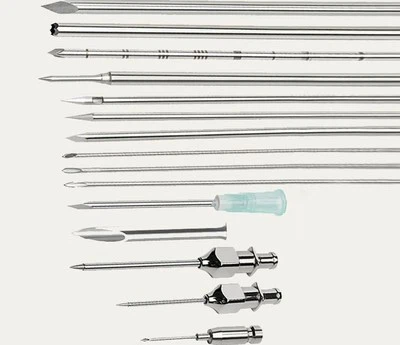
As a Class III high-risk medical device, the Vacuum-Assisted Breast Biopsy (VABB) needle sits at the center of a complex industrial chain spanning from precision manufacturing to clinical application. This sector is currently shaped by the convergence of technology, the demands of precision medicine, and intensifying pressures for healthcare cost containment. Looking ahead, its development trajectory will exhibit diverse trends toward intelligence, integration, accessibility, and standardization.
Industrial Ecosystem Panorama
Upstream:
This tier comprises suppliers of raw materials, including medical-grade stainless steel, specialty alloys, and polymer compounds. It also includes manufacturers of precision processing equipment such as high-precision CNC machine tools, laser cutting machines (e.g., Citizen L12-1M7, with precision up to ±0.01mm), and electropolishing devices. The biocompatibility and mechanical properties of these raw materials must strictly comply with international standards.
Midstream:
This segment consists of brand-name manufacturers such as BD (Mammotome), Hologic, Medtronic, and Boston Scientific. These industry leaders are responsible for core R&D, precision machining, assembly, sterilization (e.g., Ethylene Oxide sterilization), and validation. Production must occur in Class 10,000 cleanrooms or higher-standard facilities, adhering strictly to quality management systems like ISO 13485. Specialized OEM/ODM manufacturers, such as Manners, play a crucial role by providing customized production services for compatible needles to various brands.
Downstream:
Products reach end-users-primarily breast surgery, thyroid-breast surgery, interventional radiology, or ultrasound departments in large general hospitals and specialized cancer centers-via dealer networks or direct sales. The ultimate value of the product is realized by surgeons or radiologists during procedures. Hospital procurement decisions are profoundly influenced by brand reputation, clinical evidence, host system compatibility (noted for strong closure), national health insurance reimbursement catalogs, and public bidding policies.
Stringent Regulation and Quality Systems
VABB needles are subject to rigorous oversight in major markets, including China, the USA, and Europe. Before market entry, manufacturers must complete design verification, biocompatibility testing, animal experiments, and clinical trials (where applicable), followed by approval from regulatory bodies like the US FDA or China's NMPA. Post-market requirements mandate the establishment of a Unique Device Identification (UDI) system, alongside strict post-market surveillance and adverse event reporting.
Future Development Trends
1. Integrated Diagnosis and Treatment Platform
VABB is evolving from a mere biopsy tool into an integrated diagnostic and therapeutic platform. Future systems will tightly integrate image guidance, lesion localization, intelligent cutting, specimen handling, and even preliminary pathological analysis. This will enable the "discovery-diagnosis-treatment" continuum to be completed on a single platform via a single minimally invasive access point.
2. Artificial Intelligence and Multimodal Image Fusion
Artificial Intelligence (AI) will be deeply embedded in preoperative planning and intraoperative navigation. AI algorithms can automatically identify and segment suspicious lesions in ultrasound, mammography, or MRI images, planning the optimal puncture path and cutting range. Multimodal image fusion technology (e.g., combining ultrasound with MRI) will compensate for the limitations of single-modality imaging, achieving more precise localization of complex lesions.
3. Indication Expansion and Precision Medicine Support
With technological advancement, the indications for VABB may further expand, potentially including the evaluation of axillary lymph nodes. More importantly, the abundant, high-quality tissue samples acquired serve as the foundation for next-generation sequencing (NGS), PD-L1 testing, and other molecular pathological analyses. This directly underpins the individualized precision treatment and efficacy prediction for breast cancer patients.
4. Localization and Cost Optimization
In emerging markets like China, domestic substitution is an unequivocal trend. Local enterprises are driving down the cost of equipment and consumables through technological innovation and scaled production, making this minimally invasive technology accessible to a broader patient population. Concurrently, advocacy and exploration for including these high-value consumables in public reimbursement schemes will further accelerate technology adoption.
5. Standardized Training and Quality Control
The proliferation of technology is inseparable from standardized operation. Establishing standardized training systems, surgical protocols, and quality control standards is paramount to ensuring the safe and effective promotion of VABB technology. For instance, China has initiated specialized disease cohort studies aimed at accumulating local data to optimize clinical practice.
In conclusion, the future of the VABB needle lies in smarter technology, more precise manipulation, greater integration of diagnosis and treatment, and wider accessibility. Every link in its industrial chain must align with clinical demands and technological trends to jointly propel minimally invasive breast disease diagnosis and treatment to new heights.