The Evolution Of Safe Medication Transfer
Nov 03, 2026
The Unseen Crisis in Everyday Pharmacy Practice
In the daily rhythm of hospital pharmacies, outpatient clinics, and compounding centers, there exists a quiet but persistent danger that rarely makes headlines yet affects thousands of healthcare workers and patients every single day. This danger is not a dramatic surgical complication or a high-profile medication error-it is the humble act of drawing medication from a glass ampoule or a rubber-stoppered vial using a standard sharp hypodermic needle. The statistics are sobering: needle stick injuries affect more than 600,000 healthcare workers annually in the United States alone, with a significant portion occurring during the preparation phase rather than the administration phase. Beyond the physical injury itself, the psychological toll is immense-the anxiety of waiting for bloodborne pathogen test results, the prophylactic treatments, the lost workdays, and the lingering fear that follows every accidental exposure. Meanwhile, patients face a different but equally serious threat: glass micro-particles and rubber coring fragments that enter the medication stream during the draw-up process. These invisible contaminants, typically ranging from 5 to 100 microns in size, can cause phlebitis, granuloma formation, pulmonary micro-embolism, and even systemic inflammatory responses when injected intravenously. The problem is compounded by the fact that many medications used in modern practice are increasingly viscous-biologics, concentrated antibiotics, lipid emulsions, and suspension formulations-which tempt practitioners to use larger, sharper needles that increase both injury risk and contamination potential. The Innovation Hub Blunt Filter Needles emerge as a direct response to this dual crisis: a device that simultaneously protects the healthcare worker from sharps injury and protects the patient from particulate contamination, all while maintaining the efficiency and precision that modern clinical practice demands.
The Engineering Principle Behind Blunt Filter Technology
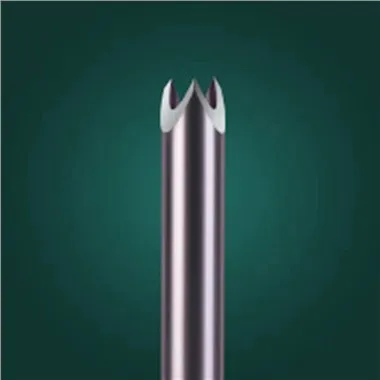
The Innovation Hub Blunt Filter Needles represent a fundamental rethinking of what a needle should do. Traditional hypodermic needles are designed with one primary function: penetration. Their sharp, beveled tips are optimized to pierce skin, tissue, and rubber septa with minimal force, which makes them excellent for injection but dangerously efficient at causing accidental injury. The Innovation Hub Blunt Filter Needles invert this design philosophy. Instead of optimizing for penetration, they optimize for controlled aspiration and filtration. The 45-degree blunt bevel is the critical innovation here. Unlike a standard sharp bevel that concentrates force on a razor-thin cutting edge, the blunt bevel distributes contact force across a wider surface area. This geometric change has profound implications: the force required to pierce human skin increases dramatically-by some estimates, three to five times more force is needed compared to a sharp needle of the same gauge. However, the force required to pierce a rubber vial stopper or to enter a glass ampoule opening remains manageable, because these materials have different mechanical properties. The result is a needle that performs its intended function-accessing medication containers-with ease, but fails at its unintended function-accidentally piercing human skin. The 5-micron filter membrane adds a second layer of protection. Positioned within the hub, this medical-grade filter captures particles larger than 5 microns as medication is aspirated through the needle. Glass fragments from ampoule breakage typically range from 10 to 200 microns; rubber coring fragments from vial stoppers are similarly sized. The filter effectively removes these contaminants before they enter the syringe barrel. The filtration principle relies on size exclusion-particles larger than the membrane pore size are physically blocked, while the medication solution passes through freely. For viscous medications, the filter is designed with sufficient surface area to maintain acceptable flow rates, balancing filtration efficiency with practical usability. The Luer lock connection ensures a secure, leak-proof interface with standard syringes, preventing the disconnection failures that can occur with Luer slip fittings during aspiration.
Comprehensive Device Classification and Selection Logic
The Innovation Hub Blunt Filter Needles are manufactured across a comprehensive range of 18 specifications, covering needle gauges from 14G to 27G. This breadth is not arbitrary; each gauge serves a distinct clinical purpose and workflow requirement. The 14G to 17G range represents the high-flow family, designed for bulk transfer of viscous medications, lipid emulsions, and suspension formulations. These wide-bore needles allow rapid aspiration of thick fluids that would clog smaller gauges, significantly reducing preparation time in high-volume pharmacy settings. The 18G to 21G range constitutes the balanced workhorse family, suitable for the majority of routine draw-up tasks including ampoule aspiration, vial access, and IV bag medication addition. These gauges offer an optimal compromise between flow rate and control, making them the default choice for general pharmacy operations. The 22G to 25G range represents the precision family, designed for small-volume preparations, pediatric dosing, and medications that require careful, controlled aspiration. These finer needles minimize medication waste and are particularly useful for expensive biologics and targeted therapies. The 26G to 27G range serves the micro-control segment, used for extremely small volumes, specialized compounding, and applications where minimal tissue trauma is paramount. The standard needle length is 1.5 inches, which provides sufficient reach for most medication containers while maintaining maneuverability. However, the manufacturer offers custom lengths upon request, accommodating specialized applications such as deep IV bag ports, tall medication vials, or unique container geometries. This customization capability is supported by the manufacturer's ability to produce needles according to 2D or 3D drawings, as well as physical samples, ensuring that even unusual clinical requirements can be met with precision-engineered solutions.
Practical Implementation and Clinical Workflow
Implementing Innovation Hub Blunt Filter Needles into clinical practice requires attention to technique and workflow integration. The first step is proper device selection based on the specific medication and container type. For standard glass ampoules, an 18G or 20G blunt filter needle is typically appropriate, providing adequate flow while maintaining control. For viscous medications, a larger gauge such as 16G or 17G is recommended to prevent clogging and reduce aspiration time. The second step is proper container preparation. For glass ampoules, the neck should be tapped to ensure all liquid settles in the bottom portion, then wrapped with a gauze pad before snapping open-the gauze protects fingers from glass shards and contains any splinters. The ampoule should be held at an angle, and the blunt needle inserted below the liquid surface to avoid aspirating air bubbles. For rubber-stoppered vials, the stopper should be swabbed with alcohol and allowed to dry before needle insertion. The blunt tip can be inserted directly through the stopper without the coring effect that sharp needles often produce. The third step is aspiration technique. The syringe plunger should be pulled back slowly and steadily, maintaining consistent negative pressure. Rapid aspiration can cause turbulence that resuspends particles and reduces filtration efficiency. For viscous medications, a slower, more deliberate draw is recommended. The fourth step is the critical safety protocol: the blunt filter needle must never be used for injection. After aspiration is complete, the filter needle should be removed from the syringe and replaced with an appropriate administration needle or other delivery device. This two-step process is fundamental to the safety design-the filter needle is a preparation tool, not an administration tool. The red hub and cap serve as constant visual reminders of this distinction, helping to prevent the dangerous error of attempting to inject through a filter needle.
Lessons from Real-World Clinical Experience
Across hospitals and compounding pharmacies where Innovation Hub Blunt Filter Needles have been adopted, several consistent patterns of experience have emerged. The most frequently reported benefit is the dramatic reduction in needle stick injuries during the preparation phase. Pharmacy technicians and nurses report feeling significantly safer when drawing up medications, particularly when working with glass ampoules that require manual breakage. The blunt tip eliminates the fear of accidental self-injury during the aspiration process, allowing staff to focus on technique rather than personal safety. The second most reported benefit is the visible reduction in particulate contamination. Facilities that have implemented particle-counting protocols report significantly lower particle loads in medications prepared with filter needles compared to those prepared with standard sharp needles. This is particularly important in oncology and immunology settings where patients may be immunocompromised and more susceptible to the effects of particulate contamination. A third benefit that emerges in practice is the reduction in medication waste. The blunt tip causes less coring of rubber stoppers, meaning fewer rubber fragments enter the medication and fewer stoppers are damaged during repeated access. This extends the usable life of medication vials and reduces the risk of contamination from damaged stoppers. However, practitioners also report some challenges that require attention. The most common issue is the increased resistance during aspiration compared to sharp needles, particularly with smaller gauges. This is an inherent characteristic of filter needles and can be managed through proper gauge selection and aspiration technique. Some practitioners initially find the blunt tip more difficult to insert through rubber stoppers, though this improves with practice and proper technique. The key lesson from real-world experience is that blunt filter needles require a brief learning curve, but the safety and quality benefits far outweigh the initial adjustment period.
Synthesis and Future Directions
The Innovation Hub Blunt Filter Needles represent a significant advancement in medication preparation safety, addressing both healthcare worker protection and patient safety in a single, elegantly designed device. The 45-degree blunt bevel, 5-micron filter, and Luer lock connection work together to create a system that is safer, cleaner, and more efficient than traditional sharp needle draw-up methods. The economic argument is equally compelling: while the per-unit cost of a blunt filter needle is slightly higher than a standard needle, the total cost of ownership is lower when accounting for reduced needle stick injuries, lower occupational health costs, reduced medication waste, and improved patient outcomes. Looking forward, several exciting developments are on the horizon. We anticipate the integration of low-dead-space hub designs that minimize medication retention and maximize yield for expensive biologics. We expect to see color-coded systems that align with ISO 6009 standards for gauge identification, reducing selection errors. Anti-reflux filter membranes are being developed to prevent backflow contamination during aspiration. And smart packaging with QR codes for batch traceability will enhance quality assurance and recall management. For healthcare facilities, the recommendation is clear: conduct a comprehensive assessment of current medication preparation practices, identify areas where blunt filter needles can reduce risk, and implement a phased adoption plan with staff training and competency verification. The transition to blunt filter needles is not merely a product substitution-it is a fundamental upgrade to the safety infrastructure of medication preparation.