Ergonomics And Human Factors In Needle Design
Nov 03, 2026
The Hidden Cost of Traditional Needle Design
The healthcare profession is built on precision, yet the tools used for medication preparation often fail to account for the human factors that influence performance, safety, and well-being. Traditional sharp hypodermic needles, designed primarily for injection, impose a significant ergonomic burden when used for medication preparation. The sharp tip creates a psychological barrier-practitioners handle these needles with caution, slowing their movements and increasing the cognitive load associated with each procedure. This hesitation is not merely a matter of efficiency; it directly impacts safety. When practitioners are overly cautious about a sharp tip, they may grip the syringe awkwardly, position their hands at unsafe angles, or rush through the procedure to minimize exposure time. These compensatory behaviors increase the risk of accidental injury and medication errors. The physical burden is equally significant. Repeated use of sharp needles for vial access and ampoule aspiration requires careful control of insertion force, angle, and depth. Over the course of a shift, a pharmacy technician may perform hundreds of these procedures, leading to hand fatigue, wrist strain, and repetitive stress injuries. The cognitive burden is perhaps the most overlooked factor. Practitioners must constantly monitor the position of the sharp tip, adjust their grip, and maintain awareness of the needle's location relative to their hands and fingers. This constant vigilance consumes cognitive resources that could be better directed toward medication verification, dose calculation, and patient safety. The Innovation Hub Blunt Filter Needles address these human factors through a design that prioritizes ergonomic comfort, intuitive handling, and reduced cognitive load.
The Biomechanics of the 45-Degree Blunt Bevel
The 45-degree blunt bevel is the cornerstone of the ergonomic design of Innovation Hub Blunt Filter Needles. This geometry fundamentally changes the interaction between the needle and the surfaces it contacts. When a sharp needle contacts human skin, the acute bevel angle creates a stress concentration at the tip, allowing penetration with minimal force. The 45-degree blunt bevel distributes contact force across a wider surface area, dramatically increasing the force required for skin penetration. This biomechanical property is the foundation of the device's safety profile-it physically cannot easily penetrate human skin, regardless of the force applied or the angle of approach. However, the blunt bevel still effectively accesses medication containers. Rubber vial stoppers have different mechanical properties than human skin-they are elastic, compressible, and designed to reseal after needle insertion. The blunt bevel displaces the rubber rather than cutting it, creating a controlled insertion that causes minimal damage to the stopper. This is a significant advantage over sharp needles, which can core the rubber, creating fragments that contaminate the medication and damage the stopper's resealing capability. The ergonomic benefit is substantial: practitioners can insert the blunt needle with confidence, knowing that accidental contact with their hands or fingers will not result in injury. This confidence translates into smoother, more controlled movements, reduced hesitation, and lower cognitive load.
Device Classification Based on Ergonomics
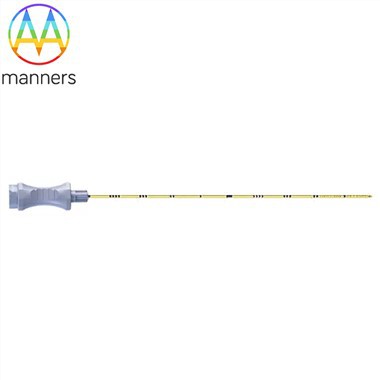
The Innovation Hub Blunt Filter Needles are available in 18 specifications, each designed with specific ergonomic characteristics for different clinical applications. The low-resistance series, comprising 14G to 18G, is designed for bulk transfer and viscous medications. These wide-bore needles require minimal aspiration force, reducing hand fatigue during high-volume preparations. The balanced series, spanning 19G to 22G, offers the optimal compromise between flow rate and control for general pharmacy operations. These needles provide smooth, predictable aspiration with moderate resistance, making them suitable for a wide range of medications and container types. The fine series, covering 23G to 27G, is designed for small-volume preparations and delicate compounds. These needles offer precise control and minimal dead space, making them ideal for expensive medications where waste reduction is critical. The red hub and cap serve as ergonomic identifiers, providing immediate visual recognition of the device's purpose. The red color signals "preparation device" to the practitioner, reducing the risk of confusion with administration needles. The Luer lock connection provides a secure, stable interface with the syringe, preventing rotation and loosening during aspiration. The hub is designed with a comfortable grip surface, allowing secure handling without excessive grip force.
Ergonomics-Focused Workflow Optimization
Implementing Innovation Hub Blunt Filter Needles into clinical practice requires attention to ergonomic principles at every step. The first principle is proper posture: practitioners should position themselves comfortably with the preparation surface at elbow height, avoiding awkward reaching or bending. The second principle is grip optimization: the syringe should be held with a relaxed, neutral grip, with the fingers positioned to allow smooth plunger movement without excessive force. The third principle is controlled aspiration: the plunger should be pulled back with a smooth, steady motion, avoiding jerky movements that cause turbulence and increase resistance. The fourth principle is workspace organization: medication containers, syringes, and blunt filter needles should be arranged within easy reach, minimizing unnecessary reaching and movement. The fifth principle is task rotation: in high-volume settings, practitioners should rotate between tasks to prevent repetitive strain injuries. The sixth principle is proper disposal: used blunt filter needles should be disposed of immediately in appropriate sharps containers, which should be positioned within easy reach of the preparation area.
Field Experience and Practical Lessons
Healthcare facilities that have adopted Innovation Hub Blunt Filter Needles report significant improvements in practitioner comfort and workflow efficiency. A large hospital pharmacy in Germany reported a 40% reduction in hand fatigue among pharmacy technicians after switching to blunt filter needles for routine medication preparation. The technicians reported that the blunt tip eliminated the need for constant vigilance about needle position, allowing them to focus on the medication preparation task itself. A compounding pharmacy in the United Kingdom reported similar benefits, noting that the blunt filter needles reduced the time required for ampoule aspiration by approximately 30% due to smoother, more confident technique. The pharmacy also reported a reduction in medication errors, which they attributed to the reduced cognitive load associated with blunt needle handling. However, practitioners also reported some challenges. The increased aspiration resistance compared to sharp needles was initially noticeable, particularly with smaller gauges. This was addressed through staff education on proper technique and gauge selection. Some practitioners found the blunt tip more difficult to insert through rubber stoppers initially, though this improved with practice. The key lesson is that blunt filter needles require a brief learning curve, but the ergonomic benefits far outweigh the initial adjustment period.
The Economic and Safety Implications
The ergonomic benefits of blunt filter needles translate directly into economic and safety improvements. Reduced hand fatigue and cognitive load lead to fewer errors, which translates into reduced medication waste, fewer adverse events, and lower liability costs. Reduced needle stick injuries lead to lower occupational health costs, including testing, prophylaxis, and lost workdays. The economic case for blunt filter needles is compelling: while the per-unit cost is slightly higher than standard needles, the total cost of ownership is lower when accounting for these factors. A cost-benefit analysis conducted at a large academic medical center found that the implementation of blunt filter needles resulted in a net savings of approximately $75,000 annually when accounting for reduced sharps injuries, reduced occupational health costs, reduced medication errors, and improved workflow efficiency.
Conclusion and Future Directions
The ergonomic design of Innovation Hub Blunt Filter Needles represents a significant advancement in medication preparation safety. The 45-degree blunt bevel, red hub identification system, and Luer lock connection work together to create a device that is safer, more comfortable, and more efficient than traditional sharp needles. The ergonomic benefits extend beyond individual comfort to encompass workflow efficiency, error reduction, and economic savings. Looking forward, we anticipate further ergonomic innovations in needle design. Soft-touch hub materials will provide even more comfortable handling. Tactile click locks will provide audible and tactile confirmation of secure connection. Laser-etched gauge markings will improve identification in low-light environments. Ergonomic packaging will facilitate easier device retrieval and disposal. As the healthcare industry continues to prioritize both patient safety and practitioner well-being, blunt filter needles will play an increasingly important role in creating a safer, more comfortable medication preparation environment.