The Evolution Logic Of Puncture Needle Devices: An Industry Perspective From Homogeneous Tools To Scenario-Specific Solutions
Apr 09, 2026
The Evolution Logic of Puncture Needle Devices: An Industry Perspective from Homogeneous Tools to Scenario-Specific Solutions
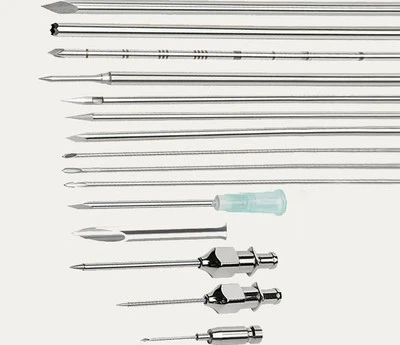
From an industrial and product management perspective, the development of puncture needle devices has evolved from providing basic functions as "homogeneous medical devices" to becoming deeply customized "solution components" tailored to different clinical scenarios. This article will analyze the underlying differences in product definition, technical barriers, and market strategies by comparing general-purpose puncture needles with endoscopic biopsy needles.
I. Product Definition: From "Standard Items" to "Device-Specific Tools"
1. General-Purpose Puncture Needles: Pursuing "Breadth" and "Reliability"
Product Positioning: Clinical infrastructure, akin to "medical screws," with stable demand, emphasizing standardization, high reliability, and cost control. Innovations typically focus on incremental improvements in universal attributes such as materials, coatings, and connectors.
Design Logic: To cover the broadest possible range of scenarios while fulfilling the basic function of puncture. For example, the design of a winged intravenous cannula must balance vascular differences between adults and children, along with the nurse's tactile feel during puncture, ease of fixation, and patient comfort.
Procurement Driver: Primarily cost-driven and group purchasing organization (GPO)-oriented. Hospital procurement departments focus more on the completeness of specifications, supplier stability, whether basic clinical needs are met, and price.
2. Endoscopic Biopsy Needles: Pursuing "Depth" and "Diagnostic Yield"
Product Positioning: High-value diagnostic consumables, serving as the "critical component determining diagnostic results." Their value is directly reflected in the pathological detection rate and tissue sample quality, linking them to a hospital's diagnostic capabilities and research proficiency.
Design Logic: Highly scenario-specific and procedure-bound. For instance, the tri-bevel cutting structure of the 22G crown-tip (Franseen) needle designed for pancreatic cancer biopsy is specifically optimized to efficiently obtain cores from fibrotic pancreatic tissue. Its design, testing, and clinical validation are all centered around a specific disease (pancreatic solid lesions) and a specific procedure (EUS-FNB).
Procurement Driver: Value/efficacy-driven. Led by department heads and endoscopic experts, procurement decisions focus on clinical data (e.g., first-pass yield, core tissue integrity), ability to support molecular testing, and the brand's endorsement by top-tier medical centers.
II. Technical Barriers: From "Precision Manufacturing" to "System Integration"
1. The Technical Core of General-Purpose Puncture Needles: Lies in large-scale, high-consistency precision manufacturing. Ensuring that every needle achieves an extremely high and stable level of tip sharpness, inner lumen smoothness, and dimensional tolerance. The barriers are reflected in mold precision, automated production lines, and quality control systems.
2. The Technical Core of Endoscopic Biopsy Needles: Is the deep system integration of "Design-Material-Manufacturing-Validation."
Tip Geometry Design: Structures like fork-tip or crown-tip require validation of their cutting efficiency through complex fluid dynamics simulations and biomechanical testing.
Materials and Processes: The needle cannula must possess sufficient rigidity to penetrate tissue while maintaining a degree of flexibility to navigate the curved channels of an endoscope. Specialized processes like 5-axis laser cutting are prerequisites for manufacturing complex tips.
Clinical Validation Feedback Loop: Product development is tightly coupled with multicenter clinical research, using diagnostic accuracy and safety data to inform and optimize the design.
III. Market Strategy and Industry Implications
1. General-Purpose Puncture Needle Market: Relatively stable landscape, exhibiting "red ocean" competition. Leaders consolidate their position by leveraging economies of scale to reduce costs,完善ing product lines, and providing consistent quality. New entrants need to seek opportunities in specific niche scenarios (e.g., safer needlestick prevention designs, superior ultrasound visualization) or emerging markets.
2. Endoscopic Biopsy Needle Market: A high-growth, high-value-add "blue ocean" field. Competition centers on sustained technological iteration capability. Companies must collaborate closely with leading clinical experts to deeply understand unmet clinical needs (e.g., biopsy of smaller/micro lesions, obtaining better sequencing samples) and rapidly translate engineering innovations into products supported by clinical evidence. Intellectual property (needle-type patents) forms the core moat.
Conclusion
The segmented development of puncture needle devices clearly maps the upgrade path of the medical device industry from providing general products to offering specialized solutions. General-purpose puncture needles embody manufacturing capability, while endoscopic biopsy needles are the outcome of clinical need-driven, doctor-engineering collaborative innovation. For industry practitioners, in the general-purpose market, honing "manufacturing prowess" is key to winning with quality and cost; in the specialized high-end market, building the core capability of "clinical insight + rapid engineering" is essential to succeed with innovation and value. Together, these two product categories constitute a well-defined, dynamically developing medical device ecosystem that continuously advances the level of clinical diagnosis and treatment.