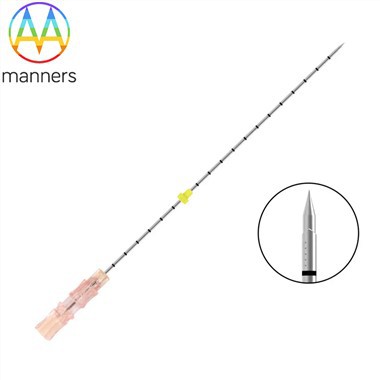
The Complete Injection System And The Use-and-destroy Engineering Approach Have Been Successfully Implemented
May 15, 2026
Subcutaneous injection needles, while saving lives, also bring about a global occupational health risk: needlestick injuries (NSIs). Accidental puncture by contaminated needles can lead to infection of blood-borne pathogens such as hepatitis B, hepatitis C, and HIV among healthcare workers. Therefore, the World Health Organization (WHO) has vigorously promoted "safe injection" and recommended the use of "safe injection devices". The core operating theory of safe injection devices is that, after fulfilling the routine injection function, through an internal engineering mechanism, the needle is automatically and irreversibly rendered ineffective, thereby fundamentally eliminating the risk of needlestick injuries. This is a sophisticated operating theory about "function termination".
I. The core operational paradigm of safe syringes: Active safety and passive safety
After withdrawing the needle from a traditional syringe, the sharp needle remains exposed and requires the user to manually re-cap the needle cap. This process inherently poses risks. The safety syringe has changed this paradigm, and its operation is divided into two stages:
1. Injection stage: It is similar to a conventional syringe. Ensure the smooth and precise extraction and delivery of the liquid medication.
2. Safety activation stage: Immediately after the injection is completed and the needle is withdrawn from the body, or shortly thereafter, trigger the safety mechanism through specific actions (such as continuing to push the piston, sliding the outer sheath, or pressing the latch). Once triggered, the device automatically and irreversibly covers or damages the needle tip, preventing it from piercing the skin again.
II. The Operating Theory and Engineering Implementation of Mainstream Security Mechanisms
The designs of safety syringes are diverse, but their operational theories can be summarized into the following categories:
1. Needle Tip Retractable (Retractable)
* Operating Principle: Utilizing the spring, negative pressure, or continuous movement of the piston within the syringe, the needle is pulled back into the syringe barrel and permanently locked therein after injection.
* Engineering Implementation: A brittle connection or latch is provided between the needle holder and the piston. After injection, by forcefully pushing the piston beyond a certain threshold, the connection breaks, releasing the pre-applied spring or locking the needle holder into the return chamber of the piston. The needle is pulled into the syringe within milliseconds. Due to the opaque material of the syringe and the needle being locked inside, physical isolation and visual warning are achieved. This design conforms to the highest safety concept of "sharp objects not leaving the container", but the structure is relatively complex.
2. Sliding Sheath Needle Holder (Sliding Sheath)
* Operating Principle: An expandable protective sheath is placed outside the needle tube. During injection, the sheath is compressed at the base of the needle holder; after injection, through an unlocking mechanism (such as a button or relying on the force of the needle holder against the patient's skin), the sheath is automatically ejected by a spring drive, fully covering the needle tip and locking it.
* Engineering Implementation: The key lies in a reliable unlocking and locking mechanism. Some designs have a notch on the base of the needle holder that unlocks when pressed against the skin; others have a slider at the front of the syringe that is unlocked by thumb pressure. The protective sheath is usually made of hard plastic and can withstand lateral forces to prevent the needle tip from piercing. This design is intuitive and reliable, and is one of the most widely used safety mechanisms.
3. Hinged Cap Needle Holder (Hinged Cap)
* Operating Principle: A hard protective cover is hinged on one side of the needle holder. After injection, the user can simply flip off the cover like "unlocking a mobile phone" until it clicks into place, locking the needle tip permanently inside.
* Engineering Implementation: The hinge must be durable and operate smoothly, and the locking mechanism must be absolutely secure. Commonly, a gear or latch design is used to ensure that once closed, it cannot be reopened. This design is simple to operate, ergonomic, but relies on the user's active action.
4. Needle Tip Blunting/Bending (Blunting / Bending)
* Operating Principle: After injection, an internal mechanism pushes a metal blunt tip through the needle tube, softening the needle tip from the inside; or a lever is used to bend the exposed needle tip, rendering it ineffective.
* Engineering Implementation: For example, at the end of the piston stroke, an internal blunt head rod is pushed out, blocking and damaging the needle tip. Another design has a slider at the needle holder where, when sliding, it pushes the needle rod to cause plastic deformation. This design completely destroys the function of the needle tip, but may increase the resistance at the injection end.
III. Core Challenges and Balance Proposed by the Operating Theory for Design
The design of a safe syringe is far from being a simple "add a cover". The operational theory behind it needs to address multiple contradictions:
1. Reliability vs. False Triggering: The safety mechanism must be easily and reliably activated after injection. However, during the injection process (especially when injecting drugs with high resistance), it must absolutely prevent accidental triggering, otherwise it may lead to treatment interruption or even danger. This requires precise force design and reliable temporary locking mechanisms.
2. Safety vs. Cost: Adding safety devices will inevitably increase the cost of a single unit. In the field of public health, how to achieve safety in large-scale vaccinations at an affordable cost is the key to promotion. This has driven minimalist and efficient design innovations.
3. Functionality vs. Drug Residue: The retraction design may cause more drug residue due to the needle retraction path occupying volume (dead space). An excellent retraction design will minimize the dead space by optimizing the internal space.
4. Universality vs. Specificity: Some safety syringes have a "fixed needle" design, with the needle holder and the syringe integrated and inseparable, which eliminates misuse but may not be suitable for special scenarios such as connecting intravenous indwelling needles.
IV. Regulatory Drive and Future Trends
Across the globe, an increasing number of countries and regions have enacted legislation mandating the use of safe syringes in medical settings. This has solidified the necessity of the operational theory at the policy level. Future developments will focus on: 1) More intelligent activation: such as automatically triggering at the moment of needle removal through electrical or optical signals, further reducing reliance on user operation; 2) Deep integration with drug delivery devices: seamlessly integrating the safety mechanism into the end point of the drug delivery process in insulin pens, automatic injection pens (used for adrenaline, biological agents, etc.); 3) Environmentally friendly materials: exploring materials that are easier to handle or biodegradable while ensuring safety.
In summary, the operating principle of the safe syringe is to regard "prevention of harm" as the starting point and endpoint of its design. Through ingenious mechanical design, it arranges a definite and irreversible "ceremony" for the dangerous needle tip at the moment the injection is completed. This transforms the "one-time use" feature of disposable medical devices from preventing cross-infection to preventing occupational injuries. This is a profound manifestation of medical engineering towards life care, and represents a leap from "treatment tools" to a "comprehensive protection system" concept.