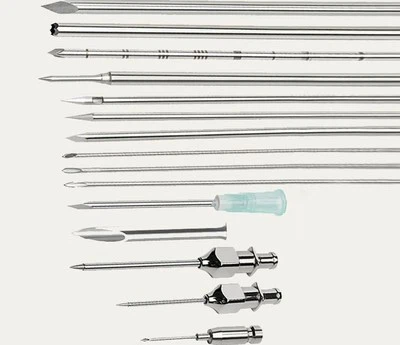
The Clinical Applications Of OPU Retrieval Needles And The Technological Innovation Trajectory Of Manufacturers
Apr 20, 2026
The Clinical Applications of OPU Retrieval Needles and the Technological Innovation Trajectory of Manufacturers
Introduction: A Pivotal Instrument in Assisted Reproduction
The OPU (Ovum Pick-Up) needle stands as one of the most critical consumables in assisted reproductive surgery, boasting extensive application scenarios and outstanding clinical value. It is not merely a tool for conventional IVF egg retrieval but also plays a vital role in fertility preservation, donor egg cycles, the management of complex infertility cases, and reproductive medical research. As technology relentlessly advances, OPU needle manufacturers are continuously innovating, propelling their products toward unprecedented levels of minimal invasion, safety, and efficiency.
Section 1: Optimizing Routine and Specialized Clinical Scenarios
In standard IVF and IVM (In Vitro Maturation) cycles, the OPU needle is deployed under transvaginal ultrasound guidance to puncture follicles and aspirate follicular fluid containing oocytes. This is the sole method for obtaining eggs. Manufacturers are actively enhancing this process by optimizing the needle tip angle and the geometry of the cutting edge. These refinements ensure smoother penetration, significantly reducing tearing damage to the ovarian cortex and mitigating postoperative risks such as pelvic pain and hemorrhage.
For patients diagnosed with Polycystic Ovary Syndrome (PCOS), the challenge lies in the sheer number of follicles and their asynchronous sizes. This necessitates needles with exceptionally high patency to prevent clogging. Manufacturers typically address this by designing needles with larger lumens to boost aspiration efficiency and curtail surgical duration.
Conversely, patients with endometriosis present a different challenge: high risks of adhesion and difficult puncture due to distorted anatomy. Here, the demand is for superior shaft resilience and pinpoint accuracy. Manufacturers respond by enhancing material strength and ensuring impeccable needle straightness. This guarantees stable puncture performance even in complex anatomical environments, thereby minimizing tissue damage from repeated attempts.
Section 2: Supporting Fertility Preservation and Research
In the realm of fertility preservation, OPU needles are instrumental for patients facing gonadotoxic therapies, such as chemotherapy or radiotherapy. The priority here shifts to absolute safety and biocompatibility. Manufacturers must ensure that the materials and lubricious coatings used do not adversely affect the oocytes, thereby securing high-quality samples for cryopreservation.
Similarly, donor egg cycles impose stringent requirements on both the quantity and quality of retrieved oocytes. The performance of the retrieval needle directly influences the success rate of the donation process. To maximize the yield of viable eggs, manufacturers often employ ultra-smooth inner lumen treatments. This reduces the adhesion and potential damage to the cumulus-oocyte complexes, increasing the proportion of usable gametes.
Furthermore, the utility of OPU needles extends into the laboratory. They are widely utilized in basic reproductive research, providing essential samples for studying oocyte developmental mechanisms and optimizing in vitro culture systems.
Section 3: The Trajectory of Manufacturer Innovation
In response to escalating clinical demands, innovation among OPU needle manufacturers is concentrated in several key directions:
Enhanced Ultrasound Visibility: Improving the needle's echogenicity to ensure the tip is visualized with utmost clarity, reducing the margin for error during navigation.
Refined Minimally Invasive Design: Further reducing the outer diameter (OD) while maintaining structural integrity to minimize trauma to the vaginal wall and ovary.
Superior Anti-Clogging Capabilities: Engineering the inner lumen and tip geometry to guarantee continuous and stable aspiration, particularly in challenging cases with viscous contents.
Robust Single-Use Systems: Perfecting the sterile, single-use product ecosystem to eliminate cross-contamination risks and align with the strictest hospital infection control standards.
Granular Specification Refinement: Offering a wider array of lengths and gauges to facilitate truly individualized treatment plans based on patient BMI and ovarian reserve.
Conclusion: A Future of Precision and Reliability
Looking ahead, as assisted reproductive technology progresses toward greater precision, minimal invasion, and standardization, the technical threshold for OPU needles will continue to ascend. Professional manufacturers will remain anchored to clinical needs, bolstering innovation in materials science, structural mechanics, and manufacturing processes. Their commitment ensures the provision of safer, more reliable retrieval solutions, solidifying their role as indispensable supporters of high-quality development within the global reproductive industry.