Quality From Materials: Material Selection Logic And Safety Bottom Line Of OPU Egg Retrieval Needle Manufacturers
Apr 20, 2026
Quality from Materials: Material Selection Logic and Safety Bottom Line of OPU Egg Retrieval Needle Manufacturers
As a high-risk interventional instrument that directly enters the human pelvic cavity and punctures ovarian follicles, the material safety and mechanical properties of OPU (Oocyte Pick-Up) egg retrieval needles are directly related to the success of the operation and the patient's health. For OPU egg retrieval needle manufacturers, material selection is not a simple cost trade-off, but a core decision involving biocompatibility, durability, sterility, and clinical effects. Different materials determine the applicable scenarios, usage methods, and safety levels of egg retrieval needles, and also reflect the manufacturer's quality positioning. In the field of assisted reproductive technology, where the safety and integrity of oocytes are crucial, the scientificity and rigor of material selection have become the primary criterion for measuring the strength of manufacturers.
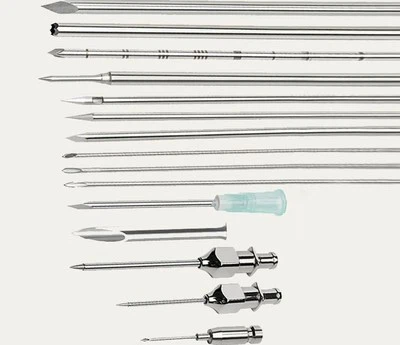
Medical stainless steel is the most classic and widely used material for OPU egg retrieval needles, and also the basic choice of most manufacturers. It has excellent strength and rigidity, which prevents bending and deformation during puncture and ensures a stable path; at the same time, it has outstanding corrosion resistance and can withstand multiple high-temperature and high-pressure sterilizations, making it suitable for reusable egg retrieval needles. The surface of medical stainless steel can be highly polished, and the inner wall is smooth, which can reduce the friction damage to oocytes during aspiration, and is not easy to adsorb tissue debris, ensuring the smooth aspiration of follicular fluid. Professional manufacturers strictly select medical-grade grades, such as 304 and 316L stainless steel, and eliminate the substitution of industrial materials, thus avoiding the risks of heavy metal precipitation and allergies from the source. In addition, medical stainless steel has mature processing technology and stable supply chain, which can balance product quality and production cost, meeting the basic clinical needs of most reproductive medical institutions.
Titanium alloy is a symbolic material for high-end OPU egg retrieval needles, and is used by many high-quality manufacturers to enhance product competitiveness. Titanium alloy has the same strength as stainless steel but is lighter in weight, which can reduce the fatigue of doctors during long-term operations and improve puncture feel and control precision. At the same time, titanium alloy has better biocompatibility and less stimulation to human tissues, making it suitable for patients with sensitive constitutions. Due to the higher material cost and greater processing difficulty, titanium alloy egg retrieval needles are usually oriented to high-end reproductive centers and refined surgical scenarios, which also reflects the manufacturer's pursuit of technology and quality. The processing of titanium alloy requires high-precision CNC equipment and professional craftsmanship to ensure the smoothness of the needle tip and the consistency of dimensional tolerances, further ensuring the safety and reliability of the puncture process.
Medical polymer materials and engineering plastics are the mainstream choices for disposable OPU egg retrieval needles, and also an important development direction under modern hospital infection control. Manufacturers select medical-grade polymers, such as medical-grade polypropylene and polyethylene, which have the characteristics of non-toxicity, non-irritation, and stable molding, suitable for large-scale standardized production. The disposable design avoids the hidden risk of cross-infection caused by incomplete cleaning and sterilization, which is especially suitable for the high-frequency and standardized surgical procedures of reproductive centers. In the production process, manufacturers strictly control the injection molding precision to ensure the firm connection of the needle hub and the unobstructed pipeline; at the same time, they adopt independent sterile packaging, ensuring that the product can be used immediately after unpacking. This not only meets the requirements of hospital infection prevention and control but also improves the efficiency of clinical operations.
In addition to the three core materials, OPU egg retrieval needle manufacturers also conduct deep processing such as surface treatment, passivation, and polishing on the materials to further improve lubricity, corrosion resistance, and anti-adhesion. Some manufacturers also carry out material biocompatibility tests, cytotoxicity tests, oocyte safety tests, etc., to ensure that the materials will not affect the developmental potential of embryos. The ability to construct a material system is an important indicator to measure the comprehensive strength of OPU egg retrieval needle manufacturers, and also an important guarantee for patient safety and clinical trust. Only by adhering to the safety bottom line of material selection and continuously optimizing the material application system can manufacturers provide high-quality OPU egg retrieval needles that meet clinical needs and promote the healthy development of assisted reproductive technology.