The Century-Long Evolution And Paradigm Shift in Meniscus Surgery
Jun 20, 2026
https://www.mannersmedical.com/lndustries/82.html
In the annals of knee surgery, the evolution of meniscal treatment represents a profound paradigm shift-a transition from "destructive therapy" to "reconstructive repair." As the knee joint's primary "shock absorber," the preservation of meniscal integrity directly dictates long-term joint health and the patient's athletic longevity.
I. The Era of Total Meniscectomy (Pre-1950s)
Prior to the mid-20th century, total meniscectomy was the mainstream treatment for meniscal injuries. Surgeons of the era regarded the meniscus as a vestigial structure; excision was believed to be curative. However, as long-term follow-up studies emerged, the medical community was startled to discover that virtually all patients who underwent total meniscectomy developed severe knee osteoarthritis (OA) within 10 to 20 years. This revelation fundamentally altered clinical cognition: the meniscus is not redundant, but a critical guardian of knee joint biomechanical equilibrium.
II. The Transition: Partial Meniscectomy
This realization gave rise to partial meniscectomy, where surgeons preserved as much healthy tissue as possible, resecting only the torn and unstable segments. While this approach delayed the onset of arthritis to some extent, it failed to address the root problem-the irreversible loss of meniscal tissue.
III. The Dawn of Repair: Inside-Out and Outside-In (1980s–1990s)
The true turning point arrived in the 1980s and 90s with the maturation of arthroscopic surgery. Early repair techniques relied on "Inside-Out" and "Outside-In" methods. These necessitated additional posteromedial or posterolateral incisions to retrieve sutures and tie knots externally. Although effective in restoring continuity, these techniques carried inherent risks of neurovascular injury, demanded lengthy operative times, and required a high level of surgical skill.
IV. The Game Changer: All-Inside Repair (Early 21st Century)
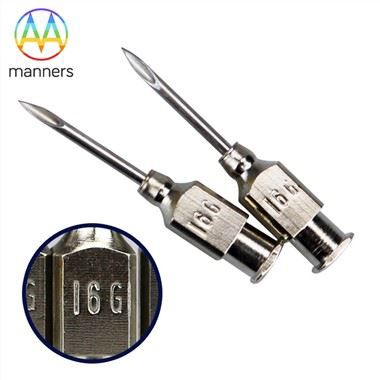
The introduction of All-Inside repair technology marked a new era. Utilizing specialized meniscus repair needles and implants, the entire procedure-suturing and fixation-could be completed entirely within the arthroscopic visual field without auxiliary incisions. As highlighted in your provided materials, modern repair needles are manufactured via advanced processes including precision grinding, electropolishing, and Wire Electrical Discharge Machining (WEDM). Their ultra-sharp tips allow for precise penetration of meniscal tissue without inflicting collateral damage.
V. The Modern Standard
Today, meniscus repair has become the standard procedure in sports medicine. Research confirms that successful repair restores native knee biomechanics, enabling patients to return to high-level athletics. While there is an acknowledged re-tear rate, the long-term chondroprotective effect and cost-effectiveness of repair far surpass those of resection.
Conclusion
From "Excision is Best" to "Repair when Possible," this century-long conceptual revolution teaches us a fundamental truth in orthopedics: preserving native tissue is always the superior choice. The meniscus repair needle stands as the indispensable precision instrument that makes this philosophy a clinical reality.