The Art Of Safe Puncture: How The Veress Needle Defines The First Entry in Laparoscopic Surgery
Apr 13, 2026
The Art of Safe Puncture: How the Veress Needle Defines the "First Entry" in Laparoscopic Surgery
Provocative Question:
In laparoscopic surgery, how does one safely enter the abdominal cavity-filled with bowels and vessels-through a tiny incision without injuring any vital organs? This 2.5–5 mm puncture, known as the most dangerous and critical step in laparoscopy, is termed the "entry conundrum." The invention of the Veress Needle was designed specifically to solve this puzzle. But how does this Hungarian invention, unveiled in 1947, continue to safeguard the abdomens of millions of patients worldwide today?
Historical Context
The story of the Veress Needle begins in mid-20th century Hungary. In 1936, thoracic surgeon Dr. János Veress, while treating tuberculous pleural effusions, designed a puncture needle featuring a spring-protected mechanism. This ingenious design allowed a blunt obturator to automatically deploy after penetrating the chest wall, protecting the underlying lung tissue from injury. However, the needle's true moment of glory arrived nearly two decades later. With the rise of laparoscopic surgery, surgeons discovered that this tool, originally designed for the thorax, perfectly solved the safety challenge of "blind entry" into the abdomen. From the thorax to the peritoneum, from Europe to the globe, the Veress Needle completed its "professional transition," becoming a key driver in the development of minimally invasive surgery.
Design Essentials
The safety mechanism of the Veress Needle is built upon a triple protection system:
|
Safety Layer |
Mechanical Design |
Safety Logic |
|---|---|---|
|
Layer 1: Blunt Obturator |
Retractable blunt inner stylet |
Automatically pops out upon penetrating the abdominal wall, replacing the sharp tip. |
|
Layer 2: Spring System |
Pre-tensioned spring |
Ensures the obturator deploys instantaneously upon passing through the peritoneum. |
|
Layer 3: Auditory Feedback |
Distinct "Click" sound |
Provides audible confirmation of successful puncture. |
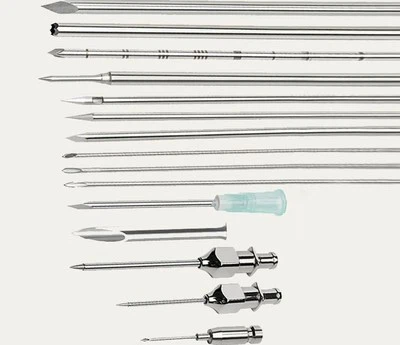
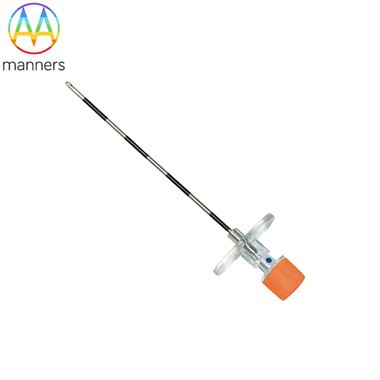
The engineering specifications of a standard Veress Needle reflect a delicate balance: a length of 120–150 mm suits most adult abdominal wall thicknesses, while a 1.5 mm gas inlet lumen allows for satisfactory pneumoperitoneum to be established within 30 seconds. The needle tip features a 15–30 degree bevel, ensuring sharp penetration while minimizing fascial defects.
Clinical Evolution
Within different surgical specialties, the Veress Needle has evolved into specialized variants:
Gynecological Version: Shortened to 80–100 mm to suit the relatively thinner female abdominal wall.
Bariatric Variant: Extended to 200 mm to penetrate subcutaneous fat exceeding 5 cm.
Optical Veress Needle: Integrated with 0° or 30° lenses to achieve "visualized puncture."
Single-Use Safety Lock: Automatically locks after puncture to prevent accidental increases in penetration depth.
Safety Data
The safety of the Veress Needle has been validated over decades. According to a Meta-analysis in the journal Surgical Endoscopy, in the hands of experienced surgeons, the incidence of major complications with Veress Needle puncture is merely 0.1–0.3%. Major complications include bowel injury (0.04%), vascular injury (0.02%), and retroperitoneal hematoma (0.01%). Compared to the traditional open Hasson technique, the Veress Needle reduces wound infection rates by 60% and incisional hernia rates by 80%.
Technical Legacy
Although visualized entry techniques have gained popularity in recent years, the clinical value of the Veress Needle remains irreplaceable. In emergency laparoscopy or in patients with a history of multiple surgeries, the simplicity and reliability of the Veress Needle offer clear advantages. Globally, over 2 million laparoscopic surgeries still employ Veress Needle technology annually; in developing countries, this figure accounts for as much as 70% of cases.
As Professor Kurt Semm, a pioneer of laparoscopic surgery, once stated: "The Veress Needle is not just a tool, but a philosophy-how to enter safely when you cannot see." From a simple spring-loaded needle to a symbol of minimally invasive surgery, the history of the Veress Needle epitomizes the evolution of modern surgery from "radical cuts" to "precision minimalism."