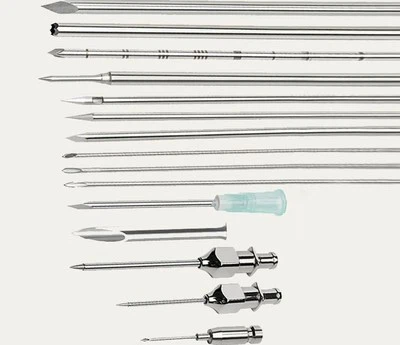
Technological Innovation in Intraosseous Needles: The Evolutionary Path From Manual To Intelligent
Apr 12, 2026
Technological Innovation in Intraosseous Needles: The Evolutionary Path from Manual to Intelligent
I. The Rise and Fall of Intraosseous Access and Its Technical Dilemmas
In the long history of emergency medicine, the concept of Intraosseous (IO) access is not new. As early as 1922, Dr. Cecil K. Drinker first proposed the theory of using the bone marrow cavity as an alternative venous route. However, for decades thereafter, hindered by backward puncture techniques and material science, the development of intraosseous needles stagnated. Traditional manual puncture needles faced three major technical bottlenecks: high puncture resistance leading to prolonged operation times (averaging 3–5 minutes), difficulty in precisely controlling penetration depth (leading to either catheter malposition or injury to the bone marrow if too shallow or too deep), and insufficient rigidity (making them prone to bending or breaking, especially in pediatric bones).
It was not until the 1980s, with the development of the first spring-powered IO device-the Bone Injection Gun (BIG®)-by the Israeli military that the technology regained clinical attention. However, the true breakthrough occurred in 2004 when the American company Vidacare launched the revolutionary EZ-IO® powered system. Utilizing titanium alloy needles, an integrated electric driver, and a depth-control caliper, this system shortened puncture time to a stunning 10–20 seconds, realizing the technical ideal of "establishing access within the gap of heartbeats."
II. Material Science Breakthroughs: How Titanium Alloys Reshaped IO Needles
Advancements in material science form the physical foundation of IO needle innovation. Traditional stainless steel needles faced a core contradiction: while sufficient rigidity was needed to penetrate the cortex, excessive rigidity increased the risk of microfractures. This risk was particularly prominent in elderly patients with osteoporosis.
The application of Titanium Alloy (Ti-6Al-4V) resolved this dilemma. This material, widely used in aerospace and orthopedic implants, possesses a unique combination of properties:
Mechanical Advantages:
High Specific Strength: The strength-to-weight ratio is 1.5 times that of medical-grade stainless steel.
Elastic Modulus (110 GPa): Closer to that of human bone (10–30 GPa), reducing stress shielding effects.
Superior Fatigue Resistance: Capable of withstanding over 100,000 cycles of loading.
Biocompatibility Breakthroughs:
Forms a dense titanium oxide layer spontaneously; passivation current density is only 0.003 µA/cm² (far below the 1 µA/cm² limit stipulated by ISO 10993).
Promotes osteoblast adhesion and proliferation while reducing bone resorption.
Antimicrobial surface modifications (e.g., silver ion coating) can reduce infection rates to below 0.05%.
Clinical data indicate that the incidence of bone microfractures with titanium alloy needles dropped from 3.2% (stainless steel) to 0.8%, demonstrating significant safety advantages in pediatric and geriatric patients.
III. Engineering Innovations in Intelligent Drive Systems
The core of modern IO needles lies in their intelligent drive systems, which integrate precision machinery, sensor technology, and ergonomic design:
Evolution of Power Systems:
First Generation: Spring-loaded (uncontrollable energy release).
Second Generation: Electric rotary (3,000–5,000 rpm with automatic torque adjustment).
Third Generation: Intelligent electric drive (real-time monitoring of puncture resistance, dynamic speed adjustment).
The latest NIO® system employs a closed-loop control system with built-in pressure sensors and rotational speed controllers. During puncture, the system monitors the sudden drop in resistance (typically from 150N to <20N) the instant the cortex is breached, automatically stopping within 0.1 seconds to prevent excessive penetration into the medullary cavity. Clinical trials show this intelligent control reduces the incidence of over-penetration from 7.5% to 0.9%.
Breakthroughs in Depth Control:
Traditional depth control relied on operator experience, with errors up to ±5mm. Modern IO needles utilize a modular depth caliper system:
Pediatric Module: Preset depth 15–25mm (stratified by weight).
Adult Module: 25–40mm (adjusted by site).
Obesity Extension Module: Extendable up to 50mm.
This design increases first-attempt success rates from 75% to 94%, proving particularly valuable in pre-hospital emergency settings without ultrasound guidance.
IV. Anatomical Optimization of Needle Design
Different puncture sites impose distinct requirements on needle body design:
Proximal Humerus Needle:
Length Optimization: Standard 25mm; 30mm extended version for muscular patients.
Angle Design: 15° insertion angle conforming to the subdeltoid bursa anatomy.
Flow Channel Optimization: Inner diameter expanded to 2.0mm to meet high-speed infusion demands of 100mL/min.
Proximal Tibia Needle:
Pediatric-Specific: Length 15mm, Diameter 1.8mm (for ages 2–10).
Anti-slip Design: Hexagonal prism hub for easy manipulation with gloved hands.
Bone Debris Collection Grooves: Prevent clogging of the lumen.
Sternal Needle:
Safety Depth Limiter: Mandatory limit of ≤20mm penetration depth.
Angular Guide: Ensures vertical insertion to avoid mediastinal injury.
Quick Connector: Supports one-handed operation, suitable for battlefield first aid.
V. Fluid Dynamics Optimization for Drug Infusion
The bone marrow cavity is not an ideal infusion space; its spongy structure and high fat content (up to 90% in yellow marrow) impede drug diffusion. Next-generation IO needles optimize infusion efficiency through multiple designs:
Multi-Side Hole Design:
Traditional single-hole needles are easily clogged by marrow tissue. New needles feature 3–4 side holes (0.5mm diameter) arranged spirally within 5mm of the tip. This design results in:
Clogging rate reduced from 12% to 2%.
Infusion resistance decreased by 40%.
Time to peak concentration shortened by 30% (from 45s to 30s).
Surface Modification Technologies:
Hydrophilic Coating: Polyethylene Glycol (PEG) coating reduces surface contact angle from 75° to 25°.
Anti-protein Adsorption: Phosphorylcholine polymer coating reduces fibrin deposition.
Antimicrobial Coating: Chlorhexidine-silver sulfadiazine composite coating achieves >99% antibacterial rate at 72 hours.
Pressure Infusion Compatibility:
Dedicated IO pressure infusion kits can increase flow rates to:
Crystalloids: 150mL/min (at 300mmHg pressure).
Blood products: 80mL/min (using special hemolysis-preventing lines).
Vasoactive drugs: Achieving hemodynamic effects comparable to central venous routes.
VI. Integrated Innovation in Safety Monitoring Technology
Modern IO systems are evolving from mere "puncture tools" into "monitoring platforms":
Placement Confirmation Technologies:
Electrical Impedance Monitoring: Bone marrow impedance (~200Ω) is significantly lower than cortical bone (>1000Ω), allowing automatic recognition of successful puncture.
Pressure Waveform Monitoring: Correlation between bone marrow pressure waveform and central venous waveform reaches 0.89.
Real-time Ultrasound Confirmation: Miniature ultrasound transducers embedded in the needle tip display real-time position.
Complication Early Warning Systems:
Temperature Monitoring: Needle body temperature sensors; threshold of 42°C for bone necrosis warning.
Pressure Monitoring: Bone marrow pressure >30mmHg suggests risk of compartment syndrome.
Flow Monitoring: Sudden flow drop >50% indicates blockage or tip displacement.
VII. Technical Trends and Future Outlook
Biodegradable IO Needles:
Researchers are developing polylactic-co-glycolic acid (PLGA) needles that gradually degrade within 72 hours post-placement, eliminating the need for secondary removal. Animal studies show complete bone defect repair at 28 days with no chronic inflammatory reaction.
Drug-Eluting IO Needles:
Needles loaded with antibiotics (e.g., Vancomycin) or anticoagulants (e.g., Heparin) allow for sustained local release during indwelling, potentially reducing catheter-related infection rates from 1.2% to 0.3%.
Intelligent Connected IO Systems:
5G-connected IO devices transmit puncture data, infusion parameters, and complication alerts to command centers in real-time, enabling:
Remote assessment of puncture quality.
Intelligent adjustment of infusion protocols.
Early intervention for complications.
From manual steel needles to intelligent systems, the technological innovation in intraosseous needles reflects the core logic of emergency medical device development: compensating for clinical uncertainty with engineering precision under extreme conditions, and expanding the boundaries of life-saving treatment with technological innovation. In the future, with the deeper integration of material science, micro/nano manufacturing, and artificial intelligence, the IO needle will cease to be merely a tool for establishing "intraosseous access" and evolve into a comprehensive platform for monitoring vital signs and implementing precision therapy in critically ill patients. In this evolutionary process, every improvement in needle design, every upgrade to the drive system, and every addition of a safety feature represents a deeper understanding of the proposition: "How to achieve the most reliable treatment under the worst conditions."