Technological Innovation And Evolution: How The AccuSteel™ Ultrasound Puncture Needle Is Redefining Endoscopic Intervention Standards
May 02, 2026
In the field of endoscopic ultrasound (EUS)-guided fine-needle aspiration biopsy, every technological iteration directly impacts diagnostic accuracy and patient safety. The evolution of modern puncture needles, exemplified by the AccuSteel™, profoundly reflects the core logic of clinical needs driving technological innovation. Early puncture needles, constrained by materials and design, frequently faced challenges such as insufficient tissue penetration, low sample yield, and poor visibility-often proving inadequate for sampling complex sites like the pancreatic head and submucosal tumors.
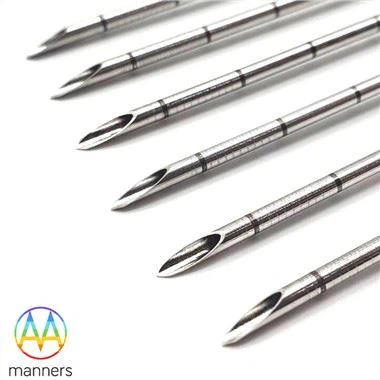
The revolution in puncture efficiency began with the redesign of the needle tip geometry. Traditional single-bevel needle tips tend to deflect when passing through tissues of varying densities, leading to positional drift. In contrast, leading-edge products now feature double-bevel or even triple-bevel (Mitsubishi-style) tip designs. These symmetric or compound-angle cutting edges deliver a scalpel-like "cutting" effect rather than a "splitting" action. This design significantly reduces puncture resistance. For conditions with severe fibrosis, such as chronic pancreatitis or scirrhous carcinoma, physicians can achieve stable penetration with minimal force, reducing compressive damage to healthy tissue and maintaining a straight needle trajectory-laying the foundation for subsequent precise sampling.
The visibility revolution marks another milestone in ultrasound intervention. Visualizing the needle under ultrasound was once likened to "searching for a thin wire in thick fog." Modern needles address this pain point through two key technologies:
Specialized micro-treatment or coatings on the needle surface, which create an acoustic impedance differential with surrounding tissues to enhance ultrasound echo signals.
Precision laser-engraved graduations or indentation markers on the needle shaft. These microstructures form regular, hyperechoic points under ultrasound-like railroad ties-allowing operators to clearly distinguish the positions of the needle tip and shaft.
Products like the AccuSteel™ integrate this visibility optimization with needle shaft rigidity (bend resistance). This ensures the needle's true shape is accurately reflected in ultrasound images when passing through the gastrointestinal wall or navigating bends, eliminating "misjudgment of needle tip position" caused by shaft bending-a critical risk factor for sampling failure or complications.
Dual-capability FNA/FNB compatibility represents a leap in diagnostic efficiency. Traditionally, separate needles were required for cytological smears (FNA) and core tissue biopsy (FNB). FNA needles, with smaller diameters, are suitable for harvesting suspended cells but lack the ability to preserve tissue architectural details. FNB needles, typically larger with specialized cutting grooves, are designed to retrieve 微型 tissue cores.
Next-generation puncture needles achieve single-needle dual functionality by optimizing the inner lumen diameter, cutting edge sharpness, and negative pressure aspiration system. They deliver high-quality cytological samples while also harvesting small specimens sufficient for histological architectural analysis via modified cutting actions (e.g., "door-leaf" or spiral rotary cutting). This not only saves procedural time and reduces consumable costs but, more importantly, provides pathologists with complementary diagnostic materials in a single insertion: cytology for rapid interpretation and histology for immunohistochemistry and molecular testing-strongly supporting precision medicine.
The foundation of materials science and reliability lies in the precision machining of medical-grade stainless steel. A puncture needle requires a delicate balance of "flexibility" and "strength." The shaft must be flexible enough to navigate the curves of the endoscopic biopsy channel yet possess high axial rigidity to enable precise insertion once extended beyond the transducer. This depends on full-process control from wire rod to final product:
The purity of premium stainless steel determines its corrosion resistance and biocompatibility.
Specialized drawing and heat treatment processes impart an optimal elastic modulus.
Welding or monolithic forming of the tip and shaft ensures an absolutely secure joint during repeated use.
The "core cannula" technology emphasized by the AccuSteel™ reinforces the internal support structure. This ensures the needle maintains consistent shape and function after multiple punctures, even with a slender outer diameter-eliminating potential risks of sample cross-contamination or device fracture.
From a broader perspective, the manufacturing process of the AccuSteel™ ultrasound puncture needle-encompassing precision machining, anti-friction coating application, firing mechanism calibration, and 100% functional testing-establishes a closed-loop quality system. This guarantees every needle shipped is predictable and reliable. Its full compatibility with standard EUS systems lowers the barrier for hospitals to adopt new technologies, accelerating the 普及 of advanced puncture techniques.
Thus, the evolution of modern ultrasound puncture needles follows a continuous upgrade path: from "usable" to "efficient and precise," and finally to "intelligent and reliable." It represents not just tool improvement but a microcosm of progress in the entire EUS intervention and diagnosis paradigm-driving disciplines such as gastroenterology, pulmonology, and oncology toward safer, more accurate, and more efficient minimally invasive diagnostics.