Analysis Of Design Philosophy: From Mitsubishi Needle Point To System Compatibility - Clinical Wisdom
May 02, 2026
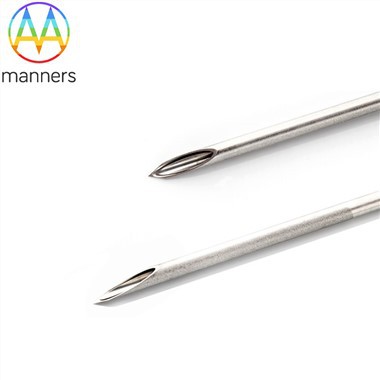
An excellent medical device is the materialization of the deep integration of its design philosophy and clinical needs. Every design detail of the AccuSteel™ ultrasonic biopsy needle, from the microscopic geometric shape of the needle tip to the compatible interface with the host platform, embodies a profound understanding of clinical operation scenarios and systematic solutions. The design of the needle tip is the most intuitive manifestation of this philosophy, directly addressing the "first kilometer" of the puncture problem. Clinically, tissues vary greatly, from soft lymph nodes, vascular-rich stromal tumors to hard pancreatic fibrotic tissues, and a single puncture strategy is difficult to be universally applicable. Therefore, leading manufacturers offer various needle tip options such as Mitsubishi (triaxial), dual-axis, and single-axis, which are not merely a simple product line extension, but "customized weapons" tailored for different clinical scenarios.
The Mitsubishi needle tip is named for its unique three symmetrical inclined surfaces. During the puncture process, it can produce a stable effect similar to that of a gyroscope, and the needle tip itself is less likely to deviate. It is particularly suitable for scenarios requiring long-distance penetration (such as puncturing pancreatic head lesions through the stomach) or situations where important blood vessels are nearby and precise avoidance is necessary. The double inclined surface needle tip provides excellent balance, achieving the best balance between reducing resistance and maintaining controllability. It is the universal choice for most conventional FNA/FNB operations. The single inclined surface needle tip, whose inclined surface can produce brighter echo points under ultrasound (the "lighthouse" effect), is conducive to the precise positioning of the needle tip. At the same time, its asymmetrical design enables a controllable deflection trend during puncture, and experienced surgeons can use this feature to fine-tune the needle path. This "selectable precision" gives surgeons greater tactical flexibility, allowing them to choose the most suitable "矛头" (needle tip) based on the location, nature, and anatomical environment of the lesion.
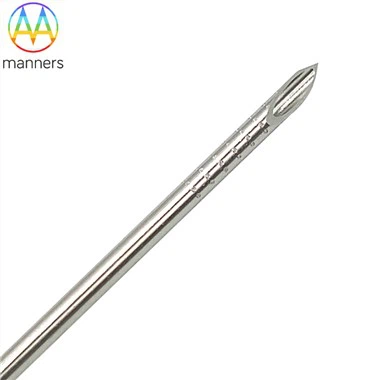
After successfully penetrating the target with the needle tip, the core contradiction of the "middle journey" shifted to the integration of visualization and controllability. Ultrasound intervention is described as "the operator's eyes on the screen", so the visibility of the needle body under ultrasound is of utmost importance. Excellent design not only involves high-echo treatment on the needle body surface, but also pays attention to setting depth marks at key positions on the needle shaft. These marks are not only length scales but also "positioning beacons" under ultrasound. When the puncture needle bends forward in the endoscopic channel, the operator may temporarily lose the view of the needle tip. At this time, the clear marks on the needle shaft can help quickly reposition. At the same time, the torque transmission performance of the needle body - that is, whether the needle tip can make an immediate, proportional response when the rotating handle is turned - determines the feel of precise control. This requires the needle body to have both flexibility and torsion resistance, and its material science and weaving/construction techniques face extremely high challenges in this regard.
The success of "the last mile" depends on the efficiency and reliability of the sampling mechanism. Whether it is the "suction-movement" of FNA or the "punch-cutting" of FNB, the goal is to maximize the amount of target tissue obtained and minimize blood dilution and contamination of surrounding tissues. The modern design of the puncture needle optimizes the smoothness and volume of the needle cavity, ensuring that tissue fragments can pass through smoothly. For the FNB function, the stroke, speed, and force of the punching mechanism (whether spring-driven or manual rapid movement) have been precisely calibrated to ensure a clean and efficient cutting action, obtaining a complete tissue micro-core (micro-core). This calibration ensures the repeatability of the operation, enabling physicians of different seniority levels to achieve stable sampling results, reducing the learning curve, and improving the homogeneity of overall medical quality.
Ultimately, all outstanding designs must focus on the system's compatibility and the security of usage. Full compatibility with the standard EUS system means that hospitals do not need to retrofit expensive ultrasound endoscopy hosts to introduce new needles, which greatly facilitates the rapid clinical implementation of new technologies. From a broader perspective, this compatibility design is an "ecological thinking", ensuring that innovative products can seamlessly integrate into the existing clinical workflow, reducing friction costs. Safety is embedded in every detail - from the biocompatibility of materials, sterile barrier packaging, to safety devices to prevent accidental discharges. The 100% functional testing during the manufacturing process is the ultimate guarantee of patient safety commitment.
Therefore, the design philosophy of AccuSteel™ puncture needle is a complete closed loop that starts from clinical problems and ends with a systematic solution. It begins with the microscopic physical properties of the needle tip, covers the entire process of puncture, visualization, control, sampling, safety and compatibility, and integrates the precise calculations of engineers with the practical experience of clinical physicians. This is not just a tool, but a highly coordinated technical system constructed to achieve the core goal of "precise, efficient and safe acquisition of diseased tissues". It represents a profound transformation in contemporary medical device design from "function realization" to "experience optimization" and "process integration".