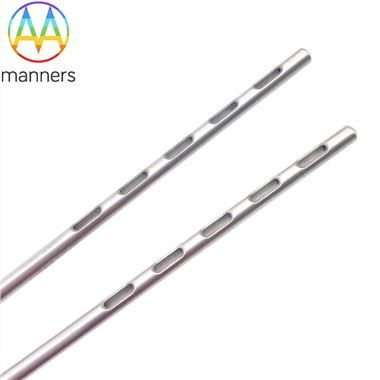
Technological Evolution: A History Of OPU Needles From Basic Puncture To Intelligent Navigation
May 19, 2026
On the precise stage of Assisted Reproductive Technology (ART), the OPU (Ovum Pick‑Up) needle serves as an irreplaceable core component. This slender metal tube acts as the sole physical bridge connecting the hope of In‑Vitro Fertilization (IVF) with mature oocytes. Its technological evolution represents an iterative development history centered on the core goals of greater precision, minimal invasiveness and higher efficiency, with every design innovation embodying the wisdom of the world's top manufacturers.
Fundamental Principles and Core Mission
The core mission of an OPU needle is to accurately puncture the vaginal fornix and ovarian parenchyma under real‑time transvaginal ultrasound guidance to reach target follicles, and safely and completely aspirate follicular fluid containing Cumulus‑Oocyte Complexes (COCs) via negative pressure. The entire procedure requires nearly zero damage to oocytes while minimizing trauma and bleeding to the patient's ovarian tissue. This dictates that OPU needle design must balance multiple conflicting factors: sufficient rigidity to penetrate tissue yet extreme sharpness to reduce puncture force; an adequate inner diameter to ensure aspiration flow rate while being as fine as possible to lower trauma risk.
Design Evolution: From Single‑Lumen to Double‑Lumen, General‑Purpose to Specialized
Early ovum pick‑up needles were mostly simple single‑lumen needles with only one central channel for aspiration. Featuring straightforward design and low cost, they remain in use in many clinical settings today. However, when oocytes adhere to follicle walls, single‑pass aspiration may fail to retrieve them completely, lowering oocyte yield rates.
To address this issue, double‑lumen needles emerged and have become the mainstream choice for modern ovum pick‑up procedures. Represented by brands such as Cook Medical and Vitrolife, double‑lumen needles integrate an independent flushing channel alongside the main aspiration channel. After aspiration, surgeons can inject culture medium into empty follicles through this channel to wash out residual oocytes, significantly improving oocyte recovery rates. This is particularly critical for patients with low follicle counts or those undergoing natural‑cycle IVF.
-
Tip Geometry: Micron‑Scale Precision Craftsmanship
- Needle tip design directly determines puncture ease and the degree of tissue injury. While conventional bevel tips are common, they tend to deviate during puncture. Accordingly, manufacturers have developed multiple optimized designs:
- Tapered Tip: For instance, Cook Medical's Otrieva™ Tapered Ovum Aspiration Needle features a smoothly tapered tip engineered to penetrate tissue with a smaller outer diameter, reducing pain and bleeding while maintaining shaft rigidity.
- Double‑edged / Multi‑edged Tip: Many premium needle models adopt double‑edged or even triple‑edged cutting designs, described by some manufacturers as a "double‑edged inverted triangular" tip. This design cuts tissue like a surgical blade rather than bluntly expanding it, enabling smoother puncture with less thrust force and reportedly reducing puncture resistance by up to 30%.
- Echogenic Marker: To ensure clear visibility under ultrasound, laser etching or embossing creates special textures or grooves near the tip. Cook Medical's EchoTip® technology is a prime example, significantly enhancing ultrasonic reflection from the tip, allowing surgeons to track needle position more accurately, minimizing intraoperative adjustments and improving procedural safety.
Specification Parameters: Trade‑Offs Between Efficiency and Trauma
OPU needle specifications are defined primarily by length and gauge. Length generally ranges from 30 to 35 cm to accommodate anatomical variations among patients. Gauge selection reflects clinical philosophy: larger‑bore 16G or 17G needles (outer diameter approx. 1.6–1.4 mm) deliver faster aspiration flow rates for high‑volume follicular fluid scenarios with numerous follicles yet cause relatively greater tissue trauma. In contrast, finer 18G or 19G needles (outer diameter approx. 1.2–1.0 mm) - with companies such as Casmed highlighting that their 19G tips markedly reduce pain and tissue damage - are becoming the preferred option amid the trend toward ultra‑minimal invasiveness, especially for patients with few follicles or high pain sensitivity. UK‑based Casmed specializes in composite‑design needles with a 19G tip attached to a 17G shaft, balancing minimal invasiveness of the fine tip and rigidity of the thicker shaft.
Future Outlook: Intelligence and Integration
Currently, the technological frontier of OPU needles advances toward intelligent navigation and functional integration. Future ovum pick‑up needles may integrate miniature pressure sensors to monitor aspiration negative pressure in real time and prevent oocyte damage from excessive shear force, or be combined with robot‑assisted puncture systems for sub‑millimeter ultra‑precision positioning. Furthermore, fully integrated ovum pick‑up kits with single‑use, pre‑connected sterile tubing and collection systems are a product development direction for manufacturers including CooperSurgical and Kitazato, designed to further streamline surgical workflows and elevate standardization and safety levels.
Evolving from a simple puncture needle into a precision instrument integrating fluid mechanics, materials science and ultrasonic engineering, the history of OPU needles epitomizes the continuous progress of assisted reproductive technology toward higher success rates and better patient experience.