Market Landscape And Industrial Competition‑Cooperation: Global OPU Needle Manufacturer Mapping And Growth Drivers
May 19, 2026
Amid the booming global Assisted Reproductive Technology (ART) market, the market for single‑use ovum pick‑up (OPU) needles - core consumables for ART - is demonstrating robust and steady growth momentum. According to research by Hengzhou Chengsi, the global market size of single‑use sterile ovum pick‑up needles reached approximately CNY 910 million in 2024, and is projected to approach CNY 1.93 billion by 2031, with a compound annual growth rate (CAGR) of 11.3% over the period. This blue‑ocean market is dominated by a small number of international giants, alongside a rising dynamic Chinese manufacturing sector.
Market Drivers: Dual Engines of Demand and Policy
- Rising global infertility rates and delayed childbearing ageSocial pressures and environmental factors have continuously increased the proportion of infertile couples worldwide. Meanwhile, the average age of women having their first child has generally risen, driving rigid growth in demand for ART services.
- Popularization and improved accessibility of assisted reproductive technologyIVF technology has become increasingly mature with higher success rates, accompanied by growing public awareness and acceptance. Additionally, more countries and regions have included ART treatments in medical insurance or provided subsidies, lowering financial barriers for patients.
- Trend toward minimal invasiveness and safetySingle‑use sterile ovum pick‑up needles completely eliminate risks of cross‑infection. The principle of "one patient, one needle, one tube" has become a global clinical standard. Compared with reusable needles, single‑use products avoid risks from incomplete cleaning and disinfection, making them more popular among fertility clinics and patients.
- Technological innovation and product upgradingManufacturers keep launching ovum pick‑up needles with finer gauges (e.g., 19G), superior ultrasonic visibility and higher integration levels, promoting product iteration and higher unit prices.
Competitive Landscape: International Giants Competing alongside Local Rising Players
The global OPU needle market features an oligopolistic structure coexisting with regional brands. Key market participants include:
- Cook Medical (USA)A global medical device giant with deep layout in reproductive health. Its Otrieva™ tapered ovum pick‑up needle enjoys high market reputation for its unique design and EchoTip® ultrasonic enhancement technology. Leveraging robust R&D capabilities and a global distribution network, Cook Medical holds a significant market share.
- CooperSurgical (USA)A leader in comprehensive ART industrial‑chain solutions, with a product portfolio covering the entire workflow including ovum pick‑up, embryo culture and cryopreservation. CooperSurgical's ovum pick‑up needles are renowned for clinical efficiency and system compatibility, achieving seamless integration with its proprietary ovum aspiration pumps and workstations.
- Vitrolife (Sweden)A world‑leading enterprise specializing in ART, offering a full range of products from ovum pick‑up needles and culture media to embryo incubators. Vitrolife's ovum pick‑up needles are designed for gentle oocyte handling to maximize oocyte survival rates and subsequent embryonic developmental potential.
- Kitazato IVF (Japan)A highly influential brand in the Asian market, famous for precision manufacturing and high quality. Its product designs are often better adapted to the operating habits of Asian clinicians and anatomical characteristics of local patients.
- TechBrueinAn important market player with active presence in several regional markets.
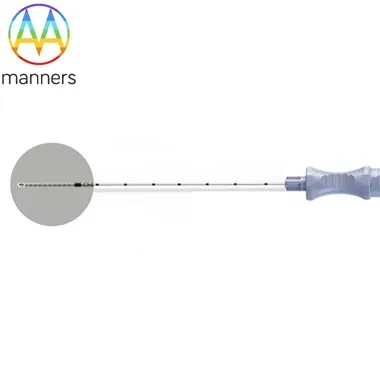
- Rise of Chinese manufacturersChinese enterprises represented by Manners Medical (Shenzhen Miris Medical Technology Co., Ltd.) are growing rapidly. Such enterprises usually start by providing OEM/ODM services for international brands, accumulate precision manufacturing technologies, and later launch self‑branded products. With cost advantages, responsive customized services and continuously improved quality, they are gradually realizing import substitution in the domestic market and expanding into global markets. Furthermore, enterprises such as Shanghai Metal Corporation supply needle tube components as upstream vendors.
Product Segmentation and Regional Markets
By product type, the market is mainly divided into single‑lumen and double‑lumen needles. Single‑lumen needles are popular in both developed and emerging markets due to their simple structure and low cost. Double‑lumen needles are more widely used in high‑end markets and complex cases for their ability to improve oocyte recovery rates.
Regionally, North America and Europe are currently the largest markets thanks to mature ART technologies and high penetration rates. The Asia‑Pacific region - particularly China, Japan and India - is emerging as the fastest‑growing market, driven by large population bases, rising infertility rates, policy support and improved medical standards, attracting increased investment from all manufacturers.
Future Competitive Focus
Future competition will go beyond pure product performance toward comprehensive solutions and services. Leading enterprises such as Cook, CooperSurgical and Vitrolife are building complete ecosystems covering ovum pick‑up needles, consumables, laboratory equipment and information management systems. Meanwhile, medical insurance cost‑control policies such as Group Purchasing Organizations (GPO) implemented in markets including China have created a window for cost‑effective domestic products to accelerate import substitution.
For Chinese manufacturers like Manners Medical, opportunities lie in continuously improving product quality and consistency, accumulating clinical data to gain clinician trust, and providing flexible and responsive customer services by leveraging supply‑chain advantages. The global OPU needle market landscape is being jointly shaped by international giants and local players, balancing technological innovation and cost control.