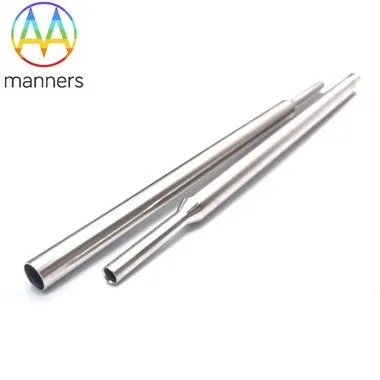
Tapered Core
Sep 15, 2026
Pain Point
The fundamental challenge in guide wire design is the inherent conflict between pushability and trackability. A uniform-diameter core wire is a study in compromise: if it is thick enough to provide the necessary push force to cross a calcified lesion, it is too stiff to navigate the delicate, tortuous anatomy of the neurovasculature or the distal coronary arteries. Conversely, an ultra-thin core that tracks beautifully through complex curves lacks the columnar strength to advance a stent or a balloon catheter. This dilemma forces interventionalists to "exchange" wires frequently, a process that adds significant time to the procedure, increases the risk of vessel dissection or perforation, and elevates radiation exposure for both patient and clinician. The pain is amplified in procedures like chronic total occlusions (CTOs) or peripheral artery disease (PAD), where the anatomy can vary from the large, relatively straight iliac artery to the tiny, highly tortuous tibial vessels. A single, non-tapered core wire simply cannot provide the "push" needed proximally and the "play" required distally. Engineers need a way to program the stiffness gradient along a single, continuous piece of metal, creating a device that is stiff where it needs to be and flexible where it must be.
Principle
The tapered core wire is the embodiment of the principle of "zoned mechanical programming." The underlying physics is derived from the formula for bending stiffness, EI=E⋅(π⋅d4/64). By gradually reducing the diameter (d) of the core wire towards the distal end, engineers can decrease the bending stiffness exponentially while maintaining a continuous, unbroken axial load path. This is typically achieved through precision centerless grinding. However, the true innovation lies in combining the tapered core with laser-cut hypotube technology. A hypotube (ranging from Ø0.20mm to 20mm) can be placed over or in place of the distal tapered section. By applying specific laser-cut patterns-such as a Continuous Spiral for uniform flexibility or a Radial cut for articulated bending-the flexibility gradient can be fine-tuned with micron-level precision. The 0.012 mm minimum kerf width ensures that the structural integrity of the core is maintained while introducing the necessary compliance. This creates a "continuous stiffness gradient" that mimics the natural transition from the rigid, proximal access point to the delicate, distal target vessel.
Equipment Classification
- Single-Taper Core: A core wire with one continuous, gradual reduction in diameter, typically used for standard coronary or peripheral interventions where a moderate flexibility gradient is sufficient.
- Multi-Taper Core: Features multiple tapers with different rates of diameter reduction along the shaft, allowing for a more customized stiffness profile for complex anatomies.
- Ground Taper Core: Made from 304V or 316L stainless steel, precision-ground to a smooth, continuous taper to minimize stress concentrations and improve fatigue life.
- Nitinol Taper Core: A tapered core made from Nitinol, providing a superelastic distal segment that can recover from extreme bends, ideal for neurovascular applications.
- Hybrid Taper-Hypotube Core: A solid, tapered proximal core transitions into a laser-cut hypotube (e.g., 17-7PH or L605) at the distal end, combining the push of a solid wire with the programmed flexibility of a cut tube.
Practical Guide
- Anatomical Mapping: The taper start point and rate should be determined by the most challenging anatomical transition of the target procedure (e.g., the aortic arch or the SFA).
- Grinding Precision: Use centerless grinding to create a continuous, shoulder-free taper. Any microscopic step or notch becomes a stress concentration point and a potential site for fatigue fracture.
- Surface Finish: Post-grinding, the core wire must be electropolished to remove the "recast layer" and achieve a mirror-like finish (Ra < 0.2 µm) to reduce friction and prevent thrombus formation.
- Coating Strategy: Apply a two-tone coating: a PTFE (polytetrafluoroethylene) coating on the proximal, tapered section for low-friction push, and a hydrophilic coating on the distal, flexible segment for enhanced trackability.
- Fatigue Testing: Subject the tapered core to millions of bending cycles in a simulated vascular environment to ensure the transition zones do not become fatigue failure points.
- Supplier Quality: Ensure the manufacturer is ISO 13485 certified and can provide a full validation package, including First Article Inspection (FAI) reports and material certifications.
Real-World Experience
A team developing a guide wire for the treatment of below-the-knee (BTK) arterial disease faced a significant hurdle. The tibial vessels are extremely small and tortuous, yet the wire needed enough push to cross heavily calcified lesions. Their initial design used a solid, non-tapered 0.014" core, which was either too stiff and caused vessel trauma or too thin and buckled under push. The solution was a multi-taper core design. The proximal 150 cm was a robust 0.014" 304V stainless steel core for push. The next 30 cm featured a rapid taper down to 0.010", and the final 10 cm was a gradual taper to 0.006". To further enhance flexibility without sacrificing torque, a 5 cm section of laser-cut 316L hypotube with an Interrupted Spiral pattern was placed at the distal end. The result was a wire that could be pushed through a calcified lesion with the force of a solid wire, yet could navigate the most tortuous BTK anatomy with the grace of a micro-catheter. The clinical trial showed a 30% reduction in procedure time and a significant decrease in vessel trauma.
Conclusion
The tapered core wire is a testament to the power of geometric programming in mechanical design. It solves the fundamental pushability-trackability dilemma by creating a continuous, controlled gradient of stiffness. By combining the art of precision grinding with the science of laser-cut hypotube technology, engineers can create a single device that adapts to the entire spectrum of human anatomy, from the rigid proximal access to the delicate distal target. It is a perfect example of how thoughtful design can turn a simple piece of metal into a sophisticated, life-saving tool.
Outlook & Recommendations
The future of tapered core wires lies in "active" tapering, where the stiffness gradient can be dynamically adjusted during the procedure, possibly through the use of shape-memory alloys or electroactive polymers. We will also see the integration of advanced sensors within the tapered section to provide real-time feedback on the forces being applied to the vessel wall. For now, the focus should be on developing standardized testing protocols for tapered cores, as current industry standards are often inadequate for these complex geometries. Manufacturers should invest in multi-axis grinding and laser-cutting machines that can produce these intricate tapers with micron-level repeatability.