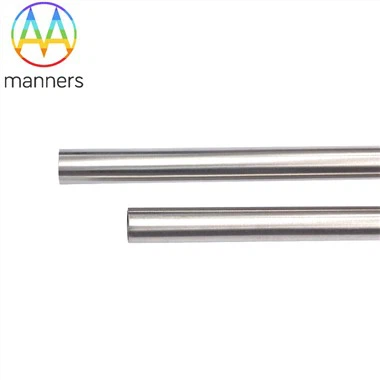
Nitinol Core
Sep 15, 2026
Pain Point
Nitinol, a nickel-titanium alloy, is often hailed as a "miracle metal" in the medical device industry due to its unique superelastic and shape-memory properties. However, the transition from a "miracle" to a reliable, high-performance core wire is fraught with challenges. The most significant pain point is the material's extreme sensitivity to processing. Improper laser cutting, grinding, or heat treatment can irreversibly alter the material's phase transformation temperatures, leading to a loss of superelasticity, poor shape recovery, or even premature fracture. Many engineers treat Nitinol like stainless steel, applying the same manufacturing processes, only to find that the core wire becomes "mushy," loses its set, or fractures after a few uses. Another major issue is the "kink-and-break" phenomenon. While Nitinol can bend to extreme angles without permanent deformation, it has a finite fatigue life. If the wire is repeatedly bent at a tight radius, it can suffer from strain localization and crack propagation, leading to a fracture that can leave a piece of metal inside the patient. Furthermore, the high nickel content raises concerns about nickel ion release and allergic reactions, requiring a robust passivation or coating process. The industry needs a deep understanding of Nitinol's metallurgy and a disciplined manufacturing process to unlock its full potential for core wire applications.
Principle
The working principle of a Nitinol core wire is based on the reversible, solid-state phase transformation between two crystal structures: austenite (the stronger, high-temperature phase) and martensite (the softer, low-temperature phase). At body temperature (37°C), a properly processed Nitinol core wire is in its austenitic phase. When a bending force is applied, the material at the outer bend radius undergoes stress-induced martensitic transformation. This transformation allows the wire to bend to a very small radius without exceeding its elastic limit. Once the force is removed, the material reverts to austenite, and the wire returns to its original, straight shape. This is the essence of superelasticity. The key to a successful Nitinol core wire is controlling the Austenite finish temperature (Af). For medical applications, the Af should be a few degrees below body temperature to ensure the wire is fully superelastic in vivo. Laser cutting plays a crucial role in enhancing the performance of Nitinol cores. By using a laser with a 0.012 mm minimum kerf, we can create patterns on a Nitinol hypotube that act as stress-relief mechanisms. For example, a Radial cut pattern can create a series of microscopic, articulated joints, allowing the wire to bend in multiple planes without concentrating stress at a single point, thereby extending its fatigue life.
Equipment Classification
- Superelastic Nitinol Core: The standard for neuro and peripheral interventions, offering excellent kink resistance and shape recovery. The Af temperature is carefully controlled for 37°C performance.
- Shape-Setting Nitinol Core: These cores are heat-treated in a jig to create a pre-defined shape (e.g., a J-tip or an angled tip). They are used for selective cannulation of vessel branches.
- Nitinol Core with Stainless Backup: A hybrid design where a Nitinol distal core provides flexibility and a stainless steel proximal core provides torque and push.
- Laser-Cut Nitinol Core Shaft: A hypotube made from Nitinol with Interrupted Spiral or Bespoke patterns, offering a programmable flexibility gradient for complex anatomies.
- Platinum-Iridium Tipped Nitinol Core: A Nitinol core with a radiopaque platinum-iridium tip for enhanced visibility under fluoroscopy, crucial for precise navigation.
Practical Guide
- Af Temperature Control: The most critical parameter. Specify an Af temperature of 10-25°C to ensure the wire is superelastic at room temperature for handling and fully superelastic at body temperature in vivo.
- Low-Heat Laser Processing: When laser cutting Nitinol hypotubes, use a pulsed, low-heat laser to minimize the Heat-Affected Zone (HAZ) and prevent the formation of brittle intermetallic compounds.
- Constrained Aging: After laser cutting and shaping, the Nitinol core must undergo a constrained aging process to set its shape memory and optimize its mechanical properties.
- Surface Treatment: Nitinol is prone to oxide formation. A multi-step cleaning and passivation process is essential to remove the nickel-rich surface layer and create a protective titanium oxide layer, reducing the risk of nickel ion release.
- Electropolishing: A critical step to remove the recast layer from laser cutting and grinding, and to achieve a smooth, biocompatible surface finish.
- Fatigue Testing: Conduct rigorous fatigue testing in a simulated vascular environment, bending the wire at its minimum bend radius for millions of cycles to validate its durability.
Real-World Experience
A company was developing a guide wire for the treatment of intracranial aneurysms. The initial design used a solid Nitinol core, but the operators complained that the wire was too "floppy" and lacked the necessary push to cross the aneurysm neck. The engineers decided to increase the diameter of the core, but this made the wire too stiff and it began to kink at the tight curves of the carotid siphon. The breakthrough came when they switched to a laser-cut Nitinol hypotube core with an Interrupted Spiral pattern. The spiral cuts allowed the distal segment to be incredibly flexible and kink-resistant, while the uncut bridges provided a continuous path for push and torque. The 0.012 mm kerf cuts were so precise that they did not compromise the structural integrity of the wire. In clinical trials, the new wire could be pushed through the aneurysm neck with ease, and its superelastic properties allowed it to navigate the carotid siphon without kinking. The company had successfully harnessed the power of Nitinol by combining it with advanced laser-cutting technology.
Conclusion
The Nitinol core wire is a triumph of materials science and mechanical engineering. It has transformed the field of interventional medicine by providing a device that is both incredibly strong and remarkably flexible. However, its successful implementation requires a deep respect for its unique metallurgical properties. By understanding the principles of superelasticity and phase transformation, and by employing advanced manufacturing techniques like precision laser cutting, engineers can create Nitinol core wires that are not just components, but life-saving instruments that can navigate the most challenging anatomies with grace and precision.
Outlook & Recommendations
The future of Nitinol core wires is in "active" materials. We will see the development of Nitinol alloys with variable Af temperatures, allowing for dynamic stiffness control during a procedure. The integration of fiber-optic sensors within the Nitinol core will provide real-time feedback on the wire's shape and the forces it is experiencing. To achieve these advancements, the industry must invest in a deeper understanding of Nitinol's fatigue and fracture mechanics. We need more sophisticated FEA models that can accurately predict the behavior of laser-cut Nitinol structures. Manufacturers must also work closely with clinicians to develop new, innovative laser-cut patterns that can further enhance the performance of Nitinol core wires.