Stainless Steel Capillary Tube – Anti-Fatigue Performance For Long-Term Surgical Use
Sep 14, 2026
Fatigue failure is a common hidden quality problem of stainless steel capillary tube in long-term surgical and repeated use scenarios. Ordinary capillary tubes are prone to metal fatigue after repeated bending, torsion and stretching during minimally invasive surgery, resulting in permanent deformation, reduced flexibility and even tube wall fracture. Low-precision processed capillary tubes have uneven internal stress and rough kerf edges, which are easy to produce stress concentration points. After thousands of cyclic movements, fatigue cracks appear, seriously affecting the service life and surgical safety of medical devices. In neurological and peripheral vascular intervention devices that require high-frequency repeated navigation, the anti-fatigue performance of capillary tubes directly determines the durability of equipment. In addition, material mismatching and excessive laser kerf loss will damage the fatigue resistance of capillary tubes, making it difficult to meet the long-term use requirements of reusable endoscopic medical devices.
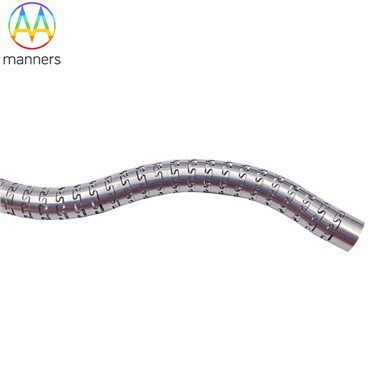
The anti-fatigue working principle of stainless steel capillary tube is to eliminate stress defects and optimize structural mechanics through material optimization and precision processing. High-quality medical-grade stainless steel and alloy capillary tubes have uniform and dense internal microstructure, with excellent fatigue resistance and ductility, providing a basic guarantee for long-term repeated movement. The 0.012mm ultra-fine kerf laser cutting technology realizes smooth cutting without burrs and sharp corners, avoiding local stress concentration caused by processing defects. Reasonable laser pattern design disperses the bending and torsion stress of the tube wall, reduces the stress load of single-point structure, and improves the cyclic bearing capacity of the capillary tube. After professional stress relief treatment, the residual processing stress inside the tube is completely eliminated, avoiding fatigue deformation caused by stress accumulation during long-term use, and realizing stable performance of repeated bending and torsion.
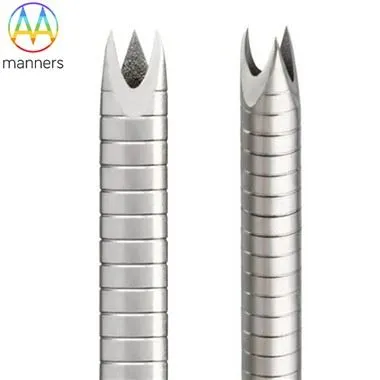
Anti-fatigue stainless steel capillary tubes are classified into different grades according to material and structural design. L605 alloy reinforced capillary tube has ultra-high fatigue resistance, suitable for high-frequency repeated bending scenarios of peripheral vascular intervention devices, with stable performance after millions of cyclic movements. Nitinol shape memory capillary tube has excellent elastic recovery ability, no permanent deformation after repeated torsion, and is widely used in long-term reusable neurological microcatheters. 316L medical stainless steel capillary tube has balanced fatigue resistance and corrosion resistance, meeting the long-term use needs of cardiovascular interventional devices. Optimized interrupted cut capillary tube disperses structural stress through segmented integral design, effectively improving the anti-fatigue life of large-size tubes for abdominal aortic aneurysm intervention.
The practical anti-fatigue performance optimization guideline covers material selection, structural optimization, stress treatment, fatigue testing and batch verification. First, select high-fatigue-resistant materials such as L605 alloy, Nitinol and 316L stainless steel according to the service frequency and cyclic load of medical devices. Optimize laser cutting patterns, adopt segmented interrupted cutting and uniform spiral cutting to disperse structural stress, and strictly control 0.012mm ultra-fine kerf width to avoid structural defects. Complete precision processing of capillary tubes in the range of Ø0.20mm to 20mm, and conduct high-temperature stress relief and surface polishing treatment to eliminate residual stress and micro defects. Carry out professional cyclic bending fatigue test, repeated torsion test and long-term simulated service test to verify product durability. Screen out unqualified products with fatigue deformation and cracks, and ensure that batch products meet long-term surgical use standards.
Field durability test experience proves that stress optimization and structural dispersion are the key to improving anti-fatigue performance of capillary tubes. In the durability test of reusable endoscopic devices, ordinary spiral cut capillary tubes had fatigue fracture after 5000 cyclic bending times. After adopting interrupted stress-dispersion structure and stress relief treatment, the fatigue life of the product was increased to more than 50,000 times, meeting the long-term reusable medical standard. It is summarized that rough kerf edges and residual stress are the main causes of fatigue failure, and standardized precision processing can effectively solve this problem. All anti-fatigue optimized products pass ISO13485 medical certification, with stable batch durability.
In summary, anti-fatigue performance is an important indicator to measure the durability of stainless steel capillary tube medical devices. Long-term repeated surgical use puts forward high requirements on the elastic recovery and structural stability of capillary tubes. Scientific material selection, stress dispersion structural design and standardized post-processing can effectively improve the anti-fatigue life of products. With the popularization of reusable medical devices, the industry's demand for anti-fatigue capillary tubes continues to increase. In the future, manufacturers should focus on the research and development of high-fatigue-resistant alloy materials and structural optimization technology to provide more durable and reliable components for long-term minimally invasive surgical equipment.