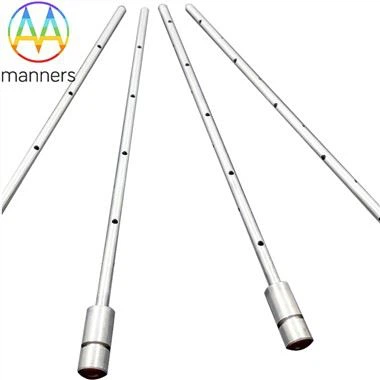
Specification Analysis And Clinical Positioning Of 18G Chiba Needles
Jun 09, 2026
https://radiopaedia.org/articles/chiba-needle
Introduction
Within interventional radiology, proper selection of puncture needle specifications lays the foundation for procedural success. Thanks to its balanced comprehensive performance, the 18G (Gauge) Chiba needle is widely regarded as the golden middle-ground option for clinical practice. A thorough grasp of its physical parameters, design rationale, and unique positioning across diverse clinical scenarios is critical for optimizing surgical protocols, as well as guaranteeing procedural safety and efficiency.
1. Analysis of Core Specifications: Why It Earns the Title "Golden Middle Ground"
The gauge (G) value of puncture needles is an inverse metric: higher numbers correspond to smaller outer diameters. The 18G Chiba needle features an outer diameter of approximately 1.27 mm. This dimension sits between thinner 20G–22G diagnostic needles and larger 14G–16G therapeutic needles or biopsy guns, forming an optimal balance of functional performance.
Balanced Rigidity, Flexibility and Maneuverability Compared with finer needles such as 22G variants, the 18G needle boasts thicker tube walls and markedly enhanced rigidity. When penetrating dense tissues-including fibrotic hepatic parenchyma, tumor capsules or subcutaneous fascia-it resists bending and trajectory deviation, delivering superior tactile control and directional stability for operators. Its anti-deflection capacity proves especially valuable for long puncture paths or precise angular adjustments.
Optimized Lumen Patency and Tissue Specimen Yield The 1.27 mm outer diameter translates to an inner bore large enough for smooth aspiration of viscous fluids (e.g., abscess pus, chronic hematoma) and rapid contrast medium injection. More importantly, for percutaneous biopsy, the 18G needle retrieves intact, high-quality core tissue samples. This is indispensable for cases requiring histological architecture assessment-such as tumor typing and grading-rather than mere cytological analysis. Histopathological diagnoses from 18G specimens are more reliable than cytology samples from 22G needles, reducing repeat punctures caused by insufficient or fragmented tissue.
Balanced Tissue Trauma and Safety Profile While it creates greater tissue trauma than ultra-fine 22G needles, the 18G device carries substantially lower risks of tissue injury, hemorrhage and procedural pain relative to 16G or larger cannulas, aligning fully with minimally invasive principles. Hemorrhage risks remain manageable for biopsies of most solid organs (liver, kidney, thyroid, lymph nodes), with safety further elevated when deployed via the coaxial technique.
2. Core Clinical Application Positioning
Its versatile all-rounder capability renders the 18G Chiba needle indispensable across a wide spectrum of interventional procedures:
Pioneer/Introducer Needle for Coaxial Biopsy Systems This represents one of the 18G Chiba needle's most classic and high-efficiency applications. Under image guidance, the 18G needle is first advanced precisely to the periphery of the target lesion. Its robust rigidity establishes a stable direct access tract. Larger automated biopsy guns (14G or 16G) are then inserted through the 18G needle's lumen (acting as a working sheath) for multiple cutting and sampling passes. The 18G needle protects the puncture tract, minimizes damage to healthy tissue, and enables repeated tissue harvesting.
Aspiration and Drainage of Moderate-Viscosity Fluids It serves as an ideal initial drainage instrument for medium-sized cysts, serous effusions, and abscesses without extreme viscosity. Its lumen facilitates efficient drainage while inflicting less trauma than large-bore drainage catheters. It is frequently used as a precursor for placing larger drainage tubes via the Seldinger technique.
Percutaneous Transhepatic Biliary Puncture For percutaneous transhepatic cholangiography (PTC) and percutaneous transhepatic cholangial drainage (PTCD), finer 22G needles are typically used for initial biliary access to mitigate bleeding risks. However, the 18G needle may be deployed directly in cases of marked biliary dilatation or when rapid establishment of a working tract is required, delivering a stable platform for subsequent guidewire advancement and catheter exchange.
Primary Core Tissue Biopsy for Targeted Lesions For soft tissue tumors, lymphadenopathies, and selected hepatic or renal lesions requiring definitive histological diagnosis, the 18G needle can be used independently for manual aspiration sampling or paired with biopsy guns for tissue cutting, acting as a reliable tool to procure adequate diagnostic specimens.
Conclusion
The 18G Chiba needle is neither the thinnest nor the largest option available, yet it achieves an exceptional equilibrium of maneuverability, specimen yield and minimal invasiveness. It functions both as an essential trailblazer for complex coaxial biopsy workflows and a standalone workhorse for numerous diagnostic and therapeutic interventions. Clinicians selecting the 18G Chiba needle-based on target tissue characteristics, required specimen type, and procedural risk assessment-consistently achieve the optimal triad of safety, efficiency and diagnostic success rates. A solid understanding of its golden middle-ground positioning forms the cornerstone of precise interventional device selection.