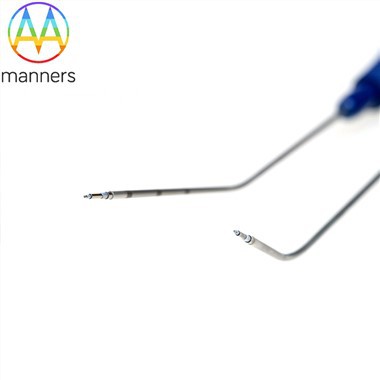
Innovation, Challenges And Development Trends Of Chiba Acupuncture Amid The Wave Of Technology
Jun 09, 2026
https://radiopaedia.org/articles/chiba-needle
Introduction
Against a backdrop of rapid global technological advancement-especially explosive progress in artificial intelligence, biosensing and digital healthcare-where does traditional acupuncture, rooted in ancient wisdom, head next? Distinguished by delicate, agile manipulation, Chiba acupuncture faces dual realities: the challenge of preserving its core traditional essence, and an unparalleled opportunity to achieve breakthroughs in quantification, standardization and personalized care with technological empowerment. Tomorrow's Chiba acupuncturists may no longer be conventional healers relying solely on their hands and needles; instead, they will emerge as a new generation of wellness stewards delivering data-augmented diagnosis and treatment, adept at operating an array of technological tools. This paper explores potential pathways for technological integration for Chiba acupuncture, ethical and perceptual hurdles it faces, and its prospective developmental trajectories.
1. Technological Fusion: Ancient Needling Meets Modern Science
Technology will never replace the wisdom and tactile expertise of Chiba acupuncturists, yet it serves as a powerful extension and auxiliary resource.
Objective Quantification in Diagnosis
- Digital palpation and imaging: High-precision pressure sensor array gloves or probes record and quantify subcutaneous tissue hardness, elasticity and temperature distribution perceived during manual palpation, generating digital palpation maps. Portable high-frequency ultrasound delivers real-time visualization of fascial layers, tiny tendon nodules, and interactions between needles and tissue during insertion. This renders part of the practitioner's tactile feedback visible and teachable.
- Integrated biosignal monitoring: Devices measuring heart rate variability (HRV), skin conductance, surface electromyography (sEMG) and infrared thermal imaging are deployed before, during and after treatment. They objectively capture acupuncture's immediate regulatory impacts on the autonomic nervous system, muscle tension and local blood circulation, supplying measurable metrics for therapeutic outcome evaluation.
Auxiliary Enhancement in Treatment Delivery
- Intelligent acupuncture assistance devices: Robotic arms or handheld tools can be engineered to stably control insertion speed, depth, micro-vibration frequency and amplitude. After acupuncturists set parameters, equipment executes highly stable, consistent foundational maneuvers, freeing clinicians to focus on overarching therapeutic strategy and tactile feedback. This is particularly valuable for clinical training and standardized research on complex manipulation techniques.
- Synergistic electro-magnetic-photonic stimulation: Classic filiform needling is organically combined with transcutaneous electrical nerve stimulation (TENS), pulsed electromagnetic fields and low-intensity laser irradiation. For example, targeted electrical stimulation can be applied during needle retention, or therapeutic light waves transmitted through needle shafts to explore synergistic curative effects and expand therapeutic dimensions.
Transformations in Inheritance and Education
- VR and AR instructional systems: Virtual Reality builds 3D digital human models of meridians and acupoints, enabling students to practice needling infinitely without clinical risk. Augmented Reality glasses overlay real-time visual guides of meridian trajectories, standard acupoints and instructor-marked therapeutic sites onto the patient's body view, simplifying localization and lowering learning barriers.
- Motion capture and manipulation analysis: Sensors capture minute hand movements of master acupuncturists (force, angle, frequency, trajectory) to build a digital fingerprint library of elite needling techniques. This repository supports quantitative research, skill assessment and standardized knowledge transfer.
2. Developmental Models: Personalized, Preventive and Integrated Care
AI-driven personalized therapeutic regimens: Merging patient multi-omics datasets (genomics, metabolomics, microbiomics) and long-term physiological readings from wearable monitors, future Chiba acupuncturists will leverage artificial intelligence analytics to design dynamically adjusted, highly customized acupuncture prescriptions-including acupoint compatibility, manipulation parameters and treatment frequency-to deliver precision acupuncture therapy.
Deep engagement in proactive wellness management: Supported by continuous wearable monitoring, acupuncturists will shift their primary role from disease treatment to holistic health stewardship. Analytical systems flag early physiological imbalances (such as sustained elevated stress indicated by long-term HRV data), allowing acupuncturists to intervene preemptively and fully realize the TCM principle of treating disease before onset.
Key nodes within integrated regional healthcare networks: Chiba acupuncture clinics and departments will evolve into vital hubs of localized integrated care ecosystems. Standardized, objective treatment records can be securely synced to patients' electronic health records for reference by general practitioners and specialists. Acupuncturists, in turn, gain timely access to lab and imaging results, enabling more comprehensive, safe clinical decision-making.
3. Core Challenges and Ethical Reflections
Opportunities invariably come with obstacles.
- Risk of lost artistic nuance amid over-quantification: Could overreliance on mechanical metrics diminish young practitioners' motivation to cultivate refined tactile sensitivity and intuitive clinical insight? How to strike a balance between objective benchmarks and individualized experiential expertise?
- Data privacy and cybersecurity safeguards: With massive volumes of physiological and health data collected, how to guarantee secure anonymization, and clarify data ownership and usage rights?
- Technological costs and equitable access: High-end devices risk inflating treatment fees, threatening to relegate acupuncture to exclusive premium care rather than retaining its accessible, affordable public healthcare value.
- Complexity of therapeutic attribution: When multiple modalities (needling, electricity, light, magnetism) are combined, rigorous research is required to isolate the contribution of each variable and identify optimal modality pairings for specific illnesses.
- Redefined human-machine therapeutic dynamics: How do patient-clinician roles shift under intelligent device assistance? How to redefine the irreplaceable core value of human acupuncturists?
4. Profile of the Future Chiba Acupuncturist
Tomorrow's Chiba acupuncture practitioners will likely embody these traits:
- Hybrid scientist-artist: Equipped with the rational rigor of a scientist to comprehend technological tools and interpret data, while preserving the intuitive artistry of refined tactile skill, sharp diagnostic perception and creative syndrome differentiation thinking.
- Biomedical data translator and final decision-maker: They act as interpreters of human biological data and ultimate arbiters of treatment plans, synthesizing quantitative metrics and clinical intuition to deliver the most humane, individualized care pathways.
- Committed lifelong learners: Sustained continuous education becomes an occupational necessity amid rapidly evolving technology and medical knowledge.
- Coordinators within integrated care teams: Fulfilling an active communicative and coordinating role in multidisciplinary patient wellness teams.
Conclusion
The wave of technological advancement is not poised to submerge Chiba acupuncture; instead, it injects fresh momentum, enabling the discipline to advance further and deliver more precise care. Its future trajectory hinges on deep integration of heritage and innovation. The true challenge lies not within technology itself, but in whether practitioners can embrace progress with open, prudent mindsets. While leveraging tools to boost efficacy, enhance patient experience and advance academic research, they must steadfastly uphold acupuncture's foundational wisdom: patient-centered care, harmonizing qi and blood, and stimulating the body's innate self-healing capacity. This demands collective deliberation from industry stakeholders, academic institutions and policymakers to establish frameworks guiding ethical, benevolent technological adoption. It is foreseeable that Chiba acupuncturists who proactively embrace this transformation will be positioned to write an even more remarkable legacy within tomorrow's global healthcare landscape.