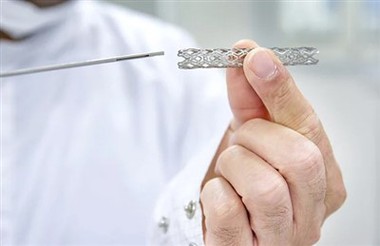
Size Standardization And Customization Of Intraosseous Needles
Sep 28, 2026
1. Size Mismatch Clinical Pain Points
Unreasonable size specification matching of intraosseous needles is a common hidden danger affecting clinical rescue safety and efficacy. At present, most medical institutions only equip standard 15G single-size intraosseous needles, which cannot meet the differentiated bone puncture needs of different age groups and different bone thicknesses. Applying standard 15G thick needles for neonatal and infant rescue will cause excessive cortical bone trauma, easily damage epiphyseal tissue and affect bone development. Using standard-size needles for adult thick bone puncture leads to insufficient needle body length, unable to reach the deep bone marrow cavity, resulting in positioning failure and poor infusion effect. In addition, single standard size cannot adapt to special patients with bone hyperplasia and skeletal malformation, resulting in low puncture success rate, repeated operations and delayed rescue progress.
2. Size Adaptation Core Principle
The size matching of intraosseous needles follows the core logic of "bone anatomical thickness + patient age characteristics + infusion functional demand". The needle gauge and length directly determine the puncture depth, trauma degree and infusion efficiency. The standard 15G size has moderate needle body diameter and length, balancing puncture stability and trauma degree, suitable for most adult and school-age children. Small-size fine needles have shorter length and smaller diameter, which can avoid damaging infant epiphyseal cartilage and meet the precise and low-trauma rescue needs of young children. Custom-size needles realize one-to-one personalized matching according to the actual bone thickness and anatomical structure of patients, breaking through the limitation of single standard size. Reasonable size matching ensures accurate entry into the bone marrow cavity, stable infusion channel and minimal tissue damage, maximizing clinical rescue efficacy.
3. Full Specification Size Classification
The intraosseous needle industry forms a three-level size system of standard specification, pediatric special specification and personalized customized specification. Standard 15G universal size is the mainstream clinical specification, adopting mature processing technology such as laser cutting and electropolishing, with stable performance, suitable for adult routine emergency resuscitation, trauma rescue and intraoperative emergency vascular access. Pediatric special small sizes are refined and optimized for infant bone characteristics, with reduced needle body diameter and shortened effective puncture length, avoiding epiphyseal damage, specially used for neonatal and pediatric critical rescue. Personalized customized sizes can be produced according to customer 2D/3D drawings and physical samples, with adjustable gauge, length and tube body diameter, adapting to special bone structure patients and special surgical rescue scenarios, making up for the adaptation loopholes of standard sizes.
4. Size Graded Matching Operation Guide
Clinical intraosseous needle application implements strict size graded matching standards. Preoperatively, classify and select sizes according to patient age and bone development: adopt pediatric special small sizes for infants under 3 years old to ensure low-trauma puncture and avoid bone development damage; select standard 15G size for children over 3 years old and adults to meet stable infusion and rescue needs; formulate personalized customized size schemes for patients with special skeletal structures. During operation, adjust the maximum puncture depth according to needle size specifications to prevent excessive penetration. Match the infusion speed according to needle tube diameter: large-diameter standard sizes adapt to rapid fluid resuscitation, and small-diameter pediatric sizes adopt slow and uniform infusion to avoid bone cavity pressure surge and pain stimulation.
5. Size Matching Practical Experience
Long-term clinical size matching practice proves that graded size selection can increase the overall success rate of intraosseous puncture by more than 40% and reduce postoperative adverse reactions by 60%. Pediatric special small-size needles completely solve the problem of epiphyseal damage caused by standard thick needles in infant rescue, with safe and reliable clinical application and no impact on children's bone development. Standard 15G universal needles have stable infusion efficiency, which can quickly complete high-volume fluid resuscitation and emergency drug delivery in adult severe shock rescue, with outstanding rescue effect. Customized size needles perfectly adapt to special anatomical patients, completely avoiding puncture failure and repeated trauma caused by size mismatch, and have become an important supplement to high-standard clinical rescue.
6. Summary and Refinement
Diversified size specification system and graded precise matching are the important foundations for the comprehensive clinical popularization of intraosseous needles. The single standard size in the past has obvious scenario limitations, while the combination of standard size, pediatric special size and customized size realizes full coverage of all age groups and all clinical scenarios. Scientific size matching balances the dual goals of rescue efficiency and patient safety, avoids unnecessary bone tissue trauma, and gives full play to the rapid and efficient advantages of intraosseous infusion. Size standardization and personalized customization jointly promote the refined development of intraosseous access rescue technology.
7. Size System Industry Suggestions
The industry should improve the graded size system of intraosseous needles, enrich pediatric special size series, and form a complete age-stratified size matching standard. Manufacturers need to optimize the processing technology of different size products, ensure the structural stability and surface smoothness of small-size pediatric needles, and improve the precision of customized size processing. Medical institutions should standardize preoperative size selection procedures, abandon single-size universal application habits, and improve the refinement level of emergency rescue. Accelerate the formulation of industry-wide size matching guidelines to standardize the corresponding relationship between needle size, patient age and surgical scenario, and promote the standardized development of the industry.