Silent Evolution And Intelligent Future: Technological Development And Prospect Of AVF Puncture Needles
May 26, 2026
Keywords: AVF puncture needle, manufacturer, technological evolution, future trend, personalized medicine
The development history of AVF puncture needles is a quiet epic advancing alongside hemodialysis technology. Evolving from primitive modified syringes to highly engineered and functional precision medical devices, such products have always centered on three core goals: alleviating patient pain, improving treatment efficiency and protecting vascular access resources. Supported by sophisticated manufacturing and material science, AVF puncture needles are standing at a critical turning point, transforming from standardized tools into intelligent and personalized interventional terminals.
1. Evolution Review: Three Major Leaps from Basic Availability to Superior Performance
- Material Upgrade: Conventional steel to medical-grade stainless steelEarly dialysis puncture adopted large-sized syringes made of rough materials with poor corrosion resistance, easily causing physical discomfort and postoperative complications. The application of surgical-grade stainless steel, especially 304 and 316L grades, marked the first revolutionary progress. Featuring reliable biocompatibility, corrosion resistance and mechanical strength, it laid a solid foundation for safe clinical application of AVF puncture needles.
- Design Upgrade: Straight tubular needle to fluid-optimized structureGrowing requirements for sufficient dialysis effect made simple large-bore design inadequate. Optimized tip profiles including multi-bevel and pencil-point structures reduce puncture trauma. The adoption of side holes became a milestone in fluid mechanics application. Scattered blood intake points effectively avoid vessel wall adhesion caused by single-end suction, stabilizing blood flow and enhancing patient comfort. It represents the shift from structure-oriented to function-oriented design philosophy.
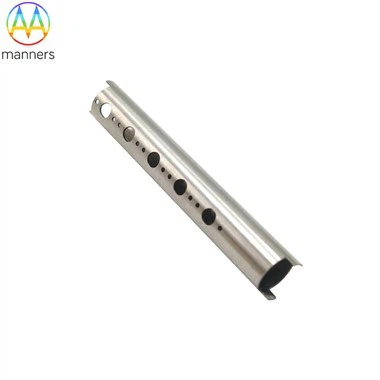
- Processing Upgrade: Traditional machining to laser precision manufacturingConventional drilling fails to fabricate delicate side holes on thin stainless steel tubes. Five-axis laser cutting enables the production of complex 3D microstructures, supporting multi-side hole layout and flow channel grooves to maximize design flexibility. Advanced surface finishing such as electrolytic polishing creates mirror-smooth inner walls, lowering flow resistance and thrombosis risks.
2. Current Frontier Development: Integration and Humanization
Leading manufacturers expand research beyond basic needle structure to systematic integration and user experience optimization.
- Safety-oriented design: Built-in passive safety devices automatically shield sharp tips with springs or protective casings right after withdrawal, drastically cutting needlestick injuries among medical staff and becoming an industrial mandatory standard.
- Optimized fixation and connection: Ergonomic needle wings, pre-connected heparin caps, extension tubes and rotary bases ensure firm fixation and convenient pipeline management, preventing needle displacement from traction force.
- Coating technology: Hydrophilic lubricating coatings turn extremely smooth when contacting liquid, reducing puncture resistance by 30% to 50%, ideal for patients with poor fistula conditions and difficult vascular access.
3. Future Prospect: Towards Intelligent and Precision Dialysis
Future AVF puncture needles will evolve from passive pipelines into intelligent terminals integrating sensing, feedback and therapeutic functions.
3.1 Integrated Sensing Functions
- Pressure-sensing needles: Miniature optical fiber or thin-film pressure sensors monitor intravascular pressure in real time, verifying proper tip position and evaluating fistula hemodynamic status during dialysis.
- Ultrasound-guided integration: Mini ultrasonic transducers installed on needle bases deliver real-time imaging guidance, improving puncture success rate for deep, obese and hard-to-locate fistulas.
3.2 Intelligent Materials and Structures
- Shape memory alloy tips: Nitinol tips remain straight for penetration and bend into preset shapes under human body temperature, aligning openings with central bloodstream to boost suction efficiency.
- Antithrombotic surface modification: Heparin grafting, hydrogel and biomimetic endothelial coatings actively inhibit intravascular coagulation, particularly beneficial for patients with hypercoagulable state.
3.3 Data Interconnection and Personalized Matching
Pressure and position data collected by smart needles can be wirelessly transmitted to dialysis machines and central monitoring systems. Combined with historical medical records, AI algorithms assess puncture quality, fistula health and predict vascular stenosis risks.
- Image-based customization: 3D printed personalized curved needles perfectly match individual vascular morphology based on CT angiography data, maximizing puncture success rate and minimizing complications.
3.4 Ultimate Manufacturing Technology
- Micro-nano fabrication: Micro textures and drug release channels on needle tips release anti-proliferative and anesthetic drugs locally to relieve pain and intimal hyperplasia.
- Additive manufacturing: Metal 3D printing serves as an innovative solution for complex multi-functional integrated needle structures.
4. Transformation of Manufacturers: From Component Suppliers to Solution Providers
Manufacturers must upgrade their positioning to adapt to industrial changes.
Conduct interdisciplinary R&D with teams covering clinical medicine, microelectronics, sensor technology, material science and algorithm development.
Establish innovation partnerships with top nephrology centers and clinical engineers to define product specifications based on cutting-edge clinical demands.
Transform business mode from simple product sales to comprehensive services including intelligent devices, data analysis and clinical technical support.
Conclusion
The past development of AVF puncture needles witnesses steady linear optimization of materials and craftsmanship. Its future will witness a paradigm revolution combining sensing technology, big data, artificial intelligence and personalized manufacturing. Future puncture needles are no longer mere metal accessories, but intelligent surgical probes capable of perception, feedback and self-adaptation to individual physiological conditions. It demands unprecedented technological integration capability and forward-looking vision from manufacturers. Enterprises taking the lead in upgrading from hardware products to intelligent hardware plus services will deliver safer, more comfortable and efficient dialysis treatment, and redefine industrial value boundaries. This silent evolution will eventually drive profound changes across the hemodialysis consumable sector.