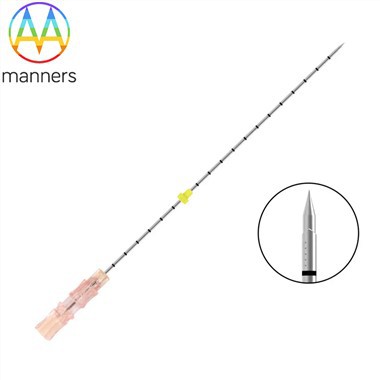
Selecting A Quality Veress Needle Supplier: A Guide For Hospital Procurement And Distributors
Jul 11, 2026
https://en.wikipedia.org/wiki/Veress_needle
With the proliferation of minimally invasive surgery, demand for Veress needles continues to surge. However, the market suffers from vast quality disparities and price volatility. For hospital procurement departments and medical device distributors, identifying suppliers offering reliable quality, cost-effectiveness, and robust service is challenging. This guide provides practical selection criteria across four dimensions: qualification auditing, product evaluation, supplier management, and cost control.
Qualification Auditing (Non-Negotiable):
- Verify active ISO 13485 certification covering "surgical needles" or "laparoscopic instruments."
- Confirm product registrations for target markets: China NMPA (Class III), EU MDR (CE Certificate), US FDA 510(k), etc.
- For imports, scrutinize customs declarations and Certificates of Origin.
- Avoidsuppliers with only ISO 9001 or no certifications-these pose compliance risks and often lack quality consistency.
Product Evaluation (Critical):
- Sample Trials: Conduct clinical evaluations of different brands focusing on: insertion feel (smoothness/resistance), obturator deployment reliability, gas flow adequacy, and post-operative complication rates.
Parameter Benchmarking:
- Material:Prioritize 316L stainless steel; request MTCs.
- Workmanship:Assess tip grinding quality (sharpness/symmetry), surface finish (smoothness/luster), and obturator assembly precision.
- Specifications:Match length (80mm/120mm/150mm) and diameter (2.5mm/3mm/5mm) to clinical needs.
- Packaging:Inspect integrity, label clarity, and sterile shelf-life.
Third-Party Test Reports: Demand comprehensive performance reports covering biocompatibility, sterility, particulates, and corrosion resistance.
Supplier Capability Assessment:
Evaluate manufacturing prowess (equipment sophistication, capacity, lead times), R&D strength (responsiveness to clinical needs), QC robustness (as detailed previously), after-sales service (response time, CAPA handling, return policies), and financial stability. Favor established, reputable suppliers with proven partnership stability. For long-term engagements, negotiate framework agreements to lock pricing and lead times.
Cost Control (Rational Approach):
Price is not the sole metric; ultra-low pricing often signals compromised quality. Consider total cost of ownership: purchase price + potential complication-related expenses + administrative overhead. Leverage volume purchasing or group purchasing organizations (GPOs) for discounts. Stay informed on regional Volume-Based Procurement (VBP) policies, as laparoscopy consumables are increasingly included, impacting pricing dynamics.
Additional Considerations:
- Compatibility: Ensure needles interface correctly with existing insufflators and trocars.
- Distributor Exclusivity: For distributors, securing exclusive territories or stable supply chains safeguards market access.
In essence, scientific selection, rigorous auditing, and rational assessment ensure clinically safe, effective Veress needles while optimizing value.