Sample Quality From EBUS-TBNA Needles And Molecular Pathology Testing
Jul 08, 2026
New Demands on Needle Selection for Tissue Cores, Cell Blocks, NGS, and PD-L1 Assays
https://profed.olympuschina.com/gs/thoracicsurgery/12628/
In the era of precision oncology, EBUS-TBNA must answer not just "Is it cancer?" but also provide: histological subtyping (adenocarcinoma/squamous cell carcinoma/large cell/NSCLC-NOS), Ki-67, TTF-1/p40 staining, PD-L1 expression (clones 22C3/SP142, etc.), and driver mutation profiling (EGFR, ALK, ROS1, BRAF, MET, RET, KRAS, and broad NGS panels). This demands DNA yields typically ranging from 10-250ng per procedure (platform-dependent) while preserving tissue architecture for IHC-capabilities exceeding those of traditional FNA cytology smears alone. Consequently, EBUS needle design is evolving towards "tissue acquisition" (FNB/core yield).
Sample Types and Needle Relationships:
- FNA (Fine Needle Aspiration): Back-cut single-bevel 21G/22G needles + negative pressure suction → cell clusters + stromal fragments → smears (Diff-Quik/H&E) + cell block. Cell blocks permit IHC and some molecular testing, but limited tissue volume may preclude DNA adequacy for whole-exome or large NGS panels.
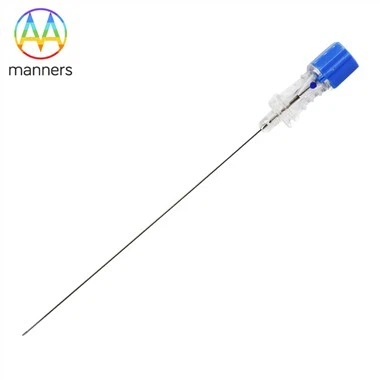
- FNB (Fine Needle Biopsy): Franseen triple-edge, crown-cut, or ProCore reverse-bevel needles → tissue strips/micro-cores → fixed, embedded sections. Preserves tissue architecture, enabling superior IHC quality and higher DNA/RNA yields compared to equivalent FNA cell blocks.
- 19G Large-Lumen Needles: Larger internal diameter aspirates small tissue cores or greater sample volumes, suitable for multiplex testing, though vigilance against blood contamination affecting specimen quality is necessary.
- ROSE (Rapid On-Site Evaluation) Integration: On-site cytopathologists/technicians evaluate smear preliminarily, assessing for "adequate cellularity," necrosis, granulomas, or lymphoid tissue, guiding decisions to cease sampling or change stations. ROSE reduces average needle passes (often 3-4 vs. 6-7 without ROSE) and improves specimen adequacy rates. Some centers employ phase-contrast microscopy for cell block triage.
Implications for Needle Selection Driven by Molecular Testing: For NSCLC patients undergoing targeted and immunotherapy assessment, prioritizing 19G FNB or 21G Franseen FNB needles is advisable where available, ensuring sampling from at least 2-3 stations to generate both cell blocks and tissue cores. Cytology screening alone may utilize 22G FNA needles, but requires increased pass numbers and cell block preparation. Studies suggest NGS success rates trend higher with samples obtained via 19G needles compared to 22G FNA, particularly for stroma-rich or paucicellular tumors.
Sample Handling Recommendations (often detailed in Instructions for Use - IFU): Immediately flush the needle lumen post-puncture with BSA/PBS buffer into a collection tube → process to cell block (formalin fixation → paraffin embedding) or fix tissue cores directly in formalin. Prevent lumen drying to avoid cellular degeneration. Manage clogging by gently advancing the stylet or applying brief air bursts-underscoring the functional purpose of the stylet (preventing clogging + preserving sample integrity).
In conclusion, EBUS-TBNA needle selection is shifting from "merely penetrating" to "customizing needle type and procedural workflow based on molecular pathology requirements." This evolution represents a focal point of multidisciplinary collaboration among medical oncologists, pathologists, and interventional pulmonologists.