Safety Standard And Disinfection Specification For PDO Thread Lift Needle
Nov 02, 2026
Pain Point
Safety and disinfection management is the biggest hidden risk in the whole thread lifting aesthetic industry. It should be emphasized that acupoint catgut embedding and PDO thread lifting both belong to invasive subcutaneous implantation operation. Once needles are reused or disinfection process is incomplete, the inevitable rupture of tiny blood vessels during puncture creates direct transmission route for blood-borne pathogens such as HIV and hepatitis B. Many small informal workshops supply unpackaged loose threads and needles without ethylene oxide sterilization certificate, and there is no independent sterile barrier for these consumables. Some clinics separate thread and needle and assemble manually on site before treatment, which completely destroys the sterile barrier and brings massive pollution risk. Most junior operators lack uniform systematic infection control training: glove replacement, sterile tray layout, medical waste disposal and sharp object management are highly irregular. Ordinary patients lack professional identification ability to distinguish qualified sterile kits, easily confusing disposable certified products with low-cost repeated-use accessories. Once infection occurs, patients may suffer from local abscess, persistent fever, tissue necrosis and even serious lifelong infectious diseases, bringing huge medical disputes and reputation loss for clinics.
Working Principle
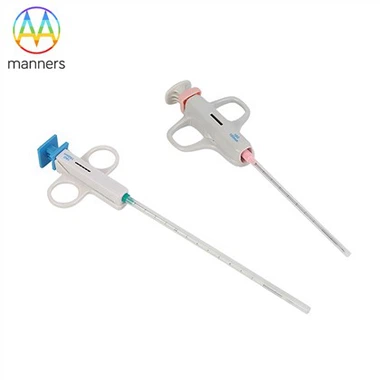
PDO Thread Lift Needle is classified as invasive disposable medical device for minimally invasive aesthetic use. Standard sterilization treatment kills bacteria, virus and spore contaminants attached on needle, thread and auxiliary components before packaging. Ethylene oxide sterilization is the mainstream sterilization method for this product because it has strong penetration ability into sealed package and will not damage biodegradable polymer material and hyaluronic acid coating which are sensitive to high temperature. After sealed sterile packaging, the inner barrier keeps internal components completely isolated from external air pollution until clinical opening. During operation, the needle pierces epidermis and dermis layer by layer, inevitably contacting subcutaneous capillary vessels. A fully sterilized single-use needle eliminates pathogen carrying risk fundamentally. The core thread material including PDO, PLLA, PCL, WPDO is verified to have good biocompatibility through biocompatibility test, and the HA coating reduces local inflammatory reaction, lowering secondary infection probability even if minor needle track micro-trauma occurs.
Classification of PDO Thread Lift Needles by Sterile Packaging Mode
There are two mainstream supply modes for global market: bulk standard carton and complete sterile procedure kit. Bulk carton packages independent sealed needle-thread units separately, suitable for standardized large clinics with complete internal disinfection auxiliary supplies and professional nursing team. Integrated sterile embedding kit is more suitable for outpatient clinics and mobile aesthetic service, containing plastic sterile tray, disposable isolation pad, pre-sterilized PDO thread lift needle, special cutting scissors, medical tweezers, sterile gloves, protective mask and sealing protective sleeve. From material perspective, all four thread variants (PDO, PLLA, PCL, WPDO) can be produced in the above two sterile packaging modes. Needle gauge 18G–30G and custom length specifications all follow the same sterilization validation standard and residual ethylene oxide detection standard. The whole production line must comply with ISO13485 medical device quality system to guarantee batch stability of sterility.
Practical Operation Guidelines
The first and inviolable rule: PDO Thread Lift Needle is strictly single-use, forbidden to reuse, recycle or re-sterilize for second application on any patient. Before unpacking, operators must inspect package integrity, sterilization indicator color change and expiry date carefully; discard immediately if package is torn, swollen, punctured or expired. Prepare independent closed sterile operation area, non-sterile personnel are not allowed to approach the operation field at will. Operators must complete hand disinfection and wear new sterile gloves; change gloves immediately once contacting non-sterile surface such as treatment bed frame, mobile phone and instrument cabinet. Mark skin with sterile marking pen, complete surface disinfection of treatment region twice with medical disinfectant. Take needle out of sealed pouch only right before puncture, avoid exposing sterile needle and thread in open air for long time. After use, put sharp needle directly into special sharp waste container, never put back into original package. Record sterilization batch number, production date and operation date in patient medical record for full traceability. If post-operation redness, progressive swelling, pus exudation and fever appear, judge possible infection and start anti-infection intervention quickly.
Real Clinical Experience
Senior infection-control specialists in aesthetic medicine remind that invisible blood residue on used needles cannot be removed merely by alcohol wiping or high-temperature soaking. Even if the needle surface looks completely clean, residual plasma and blood cells may carry latent virus. Integrated sterile kits greatly reduce human error risk, because all accessories are pre-sterilized and matched, avoiding the mistake of mixing sterile and non-sterile tools. For body lifting with long 120–150 mm needles, longer subcutaneous track means larger contact area with tissue fluid and blood, so sterile management standard must be stricter than facial treatment. HA coating has soothing and repairing function but cannot replace disinfection; contaminated HA coating will become medium for bacterial reproduction and accelerate abscess formation. Clinics should establish regular incoming inspection audit mechanism for medical consumables. Never accept unpacked loose needles and threads from unknown suppliers just for cost reduction.
Summary
The core of PDO Thread Lift Needle safety system is disposable use plus validated sterile packaging. Disinfection and sterilization cannot be simplified or replaced by manual surface cleaning. The invasive nature of subcutaneous embedding determines that any negligence of sterile protocol may cause life-threatening blood infectious disease transmission. Complete sterile kit design standardizes the whole auxiliary tool chain and reduces pollution links in manual preparation process. Safety supervision and infection control should always run through procurement, storage, operation and waste disposal of this product.
Prospect and Suggestion
Global aesthetic supervision will tighten traceability requirement for absorbable thread lifting needles, requiring each independent unit to carry unique batch QR code for full lifecycle tracking. Manufacturers will add tamper-evident anti-counterfeit structure on sterile pouch to avoid package being opened illegally before clinical use. Training for aesthetic practitioners must include independent infection control module with real infectious disease transmission case warning. Clinics should separate special storage area for sterile thread lifting consumables away from cleaning supplies and non-sterile instruments. Customers should be guided to check sterile package opening on site before treatment, refusing any operation using reused needle, pushing the whole industry to abandon irregular low-cost behaviors that sacrifice sterility.