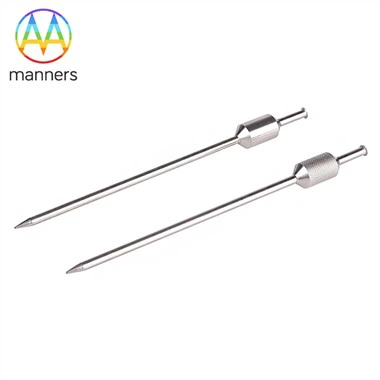
Revolutionary Clinical Value Of Echogenic Puncture Needles Across Diverse Medical Settings And The Evolving Role Of Manufacturers
May 31, 2026
The popularization of ultrasound-guided intervention has shifted invasive procedures from experience-dependent blind manipulation toward visualized, precision-driven clinical practice. Nevertheless, such real-time visualization is plagued by inherent blind zones without echogenic needles as a core enabling device. Products engineered by echogenic needle manufacturers eliminate these imaging dead zones and serve as a critical bridging interface translating real-time dynamic ultrasound imaging into accurate intraoperative manipulation. Widespread clinical adoption across multiple specialties has collectively remodeled the standard paradigm of modern minimally invasive interventional care.
I. Regional Anesthesia & Pain Management: Precise Targeting from Nerve Plexus to Individual Fascicles
Nerve block anesthesia targets millimeter-scale peripheral nerves and plexuses routinely adjacent to vital blood vessels. Conventional techniques relying on surface anatomical landmarks and paresthesia feedback carry substantial procedural risks and inconsistent success rates.
- Clinical value of echogenic needles: Surgeons visualize neural anatomy and surrounding soft tissue in real time under ultrasonography with echogenic guidance needles. Full-shaft visibility facilitates accurate perineural local anesthetic infiltration while preventing accidental intraneural or intravascular injection. This markedly improves block efficacy, reduces required anesthetic dosage, and mitigates severe adverse events including nerve injury and hematoma formation.
- Manufacturer-oriented customization: Needles developed for deep plexus blockade feature extended, fine-gauge profiles and superior flexibility via Nitinol substrate to navigate tortuous anatomical trajectories. Optimized echogenic shaft coatings maintain consistent ultrasonic delineation even at steep oblique insertion angles.
II. Vascular Access & Port Catheter Implantation: Streamlined Single-Puncture Vascular Cannulation
Central venous cannulation, difficult peripheral venipuncture and subcutaneous port implantation pose notable clinical challenges, especially among obese, edematous, hypovolemic and pediatric patient cohorts.
- Clinical value of echogenic needles: Combined with real-time ultrasound, echogenic devices enable full visualization of vascular wall indentation, transfixion and subsequent guidewire cannulation inside vessel lumens to achieve truly image-verified puncture. Repeated blind probing-induced vascular trauma and erroneous arterial cannulation are minimized, drastically elevating first-pass success for high-risk access sites such as internal jugular and subclavian veins.
- Manufacturer-oriented customization: Vascular access needles balance sharp cutting performance with optimized echogenicity. Tuned tip echo patterns deliver characteristic ultrasonic signal changes upon vascular wall penetration, while diversified shaft lengths and bevel geometries accommodate anatomical variances across neonatal through adult populations.
III. Oncologic Intervention & Percutaneous Biopsy: Targeted Lesion Access for Definitive Pathological Diagnosis
Precise placement of ablation probes (radiofrequency/microwave) or drug delivery cannulas at the geometric core of malignant lesions is decisive for curative tumor ablation outcomes. Similarly, accurate biopsy sampling of suspicious thyroid, breast, hepatic and prostatic nodules directly governs pathological diagnostic reliability.
- Clinical value of echogenic needles: Continuous real-time needle-track visualization allows clinicians to circumvent intervening major vessels and visceral organs and advance cannula tips directly to predefined lesion targets. During biopsy, tip positioning within target parenchyma rather than peripheral marginal tissue is confirmed to guarantee adequate specimen yield; ablation probe coordinates can be dynamically fine-tuned for complete tumoral coverage.
- Manufacturer-oriented customization: High-rigidity shaft construction facilitates penetration of dense fibrotic or neoplastic tissue, paired with high-enhancement tip-specific echogenic treatments. Calibrated depth-marking shafts assist depth assessment on transverse ultrasonic planes, while coaxial introducer cannulas for core biopsy are also engineered with full echogenic modification.
IV. Cavitary Aspiration & Interventional Pharmacotherapy: Safe Target Access for Effective Therapeutic Drainage
Thoracentesis, paracentesis, abscess drainage and intra-articular injection prioritize accurate compartment localization to avoid accidental visceral injury.
- Clinical value of echogenic needles: Ultrasound delineates effusion volume, cavity thickness and anatomical adjacency to lung, hepatic and intestinal tissue. Echogenic instrumentation supports optimal puncture site selection and trajectory planning with real-time tip advancement monitoring; post-cannulation imaging verifies complete intra-cavity positioning of drainage side holes for thorough, secure fluid evacuation.
- Manufacturer-oriented customization: Larger-bore drainage trocars (up to 2 mm outer diameter) demand specialized bulk-cannula echogenic surface engineering for uninterrupted ultrasonic visualization. Ergonomically refined hub and extension-tubing junctions support stable single-handed manipulation and intraoperative fixation.
Conclusion
Echogenic puncture needles have become indispensable across nearly all ultrasound-guided procedural disciplines, including anesthesiology, medical oncology, emergency medicine, critical care, pain management and interventional radiology. Manufacturers have evolved beyond passive component suppliers into collaborative co-developers of specialty-specific precision interventional solutions. Deep clinical insight into procedural workflows, technical hurdles and operator preferences enables translation of clinical requirements into targeted product optimization: superior pliability for nerve block cannulas, ultra-sharp bevel design for vascular access, and pinpoint targeting precision for biopsy instrumentation. Clinically driven iterative product development has positioned echogenic needles as a core catalyst standardizing, popularizing and improving the safety benchmark of contemporary minimally invasive interventional surgery.