Reshaping The Physical Foundation Of Menghini Liver Biopsy Needles Official Release Of Achievements
May 16, 2026
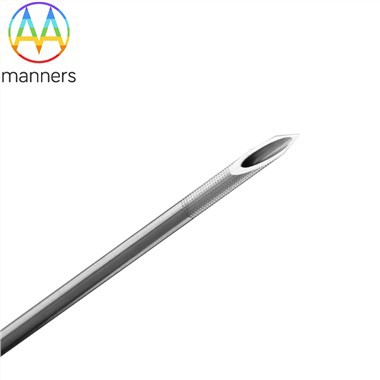
Recently, leading medical‑device manufacturer Manners Technology officially launched its new‑generation PrecisionCore series Menghini liver biopsy needles. The core breakthrough of this series lies in the full adoption of aerospace‑grade maraging stainless steel supplemented by a 5‑axis ultra‑precision laser cutting and forming process. Official verification data shows that the complete tissue acquisition rate of the new needles has risen to 98.5 %, the average axial force required for puncture has decreased by 30 %, and the fatigue life of the needle body has been extended by 400 %. This achievement marks a leap‑forward upgrade of the classic Menghini needle design in terms of materials and manufacturing, delivering a more reliable and minimally invasive tool for liver pathological diagnosis.
R&D Background and Clinical Pain Points
Since Giorgio Menghini invented this needle in 1958, its core negative‑pressure suction‑cutting principle has been widely recognised. However, conventional manufacturing materials and processes have limited the full potential of its performance. Major pain points include:
Trade‑off between tip sharpness and durability: An ultra‑thin tip is required for a sharp cutting edge, yet conventional steel is prone to edge rolling or micro‑cracking during repeated puncture of tough fibrotic or cirrhotic liver tissue, compromising subsequent sampling quality.
Inner‑cannula surface roughness: Rough inner walls increase frictional damage to tissue samples during suction, impairing the accuracy of pathological analysis.
Insufficient rigidity of the needle body: Minor bending of the needle when puncturing complex pathways such as intercostal spaces deviates the insertion trajectory, raising risks of haemorrhage or injury to adjacent organs.These physical limitations directly affect the success rate and safety of biopsy procedures.
Core Technological Innovations
The manufacturer's core innovations focus on integrating materials science with cutting‑edge processing technologies:
Breakthrough in materials science: Replacing conventional medical‑grade stainless steel with 18Ni‑300 grade maraging steel. Subject to specialised solution and age‑hardening heat treatment, this material achieves an extremely high strength‑to‑toughness ratio and excellent fatigue resistance. Its yield strength exceeds 2,000 MPa while maintaining good toughness, ensuring geometric integrity of the needle tip under extreme loads. The manufacturer provides full‑spectrum material certificates for each batch of raw materials, tracing chemical composition, mechanical properties and heat‑treatment records to guarantee consistency from the source.
Ultra‑precision manufacturing process: 5‑axis linkage ultrafast femtosecond laser cutters are adopted for integrated forming of cannulas and needle tips. Compared with traditional mechanical grinding or ordinary laser cutting, 5‑axis linkage allows laser beams to precisely act on workpieces at any angle, forming complex needle‑tip geometries with optimal rake angle, relief angle and edge radius in a single step. The "cold‑processing" property of femtosecond lasers nearly eliminates heat‑affected zones and avoids embrittlement caused by microstructural changes in materials, ensuring ultra‑sharp and smooth cutting edges.
Mechanism of Action
New materials and advanced processes jointly enhance biopsy performance through physical mechanisms:
The ultra‑high strength and toughness of maraging steel enable slimmer needle designs without bending or fracture risks. Finer gauges (customisable down to 18G or even 20G) mean less tissue trauma and milder patient pain while securing sufficient tissue cores.
Perfect geometric cutting edges formed by 5‑axis laser cutting allow smooth penetration of the liver capsule and parenchyma with minimal puncture force. Optimised cutting angles "slice" tissue like surgical scalpels rather than tearing it, reducing crush injury to hepatocytes around the needle track and providing pathologists with samples featuring fewer artefacts and closer to native conditions.
Extremely low inner‑wall roughness achieved by laser processing (Ra < 0.1 μm), combined with subsequent electropolishing, forms near‑mirror‑smooth lumens. Under negative pressure, tissue cores are smoothly and completely aspirated into cannulas without jamming or fragmentation, significantly improving the success rate of obtaining adequate, intact tissue cores in a single puncture.
Efficacy Validation
The PrecisionCore series has passed enhanced in‑vitro simulation tests based on ISO 12891 (Retrieval and Analysis of Surgical Implants) standards and completed prospective clinical studies at three top‑tier liver disease centres.
In‑vitro mechanical testing: In synthetic models simulating Grade F4 cirrhosis (the toughest condition), peak puncture force of the new tips is 25–35 % lower than conventional needles, with less than 5 % degradation in edge sharpness after 50 repeated punctures.
Histological quality assessment: Blinded evaluation of more than 300 biopsy samples conducted by two senior pathologists shows significantly higher tissue core integrity scores and lower microscopic crush‑injury grades for samples obtained using the new needles compared with the control group (p < 0.01).
Clinical safety study: In 200 clinical applications, the incidence of major complications (e.g., intervention‑required haemorrhage) was less than 0.5 %, and the average 24‑hour postoperative Visual Analogue Scale (VAS) pain score decreased by 1.5 points.
R&D Strategy and Philosophy
Manners Technology implements the R&D strategy of "Driving clinical excellence through physical‑limit exploration" for this project. Its core philosophy holds that for instrument‑driven procedures such as liver biopsy, the accuracy of diagnostic results is rooted in the physical perfection of the device itself. Partnering with national materials‑science laboratories, it adapts high‑performance alloys used in aerospace engine blades for biomedical applications. Its R&D workflow follows a closed loop of simulation‑optimisation‑validation: finite‑element analysis (FEA) is first used to simulate stress fields from interactions between needle tips and liver tissues of varying densities for geometric optimisation; prototypes are then manufactured via 5‑axis laser processing; finally, validation is performed on biomechanical testing platforms and animal models to ensure every design iteration directly addresses clinical pain points.
Future Outlook
Future innovations in materials and manufacturing will advance toward functionalisation and intelligence. On one hand, manufacturers are exploring diamond‑like carbon (DLC) nanocoatings on needle‑tip surfaces to further reduce friction coefficients for ultra‑smooth puncture. On the other hand, research is ongoing to integrate miniature fibre‑optic sensors into needle walls, enabling real‑time feedback of tissue impedance spectroscopy during puncture to preliminarily distinguish normal liver tissue, steatotic areas or fibrotic bundles and provide surgeons with real‑time "histochemical navigation". The long‑term goal is to develop tissue‑specific adaptive needle tips, whose materials or microstructures automatically adjust vibration frequency or cutting modes according to sensed tissue hardness to achieve optimised, personalised sampling for livers with diverse pathological conditions.