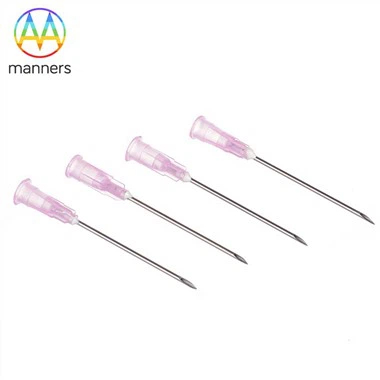
Regulatory Compliance Across Intraosseous Needles Size Range
Jul 30, 2026
Navigating FDA, EU MDR and NMPA Requirements
https://www.sciencedirect.com/topics/nursing-and-health-professions/intraosseous-needle
As intraosseous access transitions from niche procedure to standard-of-care, regulatory scrutiny intensifies-particularly concerning intraosseous needle size diversity. Devices ranging from 1.5 cm pediatric to 4.5 cm bariatric lengths fall under active post-market surveillance globally. Manufacturers supplying international markets must navigate complex frameworks including U.S. FDA 21 CFR Part 880, European Union Medical Device Regulation (MDR) 2017/745, and China's NMPA supervision regulations. Critically, compliance obligations often differ based on declared indications tied directly to needle dimensions.
Under FDA jurisdiction, manual intraosseous needles are generally classified as Class II medical devices, requiring 510(k) clearance. Successful submissions must establish substantial equivalence to legally marketed predicates, with particular attention to intended use statements specifying patient weight ranges aligned to needle length. For example, a 510(k) covering a 1.5 cm device would cite indications for pediatric patients (<40 kg), whereas a 4.5 cm version targets obese adults. Manufacturers must submit performance data-including insertion force testing across simulated tissues of varying thicknesses-demonstrating safe and effective use within those defined populations. Importantly, combining multiple sizes under one 510(k) is permissible only if each size shares identical technological characteristics and clinical validation supports expanded labeling.
The EU MDR elevates expectations further. Annex I's General Safety and Performance Requirements explicitly address device design vis-à-vis patient anatomy. For intraosseous needles, this translates into rigorous clinical evaluation reports (CERs) substantiating safety claims for each size variant. Manufacturers must compile literature reviews and, where gaps exist, generate new clinical data confirming appropriate depth penetration without excessive posterior cortex perforation. Risk management files per ISO 14971 require separate Failure Mode and Effects Analyses (FMEA) for short, medium, and long needles, acknowledging differing hazard profiles-for instance, growth plate injury risk with 1.5 cm needles versus nerve damage potential with 4.5 cm devices. Post-market clinical follow-up (PMCF) plans must likewise stratify data collection by needle size to detect emerging safety signals.
China's NMPA enforces analogous discipline through its Type Testing regime. Intraosseous needles undergo comprehensive physical, chemical, and biological evaluations at authorized laboratories. Test samples must represent worst-case conditions-meaning the longest (4.5 cm) and shortest (1.5 cm) needles typically face the broadest battery of assessments. YY/T standards govern needle sharpness, connection strength, and corrosion resistance. Notably, NMPA requires clear labeling of needle length in millimeters alongside gauge size on both primary packaging and instruction leaflets. Manufacturers exporting to China must ensure their artwork templates accommodate these mandatory disclosures without ambiguity.
Beyond initial market authorization, ongoing compliance hinges on robust post-market surveillance (PMS). Adverse event reporting systems-such as FDA's MAUDE database, EUDAMED under MDR, and China's Adverse Event Monitoring System-capture incidents potentially linked to inappropriate size selection or device malfunction. Manufacturers bear responsibility for trending such reports by intraosseous needle size, investigating root causes, and implementing corrective actions. For example, a cluster of insertion failures with 2.5 cm needles in obese patients might trigger revised labeling emphasizing palpable landmarks or promotion of the 4.5 cm alternative.
Packaging and labeling constitute another compliance battleground. Each intraosseous needle size must display unambiguous length declarations in metric units. Symbols complying with ISO 15223-1 (e.g., "Do not reuse," "Single-use only") are mandatory. Instructions for use (IFU) must contain explicit sizing algorithms guiding clinicians toward appropriate selection based on patient weight, BMI, or anatomical palpability. Some forward-thinking manufacturers augment paper IFUs with QR codes linking to online training modules demonstrating proper measurement techniques for each size.
Ultimately, regulatory excellence around intraosseous needle sizes reflects a manufacturer's commitment to patient safety and global market access. Procurement professionals should request copies of current certificates-FDA 510(k) clearance letters, EU MDR Certificates of Conformity, NMPA registration certificates-and verify that listed models correspond precisely to the 1.5 cm, 2.5 cm, and 4.5 cm variants offered. Equally vital is assessing whether the supplier maintains a Pharmacovigilance System Master File documenting proactive PMS activities. Only manufacturers embracing this holistic compliance ethos deserve consideration as strategic partners in supplying life-sustaining intraosseous access devices.