Redon Needles: Solving Minimally Invasive Surgery Pains
Aug 27, 2026
Pain Point Proposion In modern surgical and therapeutic clinical practice, minimally invasive operation has become the core development trend, but many conventional puncture and drainage tools still expose prominent clinical pain points. Traditional medical needles have blunt cutting edges, rough body design and single specification, which are prone to cause excessive tissue extrusion, vascular and nerve damage during surgery. Such defects will not only increase patients' intraoperative pain and postoperative swelling, but also lead to slow wound healing and increased risk of postoperative effusion infection. In addition, ordinary needles are poor in corrosion resistance and operational stability, which is easy to cause tool failure in long-term delicate operations, reduce surgical precision, prolong operation time, and bring great operational pressure to medical staff. These industry pain points urgently need high-precision, high-stability professional medical needles to solve.
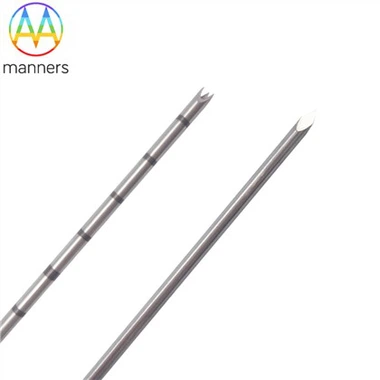
Principle Introduction Redon needles are professional medical precision needles customized for surgical and therapeutic scenarios, adopting advanced minimally invasive puncture and drainage design principles. The core working principle is to rely on high-sharp needle tip structure to realize rapid, low-resistance tissue penetration, reduce mechanical damage to human soft tissue, nerves and blood vessels. The optimized needle body streamline design can effectively avoid tissue tearing and extrusion during puncture and drainage. Meanwhile, the integrated structural design realizes the integration of puncture sampling and postoperative drainage functions, which can efficiently remove surgical site exudate, blood stasis and inflammatory fluid. By reducing tissue trauma and residual effusion, it fundamentally reduces patients' surgical pain and postoperative complications, and improves the overall safety and comfort of clinical operations.
Equipment Classification and Explanation Redon needles form a complete product classification system based on clinical application scenarios, needle gauge specifications and functional attributes, covering all mainstream surgical and therapeutic needs. In terms of material classification, all Redon needles are made of high-grade medical stainless steel, which has excellent corrosion resistance, high temperature resistance and structural stability, avoiding rust and deformation during sterilization and clinical use, and meeting long-term medical safety standards. In terms of specification classification, the product series includes multiple sizes and gauges, from fine specifications suitable for delicate therapeutic operations to large specifications for postoperative large-area drainage, providing flexible selection for different surgical sites and patient conditions. In terms of functional classification, it is divided into surgical puncture type and postoperative drainage type. The puncture type focuses on high-precision tissue penetration and minimally invasive sampling, while the drainage type optimizes the inner cavity structure to improve fluid drainage efficiency, realizing multi-scenario clinical adaptation.
Operational Guidelines The standardized operation of Redon needles is divided into preoperative preparation, intraoperative operation and postoperative maintenance three core steps. Preoperatively, medical staff shall select the corresponding gauge and size of Redon needles according to the patient's surgical site, lesion size and drainage demand, and check the sterile packaging integrity and needle body smoothness to eliminate unqualified products. Before operation, routine disinfection and local anesthesia shall be carried out on the patient's operating area to further reduce intraoperative discomfort. Intraoperatively, hold the needle body with professional medical forceps, keep the needle body stable and vertical, slowly penetrate the tissue with uniform force, avoid violent shaking and repeated puncture to prevent secondary tissue damage. For drainage operation, after the needle tip reaches the predetermined position, fix the needle body stably to ensure unobstructed fluid outflow. Postoperatively, regularly observe the drainage status and needle body fixation, keep the wound clean, and replace the auxiliary dressing regularly according to the patient's recovery.
Practical Experience In the actual clinical application of general surgery, orthopedics and plastic surgery, Redon needles have shown far better clinical effects than ordinary medical needles. Clinical data of tertiary hospitals show that the application of Redon needles in postoperative drainage can reduce the incidence of subcutaneous effusion and hematoma by more than 60%. Most patients report that the intraoperative pain is extremely slight, and the postoperative wound swelling and pain duration is significantly shortened compared with traditional needle operations. For medical staff, the ergonomic design of Redon needles reduces hand fatigue during long-term continuous operation, and the high-precision needle tip greatly improves the one-time puncture success rate, effectively shortening the operation time. In delicate minimally invasive surgery, Redon needles can accurately avoid important nerves and blood vessels, greatly reducing the risk of surgical accidents.
Summary and Sublimation As a staple tool in modern medical clinical practice, Redon needles break through the performance bottlenecks of traditional medical puncture and drainage equipment. It takes minimally invasive, precise, safe and efficient as the core advantages, perfectly solves the clinical pain points of excessive surgical trauma, obvious patient pain and low operational efficiency. From material selection to structural design, from manufacturing process to sterile packaging, every link adheres to high medical standards, creating a reliable minimally invasive surgical tool for clinical treatment. It not only optimizes the patient's medical experience and accelerates postoperative recovery, but also improves the standardized level of clinical surgical operations, becoming an indispensable core equipment in operating rooms and clinics.
Prospect and Suggestion With the continuous popularization of minimally invasive medical technology, the market demand for high-precision medical needles will continue to grow. It is suggested that medical institutions fully popularize Redon needles in routine surgery, postoperative drainage and therapeutic puncture scenarios to replace backward traditional tools and improve the overall quality of diagnosis and treatment. Medical equipment manufacturers can further enrich the personalized specification series of Redon needles, develop special models for pediatric surgery, cosmetic surgery and other special scenarios. Meanwhile, strengthen the promotion of standardized operation training, help medical staff give full play to the performance advantages of the equipment, and continuously promote the upgrading of domestic minimally invasive surgical equipment.