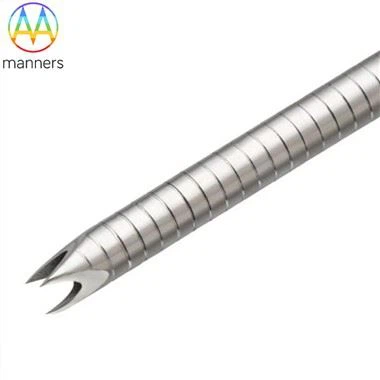
Quincke Spinal Needle 22G 90mm For Same-Day Surgery
Nov 26, 2026
Primary keyword: Quincke Spinal Needle 22G 90mm | Secondary: ambulatory spinal anaesthesia, fast-track discharge, short-acting local anaesthetic | Intent: commercial investigation | Meta: Same-day surgery changes what a spinal needle must deliver. See how the Quincke spinal needle 22G 90mm supports fast-track discharge.
The Shift to Same-Day Surgery
An increasing share of lower-limb orthopaedic, urological, gynaecological and general surgical work now happens without an overnight stay. The clinical reasons are familiar: early mobilisation, lower infection risk, patient preference. The operational reason is capacity, and it has made the recovery pathway the rate-limiting step in many units rather than the operating theatre.
For a spinal needle, that shift changes the requirements. In an inpatient setting, a block that lasts a little longer than the operation is acceptable and a mild headache is manageable on the ward. In a same-day unit, a patient who cannot walk steadily, who cannot void, or who has a postural headache at the point of discharge becomes an unplanned admission, and an unplanned admission is a bed, a staff call and a cancelled list the following morning.
Why Discharge Timing Makes Needle Choice Matter
Three properties of a spinal determine how quickly a patient can leave: the local anaesthetic, the dose, and the dural defect. The first two are pharmacological decisions with well-understood profiles. The third is a needle decision, and it interacts with the first two in a way that is easy to overlook: a low-dose, short-acting spinal that wears off in ninety minutes is undermined by a dural leak that produces a headache six hours later, after the patient has gone home.
That interaction is why same-day units tend to be conservative about large cutting needles in young patients, and why they still need a needle that reaches the space reliably in older patients with degenerative spines. The 22G 90mm cutting needle is a reasonable compromise in the older ambulatory patient, and a poor choice in the young patient having a short procedure who could have been served by a 25G pencil-point needle.
Scheduling is the second constraint. A same-day unit runs on turnover, and every additional minute in the procedure room consumes recovery capacity. A needle that reaches the space in one pass and fills the hub within seconds returns several minutes per case across a list, and that is a capacity gain rather than a clinical preference.
Short-Acting Agents and Needle Gauge
Gauge and local anaesthetic are chosen together. A 22G lumen allows a rapid injection of the small volumes used in low-dose spinal anaesthesia and allows cerebrospinal fluid to be seen quickly, which shortens the interval between dural puncture and block onset. A finer needle slows both, and in a fast-turnover list the difference accumulates across a day.
Flow also affects the quality of the block in a subtle way. Rapid, well-mixed injection in a small volume produces a more predictable spread than a slow injection through a narrow lumen, where the solution may layer rather than mix. This is one reason low-dose techniques are more reliable with a 22G or 25G needle than with a 27G needle, and it is a reason to match the needle to the anaesthetic plan rather than to departmental habit.
Patient selection for an outpatient spinal is itself a needle decision. A patient with a history of headache after a previous neuraxial procedure, a young patient having a short procedure, and a patient with a connective tissue disorder all argue for the smallest defect that can be reliably achieved. A patient with a fused lumbar spine and a body mass index above thirty-five argues for a needle that will reach the space on the first attempt.
Protocol for an Outpatient Spinal
A workable protocol has six elements. Screen for headache risk before selecting the needle. Standardise the local anaesthetic and dose by procedure. Use a 22G 90mm needle for older or difficult-spine patients and a fine pencil-point needle for young, easy-spine patients. Document the needle, the number of passes and the block level. Assess ambulation and voiding against written criteria rather than against a clock. Give specific discharge instructions about postural headache and who to call.
The sixth element is the one most often missing. A patient who has been told that a headache is possible, that it is worse upright, and that it should be reported rather than tolerated will return to the unit rather than to an emergency department, and will be treated earlier. That instruction costs nothing and prevents a disproportionate share of unplanned readmissions.
Recovery criteria should be written before the first case rather than argued after the first unplanned admission. Ambulation without assistance, stable haemodynamics, adequate pain control and the ability to void where the procedure requires it are all observable, and each can be assessed against a threshold rather than against a clinician's impression. Needle choice feeds into those thresholds indirectly, through block quality and headache risk.
What Freestanding Centres Report
Freestanding centres, which lack an inpatient ward to absorb a complicated recovery, describe a narrow tolerance for needle-related variability. They report that first-pass success is the variable that most affects turnover, and that first-pass success improves when the needle is long enough for measured depth and stiff enough to track. They also report that their most common cause of unexpected admission is not a failed block but a headache that appeared after discharge.
Staffing shapes the same story. A centre with a small anaesthesia team and rapid turnover cannot afford repeated attempts, and a needle that gives a clear end point shortens each procedure. The trade they describe is explicit: they accept a slightly larger dural defect in older patients in exchange for reliability, and they reserve fine needles for the young patients whose headache risk justifies the extra time.
Documentation in a freestanding centre should include the depth at which the space was found. That number is the single most useful piece of information for a future procedure on the same patient, and it is routinely lost because the note records only the level and the needle size. Adding depth takes a few seconds and converts an experience into data.
Summary: Reliability Beats Elegance in a Fast List
The same-day surgery requirement is not the smallest possible dural hole; it is a predictable block, a predictable recovery and a patient who can be discharged without a hidden complication. For older and difficult-spine patients, the 22G 90mm cutting needle delivers that. For young, easy-spine patients, a fine pencil-point needle delivers it better.
Written as a two-needle policy with explicit triggers, this is simple to teach, simple to stock and simple to audit. It is also cheaper than the cost of a single unplanned admission.
Outlook: Fast-Track Protocols and Needle Design
The direction of ambulatory anaesthesia is towards more aggressive discharge pathways: no mandatory bed rest, early oral intake, and criteria-based rather than time-based discharge. As those pathways tighten, the tolerance for a dural leak falls, and needle choice moves from a background decision to a visible quality indicator.
Needle design is following with finer cutting bevels, better tip visibility for guided placement, and hub designs that allow faster confirmation of flow. None of these changes will make a 22G cutting needle suitable for every ambulatory patient, but together they make the trade between reliability and defect size easier to manage, which is what a high-turnover unit actually needs.
Frequently Asked Questions
Is a 22G needle too large for day surgery?
It depends on the patient. In older patients with difficult anatomy, reliability usually outweighs the larger dural defect; in young, easy-spine patients, a finer pencil-point needle is preferable.
Does needle gauge affect how fast the block wears off?
Gauge affects injection speed and mixing, which can influence block quality, but offset time is driven mainly by the local anaesthetic and dose.
What increases unplanned admission after spinal anaesthesia?
Failed or patchy blocks, delayed voiding, and post-dural puncture headache appearing after discharge are the common drivers.