Quality Bottlenecks And Standardized Manufacturing Of Disposable Spinal Anesthesia Needles Manufacturer
Aug 09, 2026
The clinical application of lumbar puncture and spinal anesthesia has long been troubled by industry-wide quality pain points, which are closely related to the uneven production capacity of disposable spinal anesthesia needles manufacturers. Many small-scale manufacturers lack standardized production processes and precision testing equipment, resulting in unqualified product quality in the market. Unpolished stainless steel needle bodies often cause excessive tissue friction and ligament cutting during puncture, greatly increasing the risk of postoperative low back pain and dural injury. Non-standard needle tip deviation and inconsistent gauge accuracy lead to frequent clinical complications including cauda equina nerve root injury and transient lower limb numbness. In addition, irregular sterilization and packaging processes of some manufacturers fail to meet medical aseptic standards, easily inducing meningeal infection, spinal osteomyelitis and bacterial meningitis after lumbar puncture. The absence of unified color coding specifications and size calibration also causes clinical selection errors, affecting anesthesia efficiency and patient safety. These manufacturing-side bottlenecks restrict the standardized development of global spinal anesthesia clinical treatment.
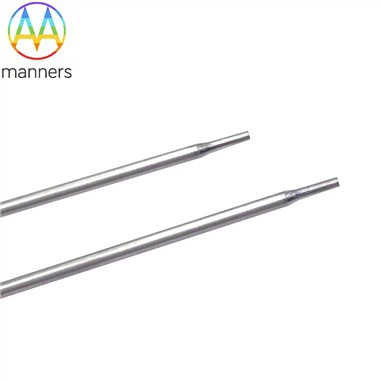
Formal disposable spinal anesthesia needles manufacturers rely on scientific production principles and strict quality control logic to solve clinical pain points fundamentally. Qualified manufacturers adopt high-purity medical-grade stainless steel as the core raw material, which features excellent biocompatibility, corrosion resistance and structural toughness, avoiding material deterioration and residue risks. The whole production process adopts precision polishing and integrated forming technology, ensuring the needle body surface is smooth and burr-free to minimize intraoperative tissue trauma. The core manufacturing principle focuses on dimensional standardization and structural humanization: standardized 90mm conventional length and full-size gauge calibration ensure accurate puncture depth control, while differentiated tip structure design balances puncture efficiency and minimally invasive protection. Meanwhile, manufacturers implement one-time sterile sealing packaging and high-temperature sterilization technology to completely eliminate cross-infection risks, realizing the integration of safety, precision and sterility of medical puncture needles.
Reliable disposable spinal anesthesia needles manufacturers produce diversified product lines with clear classification, covering all clinical application scenarios. In terms of needle tip type, manufacturers independently produce two mainstream specifications: Quincke Point and Pencil Point. The sharp beveled Quincke Point is designed for high-resistance tissue puncture, suitable for obese patients and tough ligament penetration, while the blunt Pencil Point achieves atraumatic tissue separation, greatly reducing postoperative headache incidence. In terms of size classification, manufacturers support full gauge production from 16G to 27G, with each specification matched with a unified international standard color code, including white for 16G, light purple for 17G, pink for 18G and orange for 25G, realizing visual rapid identification. Besides standard 90mm-length products, professional manufacturers provide customized length services according to 2D/3D drawings or customer samples, and support personalized carton packaging to meet differentiated market demands.
Standardized operational guidelines for clinical use are formulated based on manufacturer's product design parameters to maximize clinical safety. Before operation, medical staff shall verify the manufacturer's qualification and product inspection report, check the integrity of sterile packaging and the validity of sterilization period, and confirm no deformation or burr on the needle body. Select appropriate specifications according to patient physical condition and surgical type: large-gauge needles from 16G to 20G are adopted for complex major surgery, while ultra-fine needles above 25G are preferred for minimally invasive surgery and pediatric anesthesia. During puncture, operate along the human midline to avoid distal needle tip deviation, preventing accidental injury to spinal nerve roots. Control uniform insertion speed and stable drug injection rate, and strictly avoid excessive cerebrospinal fluid release. For patients with high intracranial pressure and posterior cranial fossa space-occupying lesions, complete preoperative intracranial pressure reduction treatment to prevent fatal brain hernia.
Long-term clinical cooperation experience with formal disposable spinal anesthesia needles manufacturers verifies that standardized manufacturing products can effectively reduce overall complication rates. Clinical data shows that products manufactured with precision polishing technology can reduce the incidence of postoperative low back pain caused by ligament cutting by more than 90%. Unified color-coded and size-calibrated products completely avoid clinical specification selection errors and improve puncture success rate. Disposable sterile products produced by formal manufacturers achieve zero postoperative infectious complication rate in standardized operations. Custom-sized products effectively solve the problem of mismatched puncture depth for special groups such as children and obese patients, avoiding nerve compression and transient urinary disorders. Strict factory quality inspection ensures stable product batch consistency, eliminating safety hazards caused by unqualified inferior products.
In summary, the manufacturing standardization of disposable spinal anesthesia needles is the core foundation of clinical anesthesia safety. Formal manufacturers rely on high-quality raw materials, precision processing technology and complete quality inspection system to solve various clinical pain points caused by inferior products. Diversified standardized and customized product classification meets the full-scenario needs of modern spinal anesthesia, and standardized clinical operation guidelines give full play to product performance advantages, greatly improving the safety and standardization level of lumbar puncture surgery.
From the perspective of industry development prospects, disposable spinal anesthesia needles manufacturers should further upgrade production technology, introduce intelligent precision processing equipment to improve product dimensional accuracy and surface smoothness. Strengthen ISO13485 medical quality system certification and international standard docking to enhance global product compatibility. Enrich customized service categories to meet personalized needs of high-end medical institutions. Industry associations should strengthen market supervision, eliminate unqualified small manufacturers, and promote the overall standardized upgrading of the industry to better protect clinical patient safety.