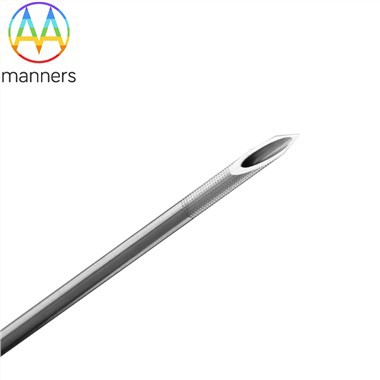
Push The Glue Out First
Oct 15, 2026
Pain Point: Soaking a Clogged Bore Makes Mud
Classic mistake: needle clogs, operator drops it into a cup of solvent and walks away. The solvent softens the outer layer. The inner plug stays. Next run, the first shot looks fine, the second shot throws a softened glue slug into the product. Worse than a hard clog-because it passes the eyeball test.
Let me describe a real production scenario. A camera-module line is dispensing UV adhesive through a 25G tapered needle. The needle clogs after 200 shots. The operator removes the needle and drops it into a cup of IPA. After lunch, the operator retrieves the needle, blows it dry with compressed air, and reinstalls it.
The first shot looks fine. The second shot is also fine. The third shot is a blob of partially dissolved adhesive that was loosened by the soak. The blob lands on the camera module, ruining the optical surface. The operator does not realize the blob came from the needle. The quality team investigates. They find the softened plug in the needle bore.
The operator repeats the cycle. The "soft slug" defect appears intermittently, hard to trace, and expensive to rework.
Principle: Forward Flush Beats Passive Soak
Your copy's sequence is correct:
glue out → cleaner in → dispense cleaner → residual glue pushed out → ultrasonic jolt.
Mechanics:
Forward flow evacuates bulk uncured adhesive.
The bulk adhesive is removed before it has a chance to cure.
Cleaner displaces remaining film.
The cleaner flows through the bore, dissolving the thin film on the wall.
Ultrasonic cavitation loosens what adhesion left behind.
The microscopic bubble collapse creates a scrubbing action on the bore wall.
Final air/rinse confirms open lumen.
The air flow verifies that the bore is clear.
Soaking alone treats the symptom. Forward flush treats the column.
Let me explain why forward flush is superior. When you soak a clogged needle, the solvent dissolves the outer layer of the plug first. The inner core remains hard. The dissolved outer layer forms a soft mud that can be pushed out, but the hard core stays. If the needle is reinstalled, the first few shots push the mud out, creating the "soft slug" defect.
Forward flush is different. The cleaner flows through the bore from the hub side to the outlet. The flow carries the dissolved residue out of the needle. The ultrasonic jolt loosens any remaining residue. The final rinse removes everything.
Equipment Classification
- Syringe-style flush adapter: manual, cheap, good for bench.
- The adapter fits the hub and allows the operator to push cleaner through the bore.
- Valve-mounted purge mode: automated forward flush after each job.
- The purge mode is programmed into the robot's end-of-job sequence.
- Solvent jet tip: snug fit to nozzle outlet, blows adhesive backward out the hub side-actually forward through the fluid path.
- The jet creates a high-velocity stream that mechanically removes residue.
- Ultrasonic basket: small nozzles, 40 kHz.
- The basket holds the nozzles in the ultrasonic bath.
- Bore-flow test stand: timed discharge into weigh boat.
- The test stand measures the flow rate, which indicates the bore condition.
Operation Guide
Do not reverse-flush fine tapered bores unless the manufacturer approves-particles can wedge at the taper shoulder. Prefer:
Pressure-forward glue evacuation.
Use the dispensing valve to push the remaining glue out.
Cleaner forward dispense.
Install the cleaner reservoir and dispense cleaner through the bore.
Short soak only if needed.
If the residue is stubborn, a short soak can help, but only with a compatible cleaner.
Ultrasonic 3 min @ 40 °C.
The ultrasonic energy loosens residue that the flush missed.
Forward rinse.
The rinse removes the cleaner residue.
Air dry.
Moisture can cause CA to cure or metal to corrode.
Flow test: 5 shots, CV < 3–5% before reuse.
The flow test proves the bore is functionally clean.
Field Experience
A camera-module UV line had "soft slug" defects after soak-only cleaning. Switching to forward cleaner dispense removed the slugs. Defect rate went from 2.1% to 0.3%.
The process engineer noted that the forward flush also reduced cleaning time. The operator no longer had to wait for the soak to dissolve the plug. The flush removed the bulk adhesive immediately.
A power-module thermal-gel cell added "purge before park" to the robot end-of-job macro. Morning startup scrap fell because no gel cured overnight in the cone.
Summary
A needle is a lumen, not a sponge. You do not soak a lumen-you evacuate it, then scrub it with energy.
The cost of a soaked plug is not just the needle. It is the "soft slug" defect, the rework, and the investigation time. Forward flush eliminates all of these costs.
Outlook
Dispensers will auto-run "end-of-job purge" with cleaner. The machine will refuse to start Monday morning until the nozzle passes a flow check.
Manufacturers will publish forward-flush parameters for each needle type: pressure, cleaner volume, and time. Process engineers will program these parameters into the dispensing system.
Expect to see "self-cleaning" dispensing systems that integrate the flush sequence into the robot's end-of-job macro. The future of cleaning is not a manual procedure-it is an automated process.